

Last updated on November 3, 2026 at 12:02 PM
A new advertising surface can attract attention long before anyone knows what a customer visit is worth. That is the tension facing conversational AI search. An October 2026 working paper analyzing ecommerce traffic found that paid ChatGPT sessions in the United States produced $0.89 in tracked revenue per visit, versus $2.45 for paid Google Search. The apparent gap is enormous. Yet it would be equally misleading to treat the result as a universal price tag on AI audiences or proof that conversation-led advertising cannot work. The more useful question for a merchant is narrower: what would this visit have to cost, and what evidence would justify putting the next advertising dollar behind it?
THE BIG STORY | THE ECONOMICS OF AI SEARCH ADVERTISING
A New Channel Needs More Than a New Attribution Label
What the research actually measured
The working paper by Maximilian Kaiser and Christian Schulze, currently under review, uses ecommerce analytics spanning 1,898 websites over roughly 60 weeks, with a staggered country rollout of ChatGPT advertising. That large population supports the study of organic referrals. The paid-channel comparison is much smaller: 102 advertiser websites with full sales tracking, including 87 advertisers that bought both paid ChatGPT and Google Search traffic in the United States. Keeping those denominators separate matters. Nearly 1,900 websites did not each run a matched, independently randomized advertising experiment. Grips Intelligence supplied the data free of charge. Kaiser is its scientific advisor and discloses salary and virtual shares; the authors say the company had no role in the research questions, design, analysis or writing.
Within the observed U.S. paid traffic, ChatGPT ad visitors converted at 0.37%, compared with 1.17% for paid Google Search. Of the 87 advertisers buying both channels, 84 recorded lower revenue per paid ChatGPT visit; 73 had no recorded ChatGPT-ad sales across 18,726 visits. The concentration was notable: across all visitor countries in the 102-site financial sample, one advertiser accounted for 66% of paid ChatGPT purchases. These results make the performance gap difficult to dismiss as a single bad campaign, while also revealing how sensitive early-channel averages can be to a small number of successful advertisers.
| Tracked metric | ChatGPT ads | Google Search ads |
|---|---|---|
| Revenue per tracked visit (US$) | 0.89 | 2.45 |
| Visit-to-purchase rate | 0.37% | 1.17% |
Study scope: U.S. paid visits to ecommerce advertisers with full sales tracking; observational, last-click-oriented measures—not a population benchmark or a controlled lift test.

Image source: Maximilian Kaiser and Christian Schulze (2026), working paper v1
The profitable-click question is a price question
Revenue per session is not return on ad spend. Without the acquisition cost of those sessions, a merchant cannot tell whether a channel is unprofitable, only that it produced a different amount of attributable sales. The researchers therefore calculated a hypothetical “parity price”: the click price at which paid ChatGPT traffic would earn the same revenue per advertising dollar as the observed paid-search baseline. Using a $0.72 median Google Search cost per click from a restricted subset of 16 accounts with at least 80% U.S. paid-search traffic, and adjusting for the observed revenue-per-visit difference, they estimated approximately $0.26 per ChatGPT click. Resampling the 102 advertisers while holding that search CPC fixed produced a wide 95% interval of roughly $0.05 to $0.57.
This is not a market-rate quote or a recommended bid for every advertiser. The $0.26 estimate depends on comparable conversion-value tracking and a comparable relationship between clicks and sessions. Equal revenue per advertising dollar alone does not establish equal profit. The study also contrasts it with one publicly reported advertiser paying $1.72 per click over a short period—but a single account is no basis for a market-wide ChatGPT CPC claim. For operators, the calculation is valuable as a method, not as a universal answer: multiply your own paid-search CPC by the ratio of your ChatGPT revenue per visit to your search revenue per visit, then stress-test that ceiling against gross margin, refunds and customer value.
Why an assistant visit may play a different role
Classic paid search often begins with an explicit shopping query: a model name, brand, price comparison or request to buy. Conversational AI can begin earlier, with an open-ended problem and a sequence of clarifying questions. That difference in intent is a plausible reason for weaker same-session ecommerce conversion, but the working paper does not observe the actual prompts or ad impressions, so it cannot establish that explanation. Nor can it settle whether an assistant’s influence on a later search, store visit or repeat purchase is missed by last-click tracking.
There is also counterevidence worth treating carefully. OpenAI reported in August that one ecommerce advertiser achieved three times return on ad spend over 28 days. That is a vendor-selected example, not a like-for-like rebuttal to a multi-advertiser observational study. OpenAI also says its ChatGPT Ads platform remains in beta and does not yet have reliable performance benchmarks across advertisers, industries and campaign types. Both points can be true: a channel may deliver attractive performance for some merchants while still performing poorly, on average, in one observed population and measurement window. The rational response is targeted experimentation rather than either hype or blanket rejection.
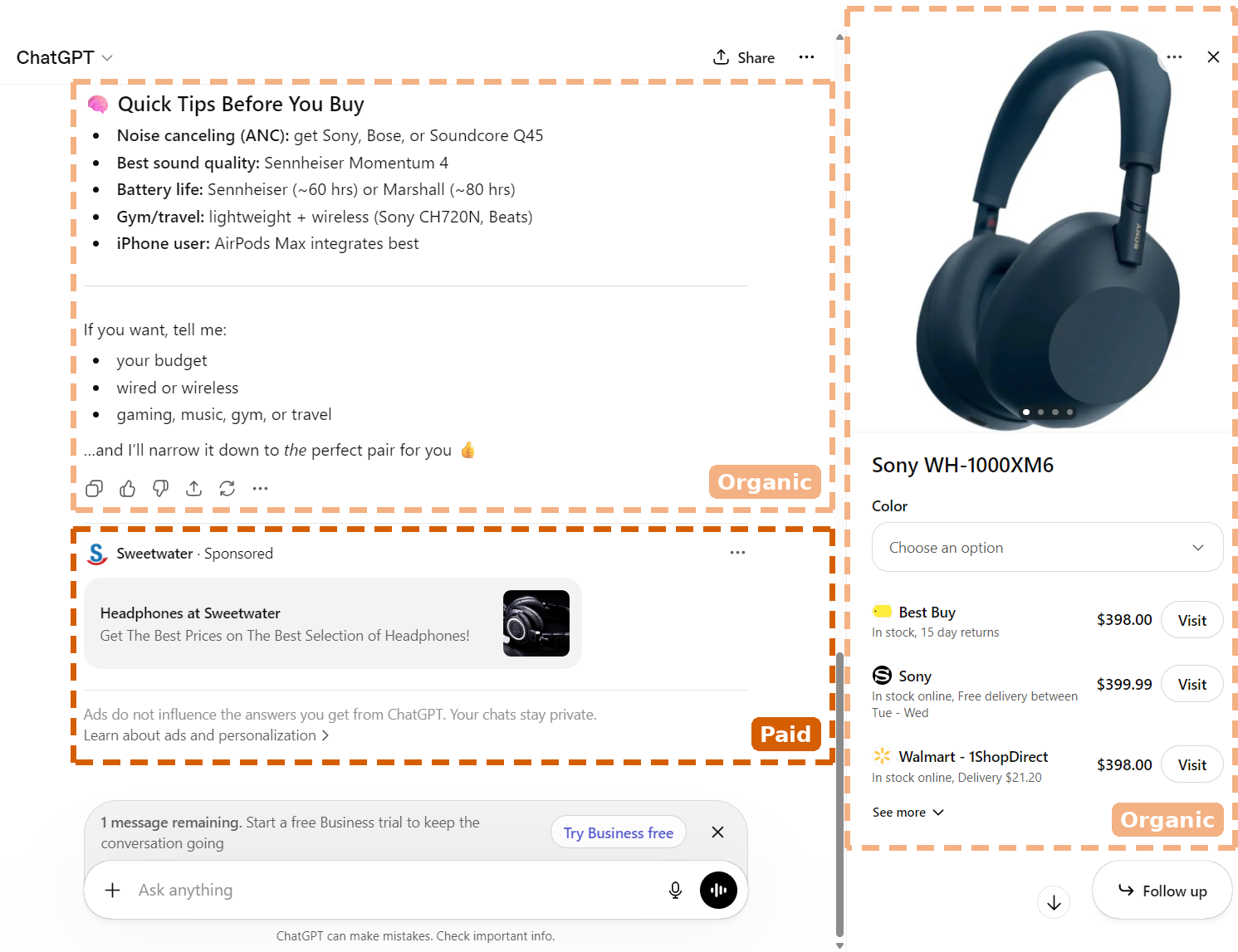
Image source: Maximilian Kaiser and Christian Schulze (2026), working paper v1
The measurement problem is bigger than a missing ROAS column
A merchant adding AI advertising should first audit what a paid visit actually means in its analytics stack. Landing-page parameters, ad-review crawlers, redirect behavior, consent settings, payment-provider returns and cross-device sessions can all change how sessions or conversions appear in a dashboard. OpenAI’s documentation warns that ad-review crawlers can carry tracking parameters and be classified as paid traffic by third-party analytics, even though those visits are not billable ad clicks. This is a reason to audit traffic, not evidence that crawler contamination was established in this study. Reporting sessions without verifying human traffic can distort both the denominator and revenue per session.
A second blind spot is incrementality. A customer might see a relevant assistant advertisement, compare a product through Google, and return directly to purchase. Last-click analytics would credit the latter visit; an assistant might still have contributed. Conversely, an assistant may attract users already predisposed to buy, and the platform may receive credit without creating extra demand. Attribution models and platform-reported conversions cannot, by themselves, distinguish these possibilities. When the sample is small, even a promising early ROAS can be driven by one high-value order. Review new-customer share, assisted journeys, margin and a meaningful holdout where feasible before declaring a channel winner.
A practical test for ecommerce advertisers
The first step is to keep existing profitable search and shopping activity as the control benchmark rather than moving budget simply because a new placement is available. Choose a product family with reliable inventory, clear product differentiation, sufficient gross margin and a landing page that answers likely follow-up questions. Use consistent campaign-level UTMs and conversion events, and separately reconcile ad-platform clicks with verified human sessions in GA4 or the store’s order data. A small, fixed exploratory budget is more informative than letting an unproven channel compete for the same unconstrained conversion budget as mature campaigns.
Second, report a channel scorecard at the same level of rigor for ChatGPT and paid search: spend, valid sessions, revenue per visit, orders, conversion rate, cost per acquired customer, new-buyer share, contribution margin and product returns or refunds. Where scale permits, use a geo or audience holdout to look for incremental revenue beyond attributed sales. Third, require a pre-set decision rule—continue, adjust price and creative, or stop—based on profit and customer quality rather than impressions or a large assisted-conversion claim. If the platform is unavailable in the merchant’s market, the preparation work still has value: make product facts accurate, landing pages decision-ready and attribution definitions consistent.
What to watch next
The most consequential new evidence will come from larger advertiser samples, more mature campaign optimization, comparable cost datasets and methods that measure cross-channel lift rather than only immediate visits. OpenAI says it is expanding campaign capabilities, buying options and measurement during the beta. Researchers also observed a possible decline in unpaid ChatGPT referrals after ads appeared, but the unadjusted estimate was a 5.9% decline, with a 95% interval from a 12.6% decline to a 1.2% increase, which included no effect; the larger adjusted estimates depend on additional assumptions. That result deserves monitoring, not a definitive claim that ads are suppressing organic discovery.

Image source: Maximilian Kaiser and Christian Schulze (2026), working paper v1
TREND WATCH | WHAT ELSE MOVED
Meta gives creative teams a closer look at the opening seconds
Reports of native “Hook rate” and “Hold rate” columns in Meta Ads Manager are supported by individual advertiser observations, rather than a confirmed universal rollout. Before replacing custom formulas, check the definitions and availability shown in your own account. These measures can help diagnose the opening hook and continued viewing, but they are not standalone business KPIs: compare videos of similar lengths and judge success by orders and margin. Meta’s Q3 disclosures put the wider AI-investment push in context, but platform spending does not establish returns for an individual merchant.

Image source: Ons Affes (original account observation)
TikTok search becomes more measurable as live shopping builds
TikTok is highlighting Impression Share and Top 1 Impression Share for eligible Search Ads campaigns, alongside automatically suggested brand and category Keyword Packs. Availability depends on account, campaign type, market and rollout stage. Preview terms before adding them, and distinguish a budget-limited campaign from one constrained by bids or relevance. In parallel, Retail Brew describes e.l.f., Gap and Nex planning product launches, creator-led offers and live-commerce tests for the holidays. The larger shift is toward a platform that can both surface an intent signal and complete a purchase, though attribution to other channels remains hard to quantify.

Image source: TikTok For Business
AI SEO still needs crawlable pages and answers worth retrieving
Google’s John Mueller is cautioning against short-lived AI search tactics while emphasizing technical foundations and useful content. Practical Ecommerce’s comparison of HTML and XML sitemaps reinforces the distinction between helping crawlers discover URLs and creating real navigational value. A Search Engine Land column argues that follow-up shopping questions offer more relevant content opportunities, but it is advice rather than a new ranking signal. Prioritize accurate product attributes, internal links and clear answers to buying objections before publishing another thin “best of” list.

Image source: Practical Ecommerce
Retail execution and affiliate value depend on the underlying system
Target’s May strategy article positions physical stores as both shopping environments and ecommerce fulfillment assets, while a sponsored Grocery Dive case argues that usable inventory and item data must precede ambitious AI or digital selling projects. The latter is vendor-supplied evidence, not an independent industry survey. In affiliate marketing, Hello Partner profiles Cashblack and Afrofiliate as examples of partnerships built around a commercial and social mission. The common operator lesson is to audit fulfillment accuracy, product data and partner economics before chasing another platform or growth label.
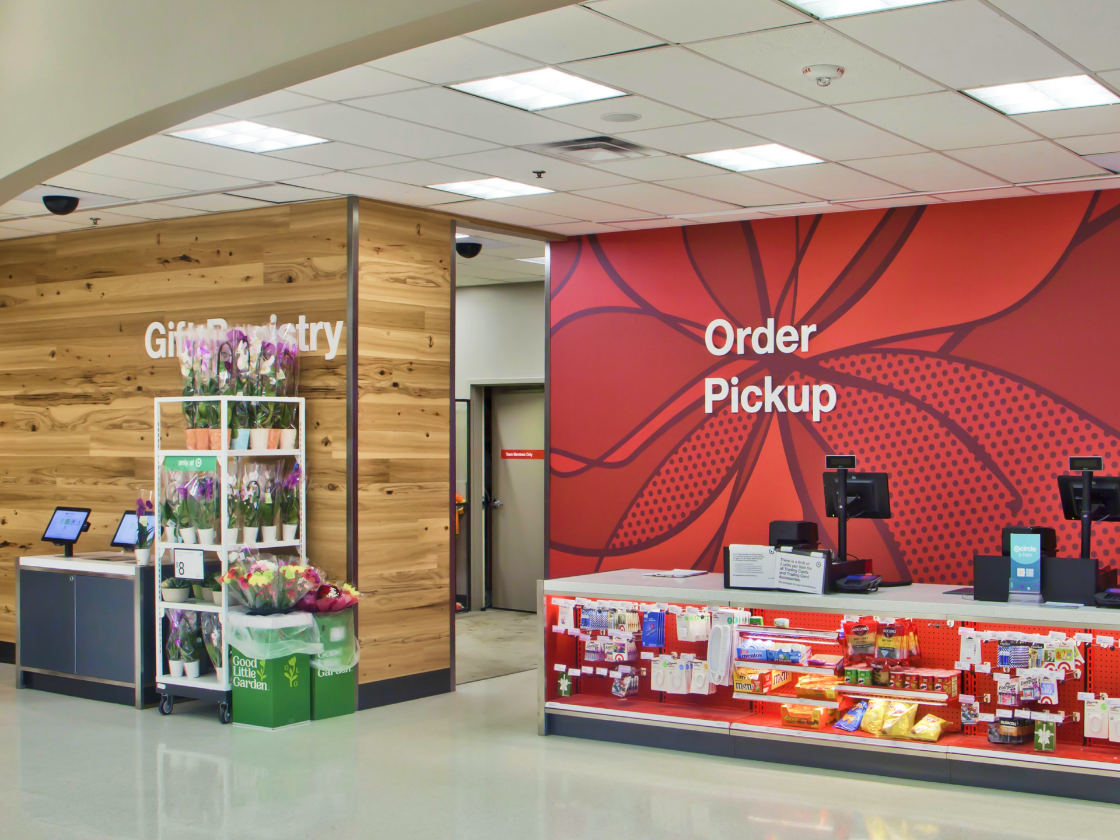
Image source: Target
THE OPERATOR'S CLOSE
Value the Channel, Not the Headline
An assistant can change how people discover products without immediately matching mature search advertising economics. That is not a contradiction. For merchants, the priority is to separate a promising new customer journey from a proven profit engine, then build a measurement system that can tell the difference. Keep experimentation disciplined, make product information dependable wherever discovery happens, and move budget when commercial evidence—not novelty—supports the move.
The Beecommercer Team