

Last updated on September 22, 2026 at 10:52 AM
Grocery ecommerce is putting new pressure on stores and cold-chain capacity, SEO basics are becoming more important as clicks get scarcer, and premium publishers are pricing credibility and audience reach above link value.
This edition focuses on ecommerce operations, search fundamentals, content distribution and local site quality. Agentic shopping appears only where it changes platform control, customer access and merchant economics.
| The Beecommercer Daily Buzz |
| Date: Tuesday, September 22, 2026 |
| Brought to you by: beecommercer.com |
The most useful commerce signals this week are unusually concrete. Faster delivery is exposing physical infrastructure constraints, familiar SEO elements still shape whether a result earns the click, and paid publishing is being valued more like media than a shortcut to rankings.
That is a useful reset for ecommerce teams. Growth is increasingly determined by the quality of the system behind the campaign: inventory position, fulfillment capacity, page clarity, accurate local data, distribution credibility and control of the customer relationship.
Let's get into it.
THE BIG STORY
Fast Delivery Is Becoming an Infrastructure Problem, Not Just a Checkout Feature
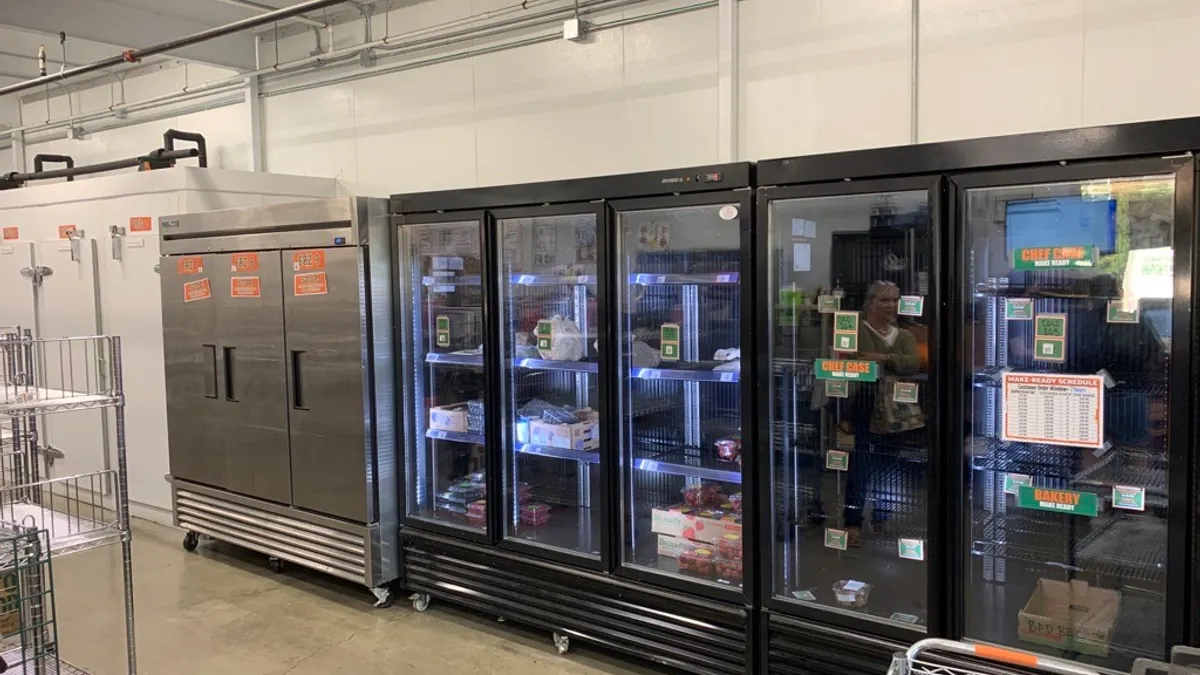
Grocery ecommerce is showing what happens when digital demand collides with physical constraints. In sponsored analysis for Grocery Dive, Lowe Rental cites Brick Meets Click data showing U.S. eGrocery sales grew 21.5% year over year in July 2026. Delivery accounted for 60% of the year-over-year sales growth, while average order frequency among monthly active users rose 14.9%.
The more important operating signal is speed. The same analysis says same-day orders represented nearly 80% of delivery orders and more than 30% of ship-to-home orders in Q1 2026. When shoppers expect groceries in hours rather than days, the ecommerce stack extends far beyond the app: refrigerated staging, frozen capacity, picking workflows, store layout and last-mile handoff all become part of conversion.
The article is sponsored, so its refrigeration-as-a-service recommendation should be treated as a vendor perspective. The underlying lesson is broader: retailers need flexible fulfillment capacity before promising faster service. A digital promotion that creates demand faster than a store can stage, pick or keep products cold is not a growth win – it is an operational bottleneck.
A separate Yahoo Finance article republishing Motley Fool analysis offers a useful contrast between two ecommerce operating models. Chewy uses category specialization, Autoship and pet-health services to deepen repeat purchasing, while Coupang uses a dense proprietary logistics network, Rocket Delivery and a broader ecosystem spanning food delivery, payments and media. The investor verdict is subjective; the operating comparison is useful because both businesses make retention a system, not a remarketing tactic.
| Operator takeaway: Before adding a faster-delivery promise, map the physical capacity that supports it. Measure order cutoffs, staging space, pick time, stock accuracy and failed-fulfillment rates by location. For recurring categories, also ask whether the better retention lever is subscription/replenishment, ecosystem convenience or both. |
SEARCH FUNDAMENTALS
The Click Still Has to Be Earned: Title Tags, Intent and Clear Page Promises
Search Engine Land's 2027 title-tag guide is a reminder that familiar SEO work still matters. A title tag is not only a relevance signal; it is the promise a result makes before the user visits. The article recommends clear titles that match the language users actually use, communicate a concrete benefit and differentiate from repetitive SERP patterns without drifting into clickbait.
For ecommerce teams, this is especially practical on category, comparison and promotion pages. If rankings and SERP layout are stable but traffic is falling, the problem may be the offer communicated in the result: terminology that shoppers no longer use, generic titles that look identical to competitors, or a title that fails to surface a price, size, discount or use case that matters.
The larger point is that SEO cannot stop at visibility. As more answers are resolved on-platform, every external click becomes more valuable. Merchants should treat titles and snippets as acquisition creative: test clarity, specificity and commercial intent with the same discipline applied to ad copy.
| Operator takeaway: Audit the title tags for your top 50 revenue pages, not just your top 50 traffic pages. Compare each title against the live SERP, current shopper language and the landing page offer. Prioritize pages where rankings are stable but CTR or sessions have slipped. |
CONTENT & DISTRIBUTION
Premium Publishers Are Selling Credibility and Reach, Not Just Links
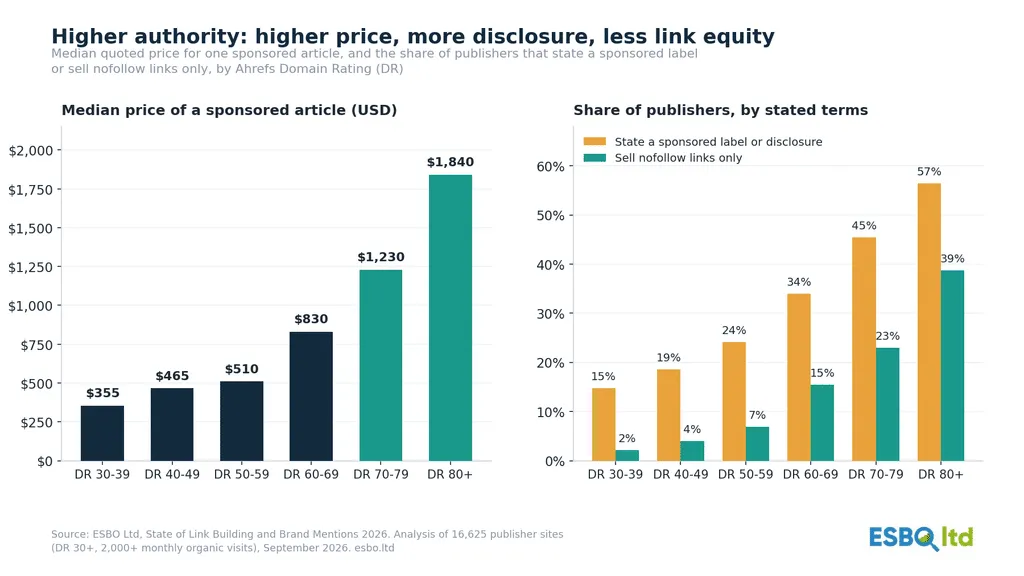
An Entrepreneur contributor analyzed pricing from 16,625 publishers across 53 languages and found a median sponsored-article quote of $570, with the middle half of the market between $250 and $1,290. The most interesting finding is not the price itself: higher-end publishers were more likely to sell nofollow-only placements, yet they charged substantially more.
In the dataset, 39% of publishers with domain ratings of 80 or above offered nofollow-only placements, and those nofollow-only publishers quoted a median of $1,840 versus $510 for the rest. The study comes from a link-building business and should be read with that commercial context, but the pattern supports a useful media principle: at the premium end, buyers are paying for audience, brand association, distribution and credibility rather than a guaranteed SEO transfer.
For ecommerce brands, that changes how sponsored editorial and digital PR should be evaluated. A placement can still be valuable when the link is nofollow if it reaches qualified buyers, creates branded demand, provides reusable proof or gives search engines and discovery systems another credible description of the brand.
| Operator takeaway: Stop approving publisher spend on domain metrics alone. Score placements across audience fit, editorial context, expected referral demand, brand-search lift, reuse rights and disclosure quality. Treat the backlink as one outcome, not the product you are buying. |
LOCAL & SITE QUALITY
Local Visibility Starts With Crawl Access and Accurate Business Facts
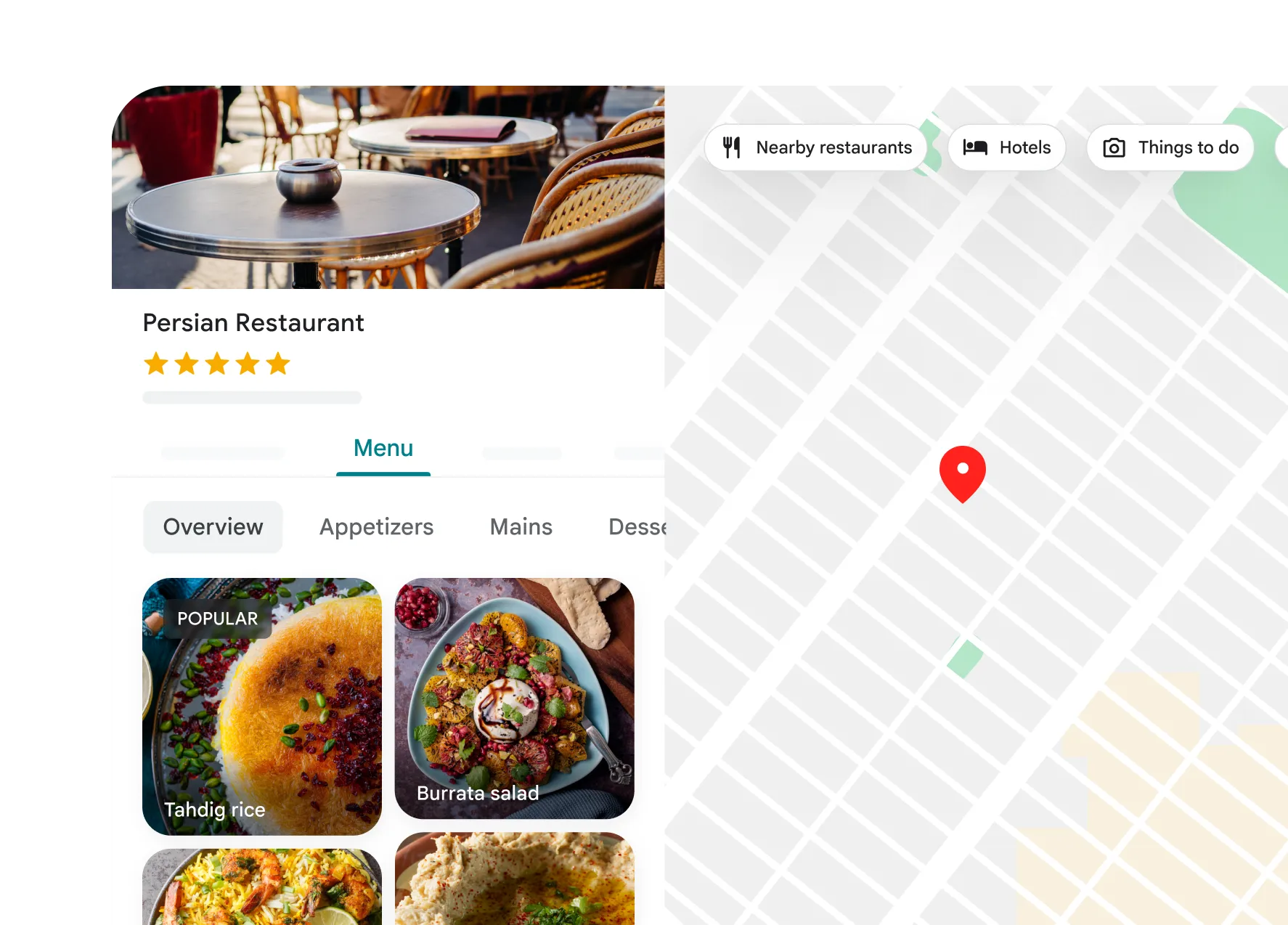
Search Engine Journal's local-page discussion is framed around AI visibility, but most of the recommendations are basic technical and local SEO hygiene: verify robots.txt and noindex settings, review security or CDN rules that may block crawlers, make sure important information is present in rendered HTML, and remove stale duplicate URLs that expose outdated addresses, phone numbers or services.
The content guidance is equally conventional and useful. Local service pages should answer the questions customers actually ask: pricing, service area, credentials, turnaround time, reviews, proof and edge cases. Structured data should agree with the visible page and the Google Business Profile rather than becoming a parallel database that nobody maintains.
For multi-location brands, the risk is inconsistency. One outdated branch page can become a bad answer in search, maps, comparison tools or customer service. The right operating model is therefore ownership: every location fact should have a system of record, a review cadence and a clear team responsible for corrections.
| Operator takeaway: Run a location-data audit before writing more content. Check crawlability, rendered HTML, duplicate/stale URLs, schema consistency, Google Business Profile alignment and the five facts customers care about most: address, hours, availability, price expectations and proof. |
PLATFORM CONTROL
Amazon Is Defending the Customer Relationship From Outside Shopping Agents
Amazon has blocked Meta's Muse assistant from shopping on Amazon.com on behalf of users, according to GeekWire. Amazon says Muse did not identify itself when browsing, that Amazon had not agreed to participate, and that the setup raised privacy, security and terms-of-use concerns. Meta has previously said Muse cannot see passwords or payment methods directly and uses secure storage for credentials.
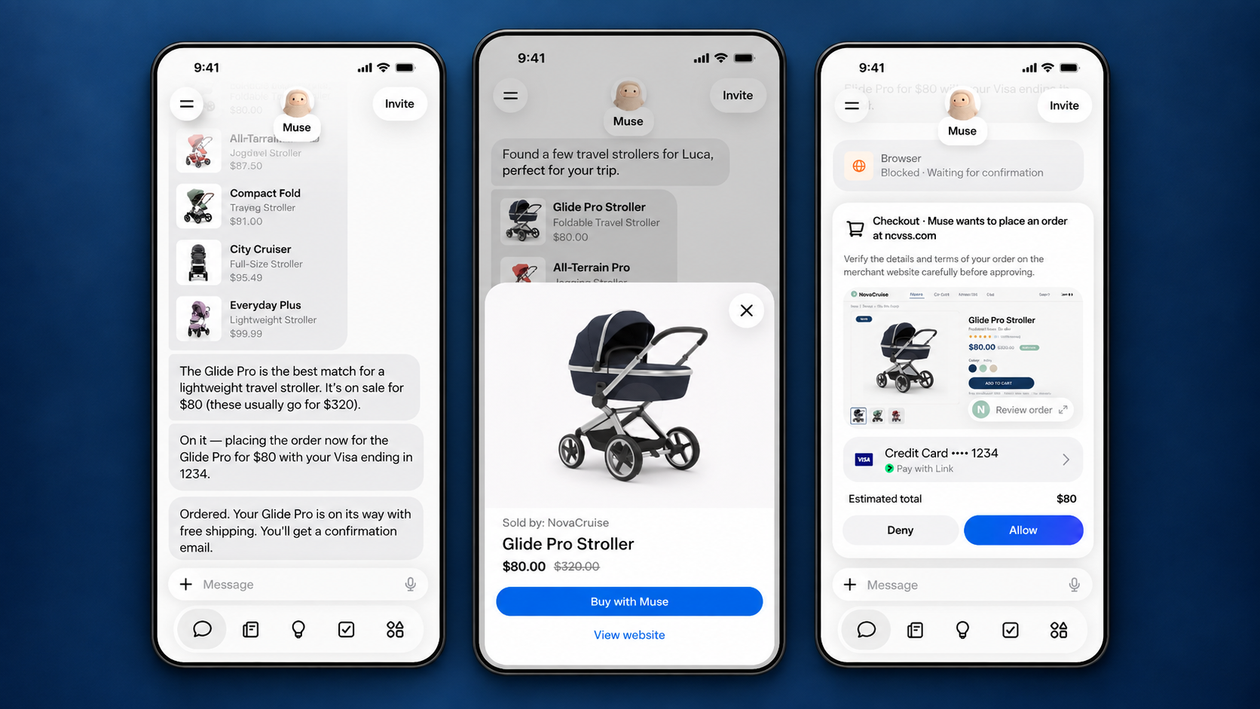
The dispute matters less as an AI headline than as a commerce-control story. Amazon's retail economics depend on owning the shopping session, merchandising products, showing sponsored placements and maintaining the customer relationship. A third-party agent that researches and buys without exposing the normal storefront can potentially bypass parts of that model.
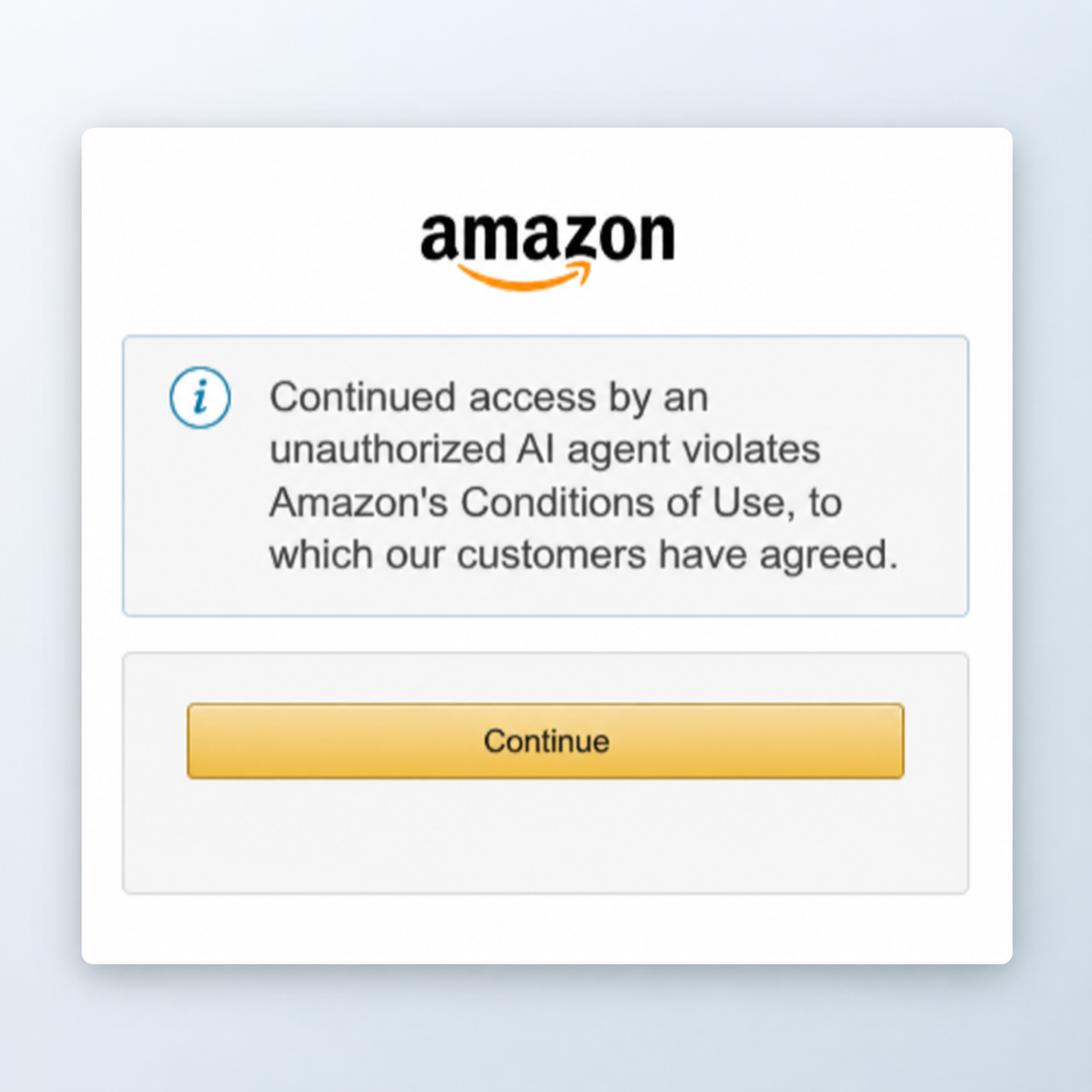
This is the same strategic question marketplaces, merchants and comparison services will keep facing: who decides how a shopper reaches product information, which offers are compared, where payment happens and which party keeps the behavioral data. For merchants, future distribution may depend not only on feed quality but also on which platforms permit automated access and under what commercial terms.
| Operator takeaway: Treat agent access as a distribution-policy question. Document which automated buyers or assistants can access your catalog, what product and offer data they receive, whether checkout is merchant-controlled, and whether the channel preserves attribution, consent and customer-service visibility. |
SEARCH EXPERIENCE
Fewer Outbound Clicks Raise the Value of Every Visit You Still Receive
Search Engine Journal summarizes a draft academic field experiment that tracked 1,100 participants' Google searches over seven days. The researchers compared normal Google use, a version where AI Overviews were suppressed when possible, and forced AI Mode. Their reported result: AI Mode reduced clicks to external websites and was associated with lower satisfaction and more use of competing search engines.
The study has important limitations. The intervention used a browser extension, and Google changed AI Overview HTML during the experiment, which reduced the researchers' ability to suppress AI Overviews consistently. It is therefore more useful as evidence of direction than as a universal traffic forecast.
For ecommerce operators, the practical implication does not require a prediction about search. If informational clicks become harder to win, landing pages need to convert a higher share of the visits they do receive. Clear titles, strong product facts, fast pages, trustworthy reviews, visible availability and useful comparison content become more important together, not separately.

| Operator takeaway: Pair SEO reporting with onsite value. For priority organic landing pages, track impressions, CTR, engaged sessions, product-view rate, add-to-cart rate and revenue per organic session. A traffic decline is more manageable when the visits you retain are better qualified and convert more efficiently. |
THE SIGNAL
The Advantage Is Moving From Channel Tricks to Operating Quality
This edition has a simple pattern. Ecommerce growth is becoming harder to separate from operations. Faster grocery delivery needs physical capacity. Organic search needs a result that earns the click and a page that completes the task. Paid publishing works better when it buys credibility and audience rather than a metric. Local visibility depends on accurate facts. Platform distribution depends on who controls access to the storefront.
None of these are glamorous shortcuts. They are system advantages. Brands that know where inventory sits, keep product and location facts clean, communicate clearly in search, buy distribution for the right reasons and understand the terms of every commerce channel are harder to displace when interfaces change.
| Operator takeaway: Pick one operating dependency behind your growth plan and make it measurable this week: delivery capacity, location-data accuracy, organic CTR, publisher quality, or channel access. The strongest commerce teams are not only better at acquiring demand – they are better at absorbing it. |
The Beecommercer Team