
Last updated on September 28, 2026 at 11:08 AM
Amazon is pushing Seller Central beyond its own marketplace, Prime delivery is moving deeper into merchant-owned storefronts, and Costco is showing how quickly digitally enabled retail can still grow at scale.
At the same time, Google is tightening the path from discovery to action across Demand Gen, Customer Match and YouTube Shopping, while search teams face a harder measurement reality: more surfaces, less referral traffic, and metrics that increasingly need interpretation.
| The Beecommercer Daily Buzz |
| Date: Monday, September 28, 2026 |
| Brought to you by: beecommercer.com |
The most useful signal this week is not another new channel. It is the consolidation of commerce operations around a smaller set of infrastructure layers: catalog, inventory, fulfillment, customer data, media activation and measurement.
Amazon is extending its operating stack outside Amazon. Google is making discovery ads more transactional. YouTube is adjusting shopping surfaces based on viewer behavior. Search Console is adding new ways to interpret image-led discovery even as traditional publisher referrals continue to weaken.
For ecommerce teams, the practical question is becoming simpler: which systems help you own the customer relationship, keep product and order data clean, and turn demand into measurable revenue with less operational friction?
Let's get into it.
THE BIG STORY
Amazon Is Turning Seller Central Into a Multichannel Operating Layer
Amazon is expanding Seller Central so U.S. merchants can connect eBay, Shopify, TikTok and Walmart accounts and manage listings, orders, fulfillment and performance from the same dashboard they already use for Amazon. EMARKETER reports that the tools will roll out gradually at no additional cost, moving Seller Central beyond marketplace management and closer to a cross-channel commerce control plane.

The fulfillment side is expanding at the same time. Amazon is letting merchants using Multi-Channel Fulfillment add Prime delivery benefits to their own websites without moving checkout, returns or customer service into Amazon. MarketScale reports that more than 40% of eligible orders shipped with Prime delivery among early participants, on average, while the merchant keeps the storefront and customer experience.
That combination matters more than either announcement by itself. A merchant can increasingly use Amazon as the logistics and operations layer while keeping demand generation, checkout and customer ownership across Shopify, social channels and marketplaces. The opportunity is operational simplicity; the risk is deeper dependency on one infrastructure provider for catalog, fulfillment and performance data.
| Operator takeaway: Map which parts of your stack are channel-specific and which are shared infrastructure. If Amazon can reduce fulfillment or order-management complexity, model the savings – but keep customer data, merchandising logic and channel economics portable enough that you can change partners later. |
RETAIL MOMENTUM
Costco's Digital Sales Are Growing Faster Than Its Store Base
Costco closed fiscal 2026 with fourth-quarter revenue of $95.7 billion and net sales up 11.2% year over year. The ecommerce signal was stronger: digitally enabled sales increased 19.5% in the quarter, or 19.8% on an adjusted basis, according to Investing.com reporting based on the company results.
The lesson is not simply that ecommerce is taking share from stores. Costco is a reminder that strong digital growth can sit on top of a large physical network when the membership proposition, assortment, pricing and fulfillment experience reinforce one another. Digital becomes an extension of the retail model rather than a separate business line.
Shopify makes a similar strategic case in its 2026 ecommerce sales framework: start with revenue-linked goals, choose channels based on customer behavior, then improve conversion, average order value, retention and measurement. The useful part is the sequencing. Multichannel expansion works best when the operating model is already clear, not when every new surface becomes a separate experiment.

A separate luxury ecommerce item distributed through PR Newswire argues that premium apparel and sportswear are continuing to shift online. Treat its market-size forecasts as promotional market commentary rather than independent research, but the direction fits the broader pattern: higher-consideration categories are becoming increasingly comfortable with digital discovery and purchase.
| Operator takeaway: Treat digital growth as an operating-system question, not a website KPI. Review whether inventory, pricing, loyalty, fulfillment and customer data work consistently across store, marketplace, social and DTC channels before adding the next sales surface. |
PAID MEDIA
Demand Gen Is Moving Closer to Transaction – and Promotion Mode Needs Its Own Rules
Google's September Demand Gen release is focused on shortening the distance between attention and action. The update includes one-click image-ad experiences on YouTube Shorts and Gmail, affiliate location extensions through promoted pins in Google Maps, and product-question assistance alongside feed-based YouTube ads.
Google says advertisers adding Gmail to Demand Gen campaigns see image creatives produce a 40% increase in conversions at the same ROI on average. That figure comes from Google internal data, so it should be treated as a platform benchmark rather than a guaranteed lift. The more durable change is structural: Demand Gen is becoming a blend of visual discovery, local intent and direct response rather than a purely upper-funnel product.
There is also a small but important bidding-control detail for promotion-heavy accounts. Search Engine Roundtable reports that Google Ads does not allow advertisers to edit Target ROAS while Promotion Mode is active; advertisers can adjust ROAS tolerance instead. That makes promotion setup part of the bidding plan, not an overlay you can change independently at the last minute.

| Operator takeaway: For holiday campaigns, define the promotion window, Target ROAS rules, creative rotation and location strategy before activation. Treat Google's new conversion claims as test hypotheses, then compare incremental revenue and margin against your existing Search, PMax and paid-social baseline. |
FIRST-PARTY DATA
Customer Match Gets More Matching Signals – and a Bigger Privacy Checklist
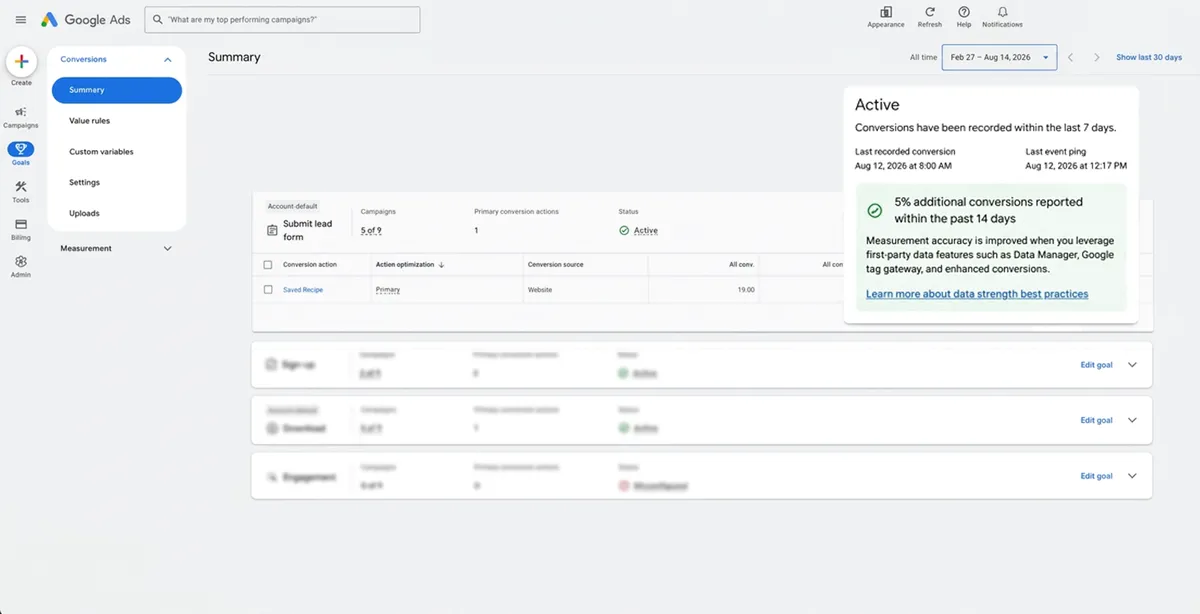
Google Ads is adding IP address and interaction timestamp as new Customer Match identifiers. Search Engine Land reports that the fields can be included alongside existing identifiers such as email and phone number, potentially increasing the amount of first-party data that can be matched to Google users.
The implementation detail matters: IP addresses and timestamps must be uploaded unhashed, and the feature is not available for end users in the European Economic Area, United Kingdom or Switzerland. Advertisers therefore need region-aware collection, consent and upload rules rather than treating this as a simple file-format update.
The strategic direction is familiar: as platform targeting becomes more automated, the value of clean first-party data increases. But "more matchable" is not the same as "more valuable." The quality of the conversion event, customer definition and economic signal still determines whether automation has anything useful to optimize toward.
| Operator takeaway: Before using the new fields, have legal/privacy owners validate disclosures and regional handling. Then measure whether the extra identifiers materially improve match rate, audience reach or conversion quality – not just whether the upload succeeds. |
SHOPPABLE MEDIA
YouTube Is Making Product Tags More Contextual
YouTube is testing dynamic placement for shopping affiliate product tags. When viewers show interest in tagged products, the tags can appear more prominently in the video and description; when engagement is low, the products can be pushed into the description instead.
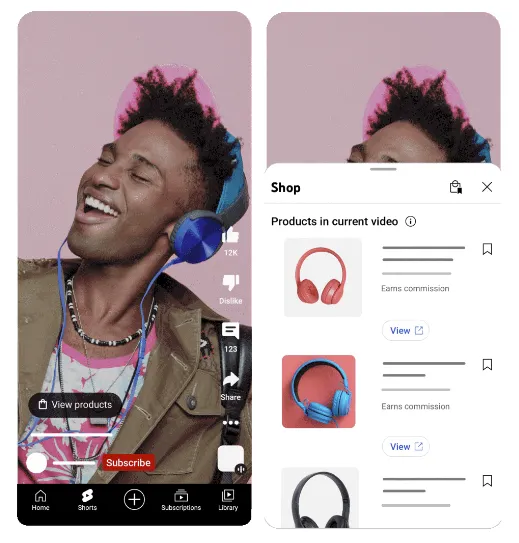
YouTube says the placement test does not change video reach, discovery or recommendations. The commerce implication is more subtle: product merchandising is becoming responsive to viewer behavior inside the content experience, which should reduce visual interruption for low-intent viewers while giving higher-intent viewers a clearer route to purchase.
For merchants using creator affiliates, this increases the importance of feed quality and product-level economics. If the platform decides when to surface a product more prominently, the merchant needs accurate titles, prices, availability and commission logic ready before the creator ever publishes.
| Operator takeaway: Audit the products that creators can tag. Prioritize items with strong availability, competitive landing pages and commission room, and track creator content by assisted conversion as well as direct affiliate sales. |
SEARCH & DISCOVERY
Search Reporting Is Getting Richer While Referral Traffic Gets Harder
Chartbeat data summarized by Search Engine Journal shows Google Search referrals across its publisher-heavy network down 40.2% year over year from July 2025 to July 2026. Google Search also fell from roughly 9% to 5% of pageviews across the network over two years, while direct, internal and dark-social shares increased. The dataset is not representative of all ecommerce sites, but it is a strong reminder that search referral dependence carries concentration risk.
At the same time, Search Console metrics need more interpretation. Search Engine Journal explains that links inside an AI Overview can inherit the position of the entire overview block, so a link hidden deep inside the unit can still be reported as position 1. That makes average position a weak proxy for actual visibility. Visits, engaged sessions, assisted conversions and branded demand are more useful outcome measures.
Search Console is also rolling out a multimodal filter for searches that use images, including Lens, Circle to Search, image uploads and Chrome's image-search workflow. It can show which pages receive image-led discovery, but Google does not provide text-query data for those searches. For ecommerce teams, that creates a new optimization loop around product imagery, visual context and landing-page quality rather than keywords alone.

A Search Engine Land column adds a different trust problem: anyone can call themselves an SEO or AI-search expert, and Nick LeRoy argues the industry needs competency-based accreditation. That is an opinion, not a platform rule, but the operational takeaway is useful: as measurement gets less intuitive, businesses should ask vendors to document methodology, limitations, test design and business impact instead of accepting visibility screenshots as proof of value.
| Operator takeaway: Diversify discovery beyond Google referrals, but do not abandon search fundamentals. Build a scorecard that separates visibility metrics from business outcomes, and add image-led discovery, direct traffic, branded demand and assisted revenue to the same view. |
PLATFORM WATCH
Fast Product Adoption and Fast Policy Reversals Both Matter
Meta's Muse reached the top of the U.S. App Store shortly after launch, with Sensor Tower estimates cited in Yahoo coverage putting early U.S. downloads in the hundreds of thousands. The commerce relevance is distribution: widely adopted assistants can become another place where product research and shopping begin, even before their long-term economics are clear.

Separately, the distributor of Alex Gibney's Musk documentary said several large platforms initially rejected paid trailer ads under political-content rules. Follow-up reporting on September 26 said Meta restored the ads after calling the rejection an error, while YouTube cleared the trailer after review. The episode shows how quickly platform policy classifications can change.
For marketers, both stories point to the same constraint: distribution can scale quickly, but access is still mediated by platform rules and review systems.
| Operator takeaway: Maintain a channel-policy playbook with approval requirements, escalation contacts, restricted categories and backup launch channels. |
THE SIGNAL
Own the Operating System, Not Just the Traffic Source
The common thread this week is control. Amazon wants to run more of the seller operating layer. Google wants discovery, audience data and conversion mechanics to connect more tightly. YouTube is blending content and product merchandising. Search is becoming harder to read through a single ranking or referral metric.
That makes the merchant-owned layer more important, not less. Product data, customer definitions, contribution margin, lifecycle measurement and channel governance are the parts that let a business compare platforms on equal terms. Without them, every new feature looks like growth because the platform defines the metric.

| Operator takeaway: Pick one cross-channel workflow to standardize this week. It could be product feed governance, first-party audience rules, promotion-mode bidding, creator product eligibility, or a unified dashboard that connects channel spend to revenue and margin. The goal is to reduce the number of decisions that depend on a platform-specific metric. |
The Beecommercer Team