

Last updated on September 23, 2026 at 10:19 AM
Best Buy is turning TikTok Shop into a real holiday sales channel, affiliate spending is growing faster than retail ecommerce, and Google Ads is pulling more backend data into bidding. The common thread: growth is spreading across more surfaces, so merchants need stronger channel economics and measurement.
Search is changing too, but the fundamentals remain familiar: match intent, publish useful product information, structure content clearly, and measure more than last-click traffic.
| The Beecommercer Daily Buzz |
| Date: Wednesday, September 23, 2026 |
| Brought to you by: beecommercer.com |
Today’s most useful commerce signals are about distribution, not novelty. Retailers are opening new points of sale inside social platforms, affiliate budgets are still expanding, and paid-search systems are becoming more dependent on complete first-party conversion data. At the same time, search marketers are being asked to prove value across classic rankings, AI answers, branded demand and assisted conversions rather than one clean referral path.
That makes the operating question less about choosing one “winning” channel and more about connecting the pieces. Product data needs to be accurate enough for feeds and native checkout. Creator programs need SKU, inventory and margin discipline. Search content needs to serve high-intent buyers, not just capture impressions. And conversion systems need backend data that reflects what actually happened after the click.
Let's get into it.
THE BIG STORY
Creator Commerce Is Becoming a Retail Channel, Not a Campaign Add-On
Best Buy will launch on TikTok Shop in late October with nearly 10,000 products, including headphones, cameras, laptops, accessories and small appliances. Customers will be able to discover products through shoppable creator videos, Best Buy’s TikTok storefront and in-app product pages, then complete the purchase without leaving TikTok. Best Buy will fulfill the orders, and eligible purchases can be returned in store or by mail.

The timing matters because social discovery is moving closer to transaction. EMARKETER cites its Path to Purchase survey showing that more than 35% of U.S. shoppers who bought a new brand or product first heard about or saw it on social media, compared with 31.3% for search engines. For holiday discovery, social media is tied with physical stores at 46%, rising to 54% among Gen Z in a Sprout Social survey cited by EMARKETER.
Creator marketing is also becoming a more operational discipline. In an AdExchanger interview, Jennifer Quigley-Jones argues that creator marketing should be managed as a strategy rather than a one-off tactic. Technology and performance data can help brands scale from dozens of creator relationships to hundreds or thousands, but only if creators and marketers are aligned on objectives, measurement and commercial expectations.
Affiliate economics reinforce the same shift. EMARKETER forecasts U.S. affiliate marketing spend will exceed $14 billion in 2026 and grow 11.4% year over year. Retail affiliate marketing spend is forecast to grow 10.5%, faster than U.S. retail ecommerce sales through the forecast period. Creator demand, ecommerce growth and cost-conscious shoppers are all supporting the channel.
| Operator takeaway: Treat creator and affiliate programs as distribution infrastructure. Start with products that have clear margins, reliable stock and strong visual demonstration value; define creator compensation and attribution rules before scaling; and track contribution margin, new-customer mix, assisted conversions and return rate alongside platform-reported revenue. |
SEARCH & CONTENT
Search Fundamentals Still Matter — but Measurement Has to Expand Beyond the Click
Search is adding new formats and terminology, but the durable work still looks familiar. In Search Engine Land’s interview with SEO copywriting pioneer Heather Lloyd-Martin, the recurring theme is that clear structure, persuasive writing and genuinely useful content have survived every search shift from AltaVista to Google to today’s answer engines. Her practical point is not to replace the writer with automation, but to use new tools for research, analysis and iteration while keeping a human responsible for relevance, voice and persuasion.
That is especially important in B2B ecommerce. Shopify’s new B2B SEO guide notes that business buyers research more deeply, involve multiple stakeholders and often use lower-volume but higher-intent queries such as model numbers, bulk ordering, commercial-grade specifications and volume pricing. The guide recommends keeping core product and category information publicly crawlable while reserving customer-specific pricing or exclusive catalogs for authenticated buyers.

Demand for GEO services is rising, but the signal is more nuanced than “SEO is over.” A Fiverr survey summarized by Search Engine Journal found that 67% of surveyed search freelancers reported increased GEO requests over the past year versus 56% seeing more demand for improving Google rankings. Yet 61% still said Google SEO was the stronger long-term investment. The article also notes meaningful methodology limitations: the holiday survey is self-reported and does not disclose full sample details or weighting.
For teams trying to measure answer-engine work, Search Engine Land proposes a three-layer AEO attribution framework: direct attribution from identifiable LLM traffic and leads; influenced attribution from signals such as branded search and assisted demand; and a longer-term “future moat” based on visibility and authority. A separate ASC framework — analysis, SEO and content — starts with auditing what AI systems say about a brand, then uses familiar SEO and content work to close the gaps.
| Operator takeaway: Do not create a separate “AI search content factory.” Build one search portfolio around buyer intent. Keep product facts crawlable, publish comparison and implementation content for high-intent B2B queries, monitor classic rankings and branded demand, and add AEO visibility or citation tracking as an additional measurement layer rather than a replacement for SEO. |
PAID SEARCH & MEASUREMENT
Google Ads Adds More Growth Levers — and More Ways to Misread Performance
JumpFly’s comparison of Broad Match, AI Max and Smart Bidding Exploration is useful because the three tools solve different problems. Broad Match expands which searches can match a keyword. AI Max can expand matching, adapt ad messaging and select a more relevant landing page through Final URL Expansion. Smart Bidding Exploration does not broaden keyword matching; instead, it relaxes a target ROAS constraint so the bidding system can pursue additional conversion opportunities. The practical lesson is to test the lever that matches the bottleneck instead of turning everything on at once.
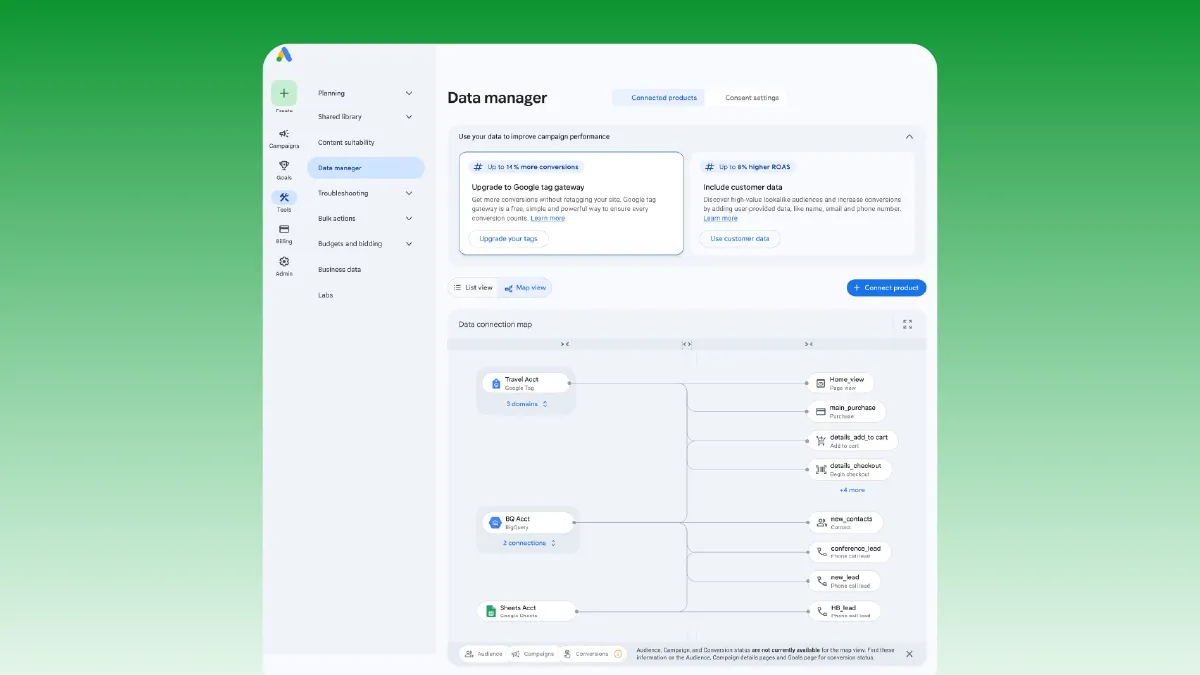
The data layer is changing too. Google Ads now lets advertisers use offline uploads to supplement tag-based conversion records in its multi-source conversions beta. A backend record matched by transaction ID can fill missing customer-provided data such as email, phone or address, and can update the conversion value with a finalized order total, upsell or refund. Google recommends sending supplemental data within 24 hours; newly connected sources enter a 14-day trial period before additional conversions affect bidding.
That added data can improve measurement, but automation still depends on clean strategy. Search Engine Journal highlights common misuse of Google Ads Customer Lifecycle Goals, including campaigns labeled as “new customer acquisition” that are actually duplicating other PMax campaigns or excluding far more users than intended. Value adjustments can also make reported ROAS look better without improving underlying unit economics.
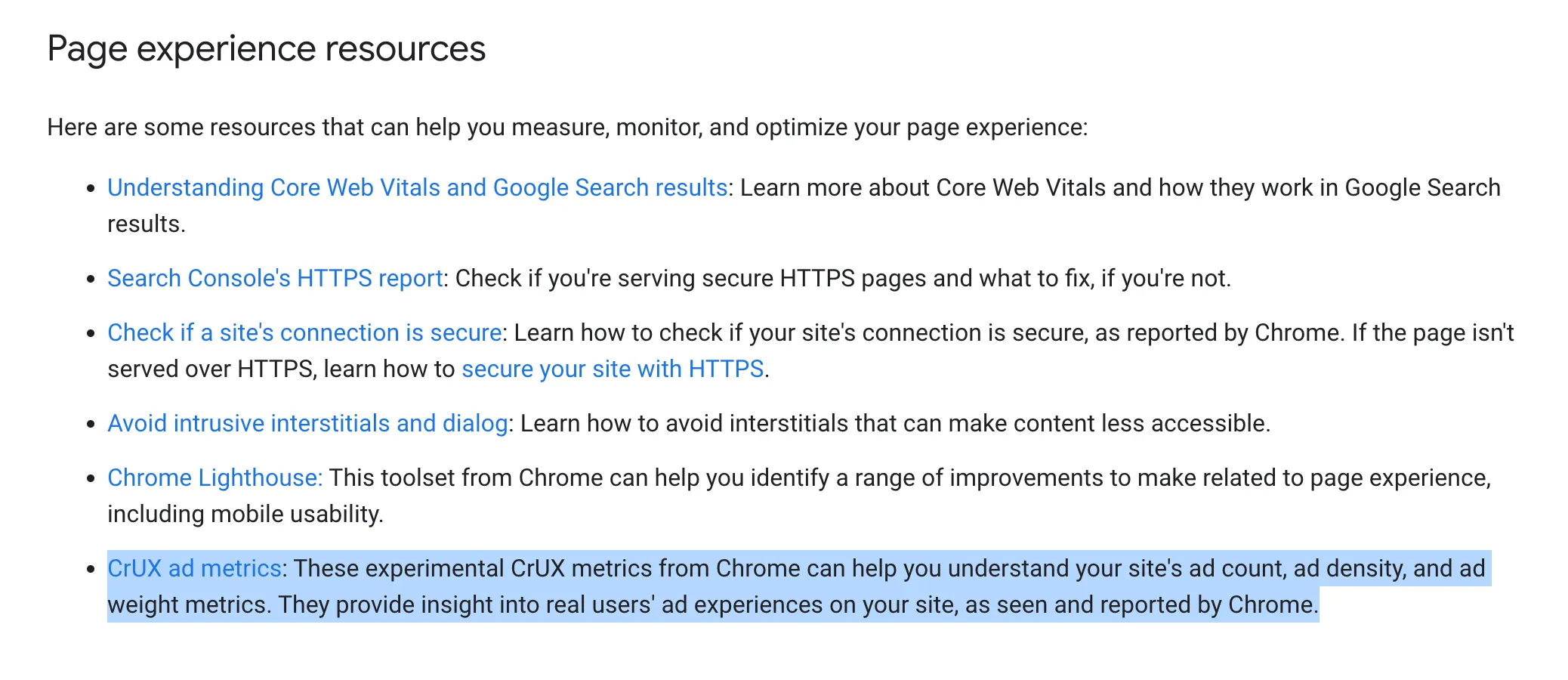
Google is also documenting more page-experience diagnostics through CrUX, including ad count, ad density, ad network weight and ad CPU usage. These are not direct ranking shortcuts; they are useful operational signals for understanding whether monetization or promotional clutter is degrading the user experience.
| Operator takeaway: Before testing a new expansion feature, write down the constraint it is supposed to solve. Then audit conversion definitions, transaction IDs, customer lists and final values from refunds or upsells. Separate real business lift from reporting lift: a higher platform ROAS is not enough if it comes from value adjustments, duplicate campaign logic or low-quality expansion traffic. |
COMMERCE & CHECKOUT
Shopify Merchants Need to Audit Where Checkout Actually Happens
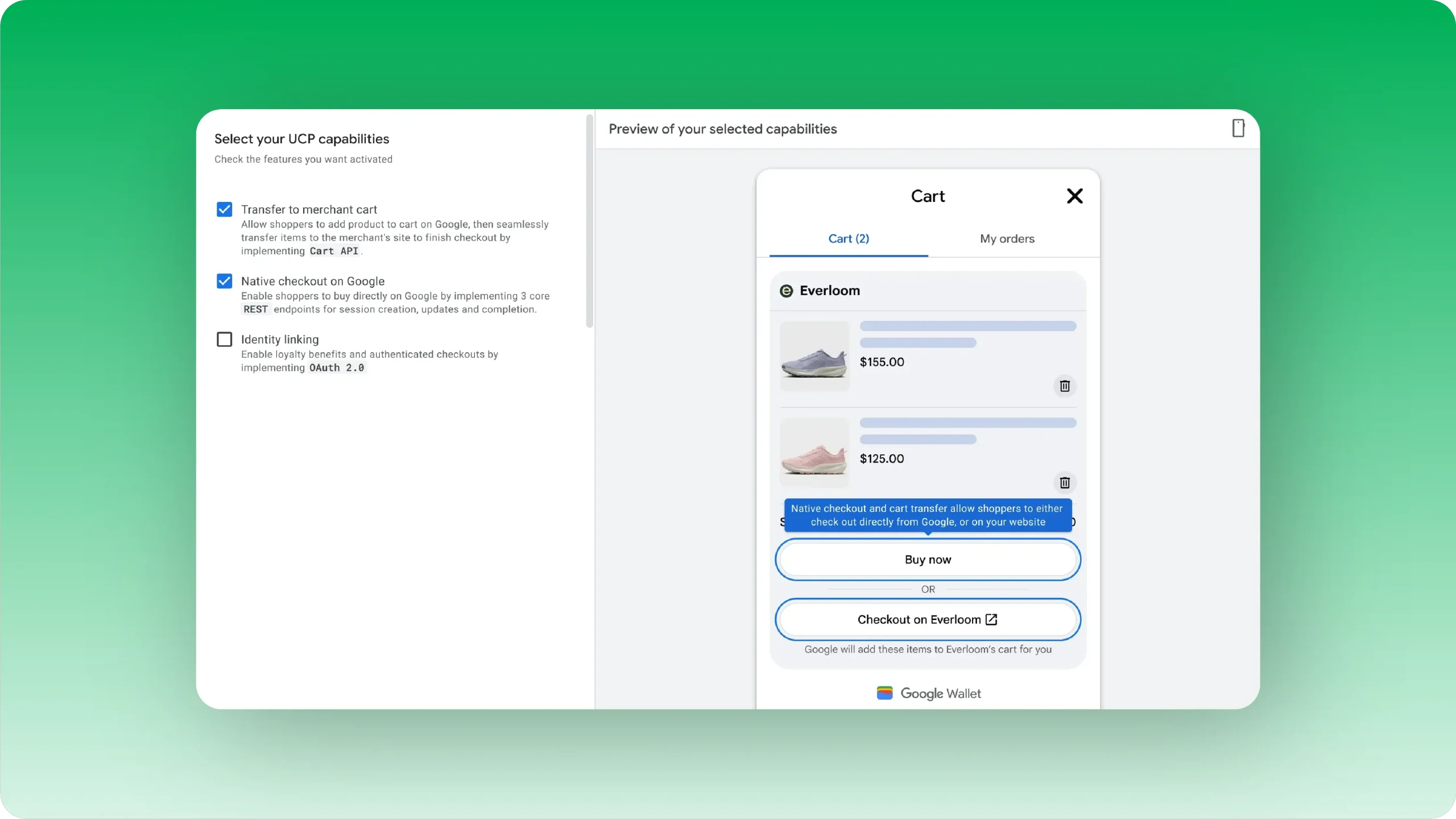
Eligible U.S.-based Shopify merchants can now have products purchased directly through Google AI Mode and the Gemini app using Google’s Universal Commerce Protocol. Search Engine Land reports that eligible products may be automatically included when the Shopify store is matched with Merchant Center, so merchants should not assume the feature is opt-in by default.
The operational detail matters more than the headline. Merchants retain the customer and order relationship, but the native checkout experience does not support every onsite feature. Search Engine Land notes that certain checkout blocks, product bundles, custom pixels and Google Analytics client-side tracking are not supported in the direct checkout flow. Shopify merchants can disable direct checkout under their Agentic sales-channel settings while still allowing products to be discovered and sending shoppers back to the site.
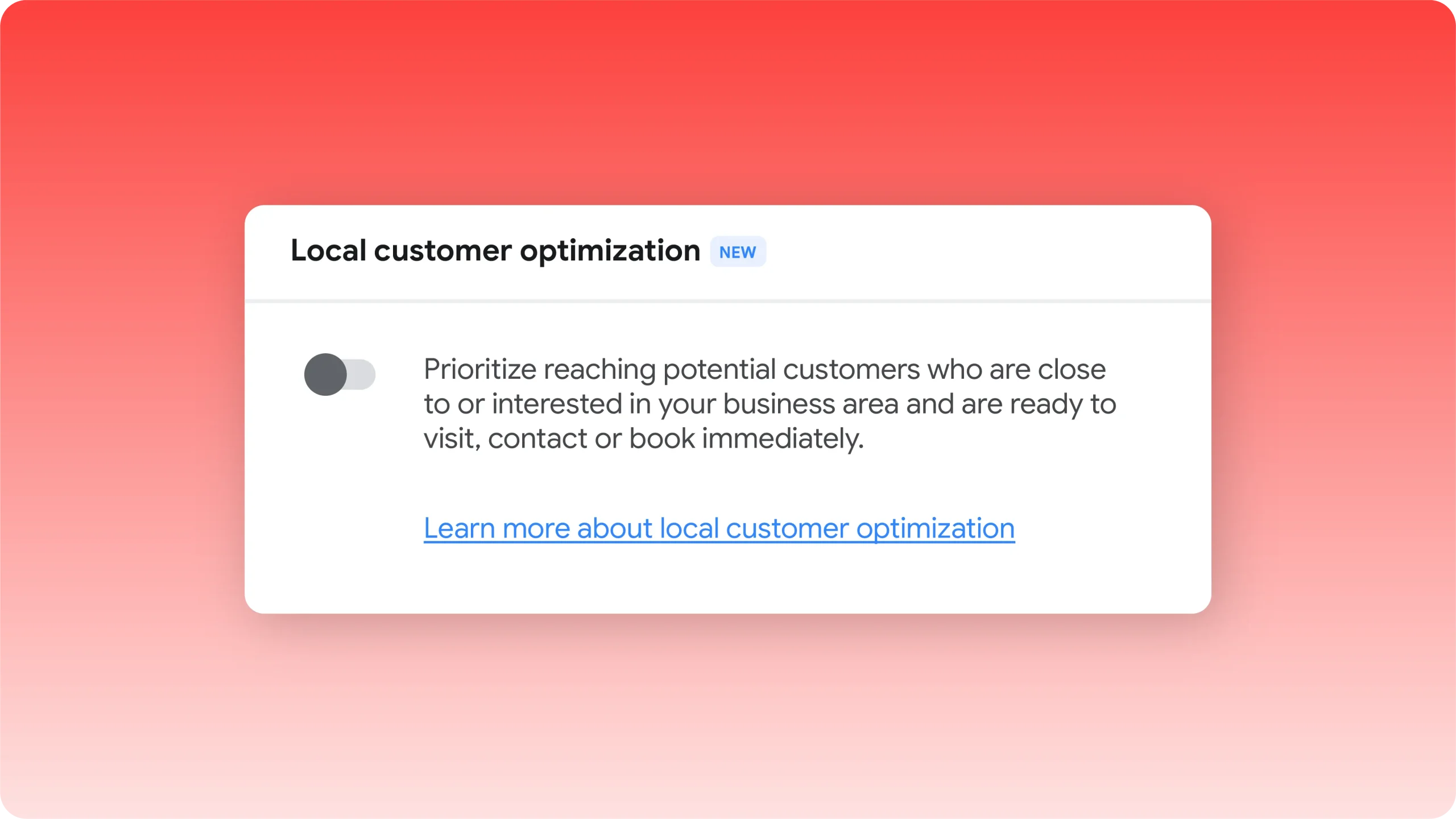
Google’s own Rethink Retail materials point in the same direction: product-feed completeness, first-party data, conversion measurement, Merchant Center setup and flexible budgets are increasingly treated as one commerce system. The page is a first-party Google marketing resource rather than independent research, but it is a useful checklist of where Google is pushing retail tooling, including Product Value Optimization, promotion controls, local customer optimization and affiliate-partnership amplification.
| Operator takeaway: Audit every place a customer can now buy from you. For each channel, document what product data is required, who owns checkout, what tracking is lost or changed, which payment and merchandising features still work, how returns are handled, and whether the channel preserves your customer economics. Discovery reach is useful only if the transaction layer remains measurable and operationally sound. |
RETAIL & OMNICHANNEL
The Best Commerce Experience May Be Different on Every Channel
A Business of Fashion event recap, produced as sponsored content in partnership with Amazon Fashion and Sports, argues that brands should stop treating omnichannel as a requirement for identical experiences everywhere. The piece cites data suggesting omnichannel shoppers can spend more and repeat more often, while the panel emphasized that each channel should provide a distinct reason to use it — discovery, convenience, entertainment, fit confidence or service.
The retail takeaway is broader than fashion. A marketplace can be the best discovery surface, a branded site can be the best place for education and bundles, social can be the best demonstration layer, and stores can be the best service and returns network. The challenge is keeping price, product facts, inventory promises and customer-service expectations consistent while allowing the experience itself to differ by channel.
| Operator takeaway: Map each major channel to a job, not just a revenue target. Decide where customers should discover, compare, validate, buy, return and repurchase. Then remove the unnecessary duplication. Channel consistency should mean accurate facts and reliable service — not forcing every storefront to look and behave the same. |
PLATFORM WATCH
Threads Opens Up for Advertisers While Meta Tests Consumer-Agent Demand
Meta is making Threads a more independent advertising surface. Starting in September 2026, businesses no longer need matching Instagram and Threads usernames to run Threads ads, and businesses without an Instagram profile can launch ads directly from a native Threads profile. The rollout is gradual, but it lowers the operational barrier for brands that want to test Threads without maintaining a matching Instagram identity.
Meta’s new consumer agent Muse is also attracting early attention, though it remains a secondary signal for ecommerce teams. Reuters reports 2.8 million downloads in the first 12 days according to Apptopia, while the Wall Street Journal notes the app reached No. 1 in Apple’s App Store within two weeks. Analysts cited by Reuters are projecting potential new revenue streams, but those are forecasts rather than established results, and Amazon has already challenged how Muse accesses its retail site.
The useful takeaway is not to rush budget into every new surface. New channels matter when they change distribution, transaction control or measurement. Threads is immediately testable as an ad surface; consumer agents are still something to monitor for product-data access, checkout rules and referral behavior.
| Operator takeaway: Separate testable channel changes from speculative platform narratives. Threads can be evaluated with normal media tests and incrementality logic now. Consumer agents should stay on a watchlist until they materially affect referral traffic, checkout behavior, catalog access or customer acquisition economics. |
THE SIGNAL
More Channels Make Owned Economics and Clean Measurement More Valuable
This edition has one consistent pattern: commerce is becoming more distributed. Discovery can begin with a creator, a marketplace, a B2B query, a Threads ad or a recommendation interface. Checkout can happen on the merchant site or inside another platform. Conversion records can be created by a tag and then corrected by backend data. Search visibility can influence demand without generating a clean referral path.
That fragmentation rewards merchants that understand their own economics. The advantage is not simply “being everywhere.” It is knowing which products deserve distribution, which audiences are incremental, what each channel is supposed to do, and how orders, refunds, customer identity and margin flow back into one operating view.
| Operator takeaway: Pick one cross-channel gap to close this week. Examples: reconcile platform revenue to finalized order values, audit Shopify agentic checkout settings, create a creator SKU shortlist based on margin and return rate, or build a B2B keyword map around model numbers, bulk terms and procurement questions. Small improvements to the operating layer will compound across every channel. |
The Beecommercer Team