

Last updated on October 29, 2026 at 10:14 AM
A customer can now discover a product in an AI conversation, encounter an ad generated from richer intent, and purchase through a marketplace or local booking flow without ever opening a brand homepage. That does not make websites obsolete. It changes which jobs a site, an ad, a product feed and a trusted content source must perform.
This issue separates launched features from limited tests, platform-reported performance from independent evidence, and strategic commentary from announced policy. For ecommerce teams entering the holiday quarter, the common task is to make product information trustworthy, creative distinctive and conversion data auditable.
THE BIG STORY | AI SEARCH & COMMERCE DISCOVERY
Google Takes AI Mode Ads Global — and the Customer Journey Becomes Less Visible
On October 28, Google said advertising in AI Mode is expanding to Australia, Canada, India, Kenya, Malaysia, New Zealand, Nigeria, Pakistan, the Philippines and Singapore. Brazil, Mexico and the United Kingdom are planned for later in Q4 2026. Google is also launching multiturn ads in the United States, allowing sponsored messages to appear in follow-up AI Mode queries. Ads will carry a “Sponsored” label; geographic and feature availability are not yet universal.
Google says AI Mode questions are on average three times longer than conventional searches, citing a US report from May 2026. Its Ads Decoded podcast describes how AI Overviews and AI Mode are changing query behavior. Google also reports similar click-through rates for sponsored and organic product-list items, based on internal US AI Mode data from August 20 to September 3, 2026. These are platform observations from specified periods and experiences, not evidence that every advertiser should expect the same CTR or incremental sales.
A MarTech opinion piece makes the commercial implication concrete: a shopper may ask an assistant to compare products and then buy from a marketplace, leaving the original brand with limited visibility into the decision. The author argues for clearer machine-readable specifications, verifiable product facts and measurement that follows outcomes beyond the owned website. This is a strategic argument rather than a newly announced Google ranking factor.
Image source: Google
PAID SOCIAL | META AD RANKING & CREATIVE SIGNALS
Meta Makes Creative Meaning More Useful to Its Models — and More Measurable to Advertisers
Meta has described a three-part upgrade to ad recommendations: Andromeda retrieves suitable ad candidates; the refreshed GEM model informs ranking across surfaces; and GenRecs uses large-language-model techniques to represent the meaning of text and images, helping new ads find relevant audiences before much interaction history exists. Meta told AdExchanger that ad-ranking improvements produced 8.3% more clicks and a 15.7% conversion lift on Facebook in Q2. These are Meta-reported system results, not a promised result for an individual account.
The new Andromeda implementation is also designed to evaluate far larger pools of ad candidates efficiently. Meta says the infrastructure change requires no new advertiser setting. That makes accurate product feeds, varied creative concepts and well-defined conversion signals more important practical levers than simply increasing the number of finely segmented audiences.
Separately, Ads Manager now offers a creative Breakdown view showing delivery and performance for individual media assets and text variations. Social Media Today notes exclusions, including ads displayed in certain multi-post formats and some custom conversion types. This is useful diagnostic visibility, but it does not prove the causal value of a headline or picture when delivery differs across audiences.
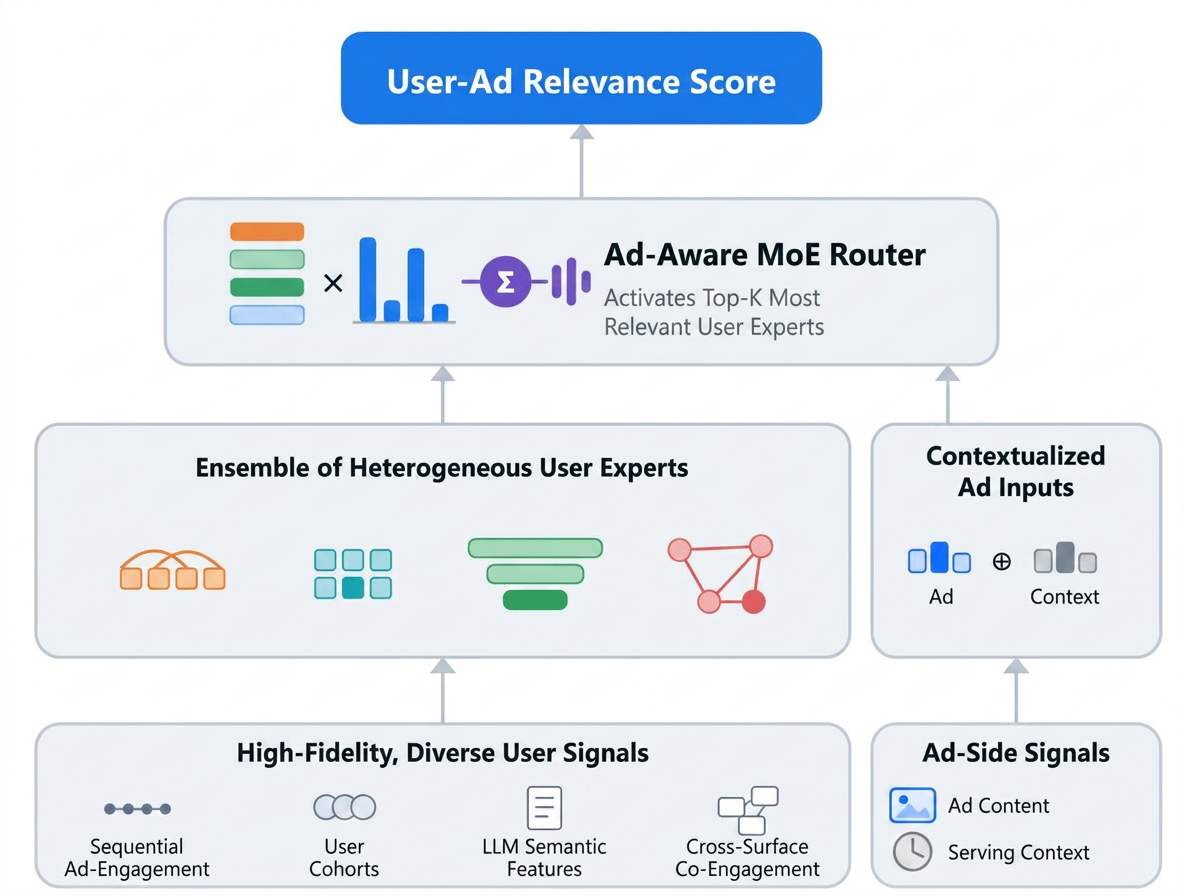
Image source: Engineering at Meta
TIKTOK | LOCAL DISCOVERY & ADVERTISER TRUST
From Restaurant Maps to Brand Safety, TikTok Is Building More of the Decision Path
TikTok has launched Must Eat, a restaurant discovery guide drawing on more than 40 million reviews, videos and comments, according to platform reporting. EMARKETER says users in New York City, Los Angeles and the San Francisco Bay Area can explore nearby restaurants on a map, save and review listings, filter results and book selected venues through OpenTable. The rollout is currently limited to those metros; it should not be described as a nationwide reservation service.
At its APAC Responsible Media Forum in Singapore, TikTok also introduced a Brand Safety Center, a Brand Protection Playbook and AI Safety Essentials. Its protection approach includes inventory and category controls, third-party verification, branded-content labels, AI-content disclosure and intellectual-property reporting. TikTok cited Ipsos research in 12 markets about sponsored-content authenticity and trust; those comparisons are supplied by the platform and are not the same as measured incremental advertising effectiveness.
Taken together, the news shows how discovery, local utility, commerce and reputation management are converging inside a social app. More native actions can shorten the path from inspiration to booking, but may also make external click metrics less representative of total customer activity.
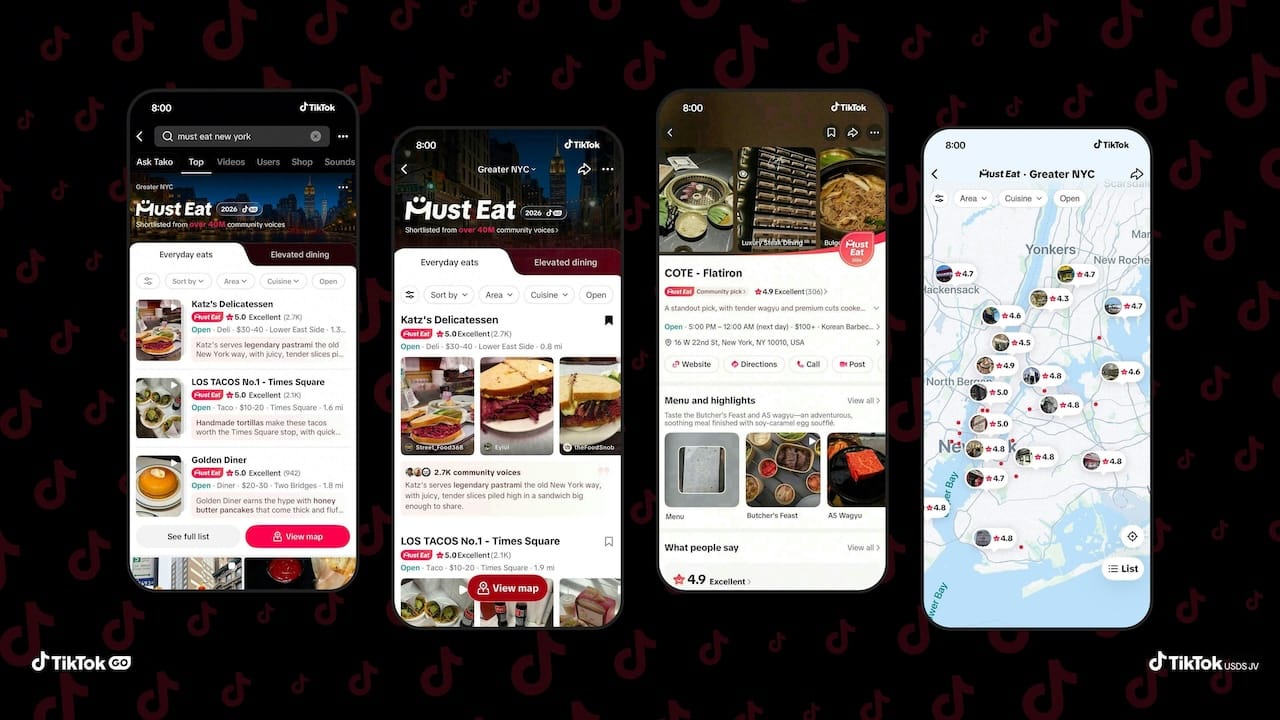
Image source: TikTok / via Nation’s Restaurant News
SEO & GEO | ORIGINALITY, LINKS AND PLATFORM HYGIENE
The Case for Human-First Content Gets Stronger; E-E-A-T Is Still Not a Score
Two Search Engine Land columns reach a similar practical conclusion by different routes. A human-first SEO piece favors firsthand experience, opinion, proof and real expert identity over mass-produced pages designed only for AI citations. Another argues that E-E-A-T — experience, expertise, authoritativeness and trustworthiness — is a quality-evaluation framework, not a single direct, calculable Google ranking score. The actionable goal is to earn genuine trust and useful signals, not to manufacture decorative “authority” badges.
Search Engine Journal reports that Google has broadened its user-generated spam documentation to cover tools that publish shareable pages, generated content and web apps. The revised guidance encourages operators to limit indexing of pages intended primarily for sharing, monitor creation and indexing spikes, and intervene against abusive accounts. This is published guidance and a warning about possible enforcement, not confirmation of a newly launched mass penalty.
Link experience matters too. An analysis of a Bitly-sponsored survey of 1,006 US consumers and 501 marketers and creators found that 79% of surveyed consumers had abandoned an action after a social link sent them to a generic homepage instead of the featured destination. The study is self-reported and vendor-funded, but it underscores a clear UX problem: destination relevance is often more consequential than whether a link is short.
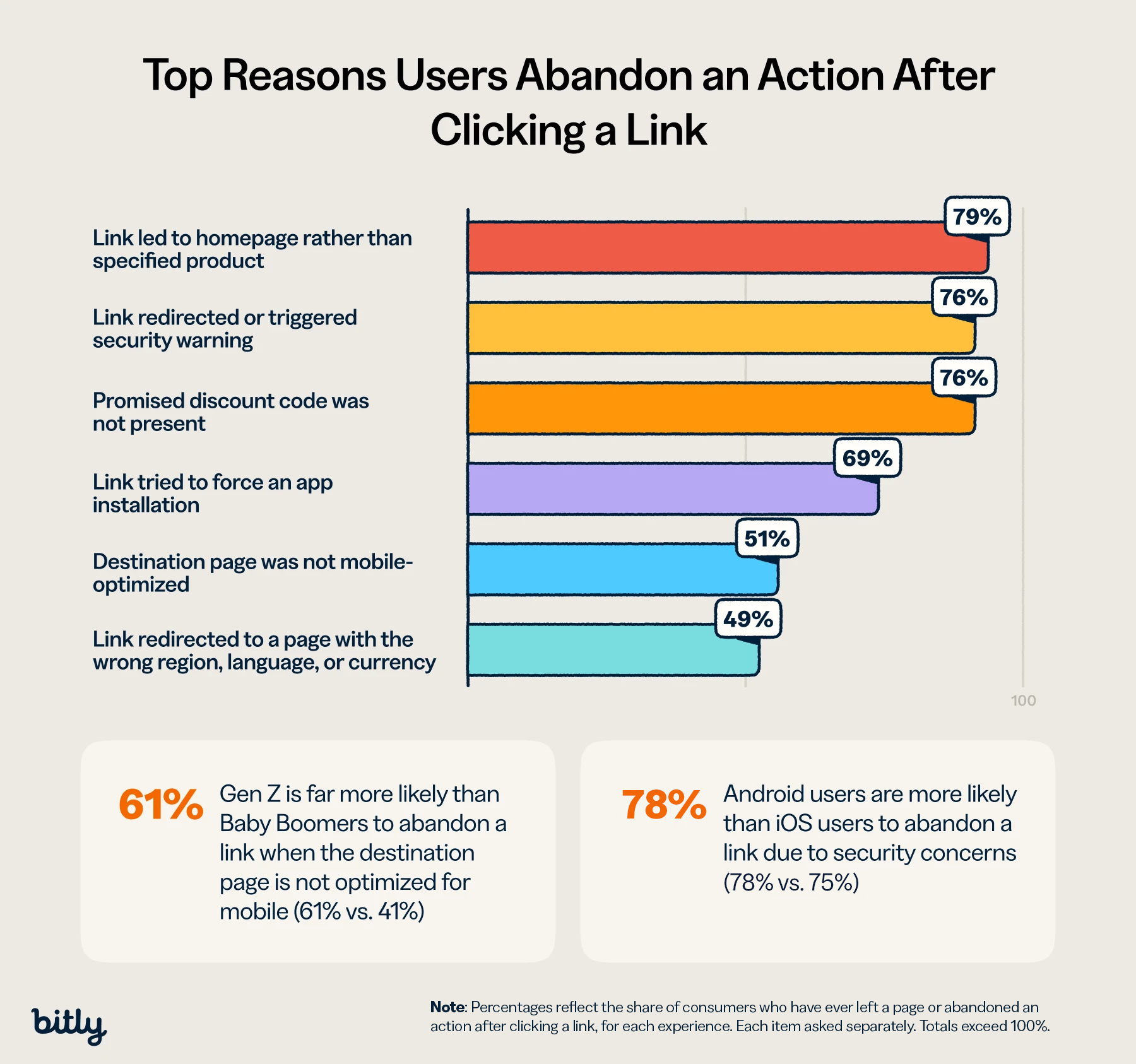
Image source: Bitly
CREATIVE OPERATIONS | AI VERSIONING & CREATOR EVIDENCE
Making More Ads Is Easy; Making Them Different and Effective Is the Hard Part
Ad Age has highlighted AI-assisted creative versioning involving tools such as Runway and Canva, although the supplied article itself was not fully accessible for independent verification. The tools’ published guidance does substantiate the workflow: Runway can generate variations from an existing ad image, while Canva recommends changing a controlled element such as a headline, visual or call to action and tracking the result. Those product capabilities should not be mistaken for measured campaign success.
The danger of faster production is a larger pile of nearly identical assets. A good variation changes the message a customer sees, not just the background color. Before producing 20 executions, a team should decide whether it is testing an audience tension, a product benefit, an offer, a proof point or a format, and whether the buying platform has enough budget to learn.
Search Engine Land’s updated compilation of 26 influencer statistics provides broader context: one cited YouGov survey from December 2023 found 31% of US adults were somewhat often or very often influenced by social media influencers in purchase decisions, rising to 52% among ages 18–29. The figures are drawn from different external studies and periods; they are directional research, not a universal benchmark for creator ROI.

Image source: Runway
BRAND GROWTH | OWNED CHANNELS AND PHYSICAL PROOF
Lush and The Good Liver Show Different Ways to Grow Without Relying on Paid Social
Digiday reports that Lush has stayed away from paid advertising on major social networks since its 2021 withdrawal, redirecting effort to creators, events, collaborations and directly controlled channels. Lush says its app has 2.8 million users and its global email program reaches more than 6 million people. Its reported revenue for fiscal 2025, ending June 30, 2025, rose to £736.2 million from £672.7 million in fiscal 2024. That is evidence of company growth alongside a different channel mix, not proof that withdrawing paid social caused the growth.
Shopify’s profile of Los Angeles home-goods retailer The Good Liver illustrates an even more product-specific approach. Founder Bert Youn says an online presentation struggled to communicate craftsmanship and price, while a physical store let customers handle premium objects. Shopify reports that the business became profitable without spending on SEO or ads, with ecommerce supporting product storytelling and out-of-town purchases. It is a single-company case study, not an argument that paid acquisition has no place in retail.
Both cases point toward a useful distinction: paid platforms can rent reach, but the brand still needs an experience worth returning to. That experience can come from owned CRM, tactile retail, distinctive product stories and genuine communities as well as media.

Image source: The Good Liver / via Shopify
GOOGLE ADS OPERATIONS | TRACKING & MARKET SIGNALS
A Cleaner Conversions View and an Apple Messages Test Arrive as Alphabet Reports Q3
Search Engine Roundtable reports that an “All conversions” submenu is appearing within Google Ads Goals and Conversions, making conversion-action settings easier to inspect in participating accounts. In a separate observed search-results test, an Apple Messages button appeared on a sponsored listing and opened a prefilled message. The latter remains an appearance spotted by an observer, not a confirmed general rollout or a standard asset available to every advertiser.
Alphabet’s third-quarter 2026 release puts the scale of the ad business in perspective: Google advertising revenue was $82.012 billion, up approximately 10.6% year over year; Google Search & other contributed $63.350 billion, up roughly 12.0%. Total Alphabet revenue was $127.577 billion, up 25%. Crucially, $82 billion represents all Google advertising, not Search alone — a distinction blurred in one industry summary.
These figures show continued advertising scale while AI search products evolve, but they do not establish whether a particular AI Mode ad unit drives incremental advertiser profit. A new account navigation control and an experimental messaging button are useful operational observations, not reasons by themselves to change bidding strategy.
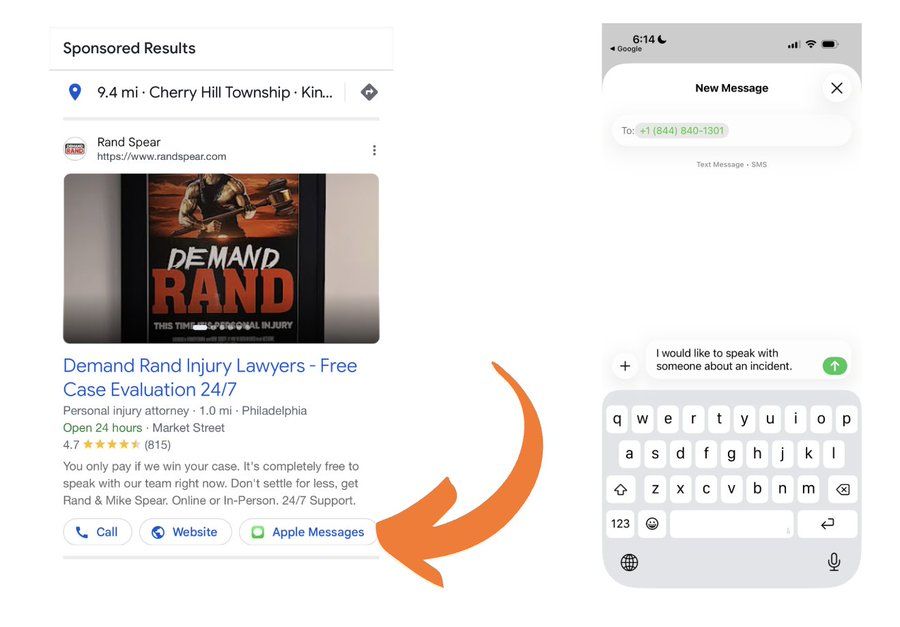
Image source: Anthony Higman / via Search Engine Roundtable
CROSS-BORDER OPERATIONS | MEXICO SHIPPING
Shein’s Permit Warning Turns Courier Compliance Into a Customer-Experience Risk
Bloomberg reporting on October 28 says Shein warned that delayed Mexican courier permit renewals could disrupt ecommerce shipments. The T1 mechanism facilitates simplified imports for qualifying shipments valued up to $2,500 per recipient; 11 logistics operators were reportedly exposed to expiring or lost authorizations. The story also describes previously disrupted orders and refunds, but it does not establish that all Shein deliveries or all cross-border parcels in Mexico have stopped.
The underlying lesson extends beyond one retailer: even a healthy acquisition campaign can become unprofitable when customs processing, carrier authorization or returns capacity changes unexpectedly. The original Bloomberg link is restricted; the reporting was cross-checked against a Bloomberg Línea publication of the same account.

Image source: Tamara Merino / Bloomberg, via Bloomberg Línea
THE OPERATOR’S CLOSE
Optimize for the Decision, Not Merely the Click
The practical priority is to close three gaps: between a question and a trustworthy answer, between a creative asset and the right customer need, and between a recorded conversion and real economic value. AI Mode and TikTok can compress the buying journey; Meta can interpret creative more deeply; and physical or owned channels can build loyalty the ad platform does not own. None of these changes removes the need for accurate data, distinctive proof and disciplined measurement. It makes them more important.
The Beecommercer Team