
Last updated on November 27, 2026 at 10:05 AM
A creator demonstrates a product on TikTok. The video finds an audience, generates orders and proves that a particular selling angle resonates. The brand then licenses the creative, distributes it through another ad network and sends shoppers to its own store. Three different businesses can earn money along that journey. The company that understands which part creates value has a better chance of controlling the economics.
That is the strategic story behind this week’s reports. It is not a verdict that TikTok Shop is losing to Meta. It is a reminder that social commerce is becoming an interconnected system of content, distribution and transactions, even as its platforms compete fiercely to control each step.
THE BIG STORY | CREATOR COMMERCE & CHANNEL ECONOMICS
The creative asset is moving across platform boundaries
Business Insider reported on November 25 that brands were repurposing TikTok Shop creator videos for Meta ads directing buyers to Amazon or their own stores. Cruva, a commerce technology provider, reported 84,400 orders via Meta ads for its TikTok Shop clients between October 25 and November 23, at an average ROAS of 4.3. Neither the client count nor a comparable control group was disclosed in the report. This is evidence of a workflow, not an industry-wide return.
Demand on TikTok itself remains substantial. In its original market analysis, FastMoss estimated 93.5 million units sold on U.S. TikTok Shop during November 2–22, up 37.6% against the three weeks of October 5–25. Beauty and personal care led the ten tracked categories. This is a comparison of two completed three-week windows, not year-on-year growth, audited platform sales or Black Friday results.
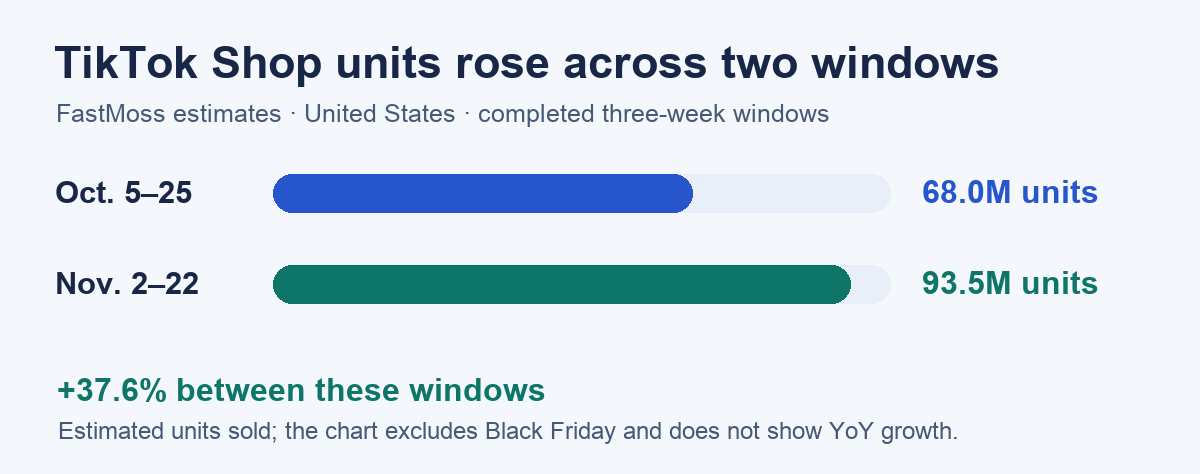
Image source: Beecommercer / FastMoss
Separate the three jobs before you allocate budget
| Commercial role | Primary job | Measure first |
|---|---|---|
| TikTok Shop / creators | Discover and validate | Creative hit rate; net Shop contribution |
| Meta or other paid media | Distribute proven assets | Incremental orders; marginal acquisition cost |
| Marketplace / brand store | Convert and fulfill | Net contribution; returns; repeat purchases |
Roles are not exclusive. Each platform can perform several jobs; the table describes the cross-channel workflow, not guaranteed platform performance.
A brand can use TikTok as an idea-testing environment without automatically assuming that every order belongs on TikTok. The winning asset is a product demonstration, objection-handling angle or credible endorsement that can survive a change in placement, audience and checkout experience.
Checkout choice is a customer-relationship decision as well as a conversion decision. A marketplace may win the first order through existing trust, payment convenience and delivery promises. A direct store may make it easier to learn which customers return and, with their consent, reach them again through email or loyalty. Compare the lifetime contribution of each route without assuming that marketplace shoppers can be exported to a brand’s CRM or contacted outside the marketplace’s rules.
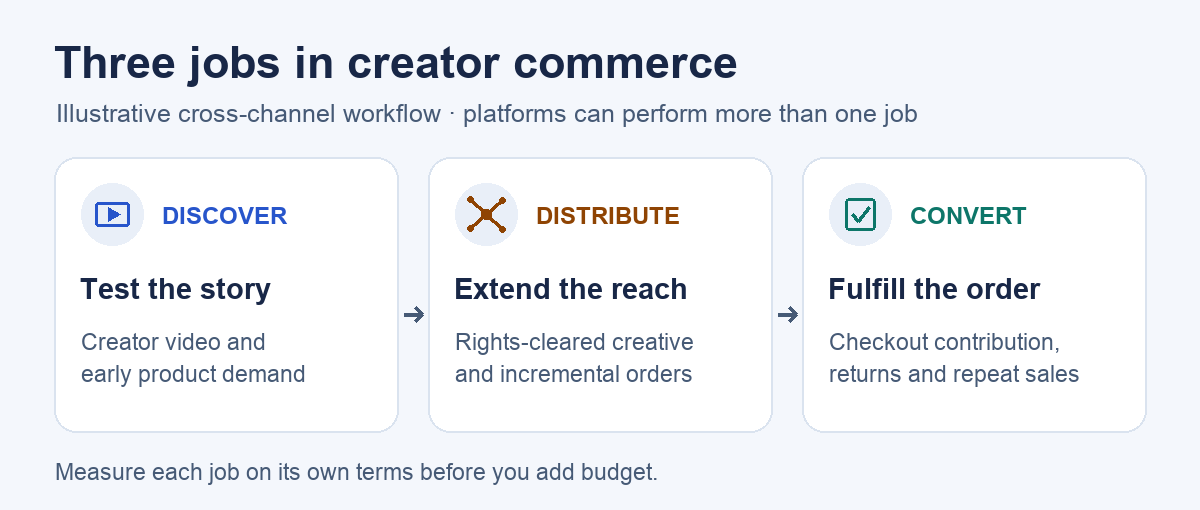
Image source: Beecommercer
Why the platforms have different incentives
TikTok benefits when discovery converts into a Shop order: it can connect content, product and transaction signals while reinforcing its seller and creator ecosystem. Its official Shop Ads documentation supports authorized affiliate posts as paid creatives, and qualifying sales may earn additional creator commissions. Its external affiliate-link program can also bring shoppers into TikTok Shop from other channels.
Meta, by contrast, can monetize distribution without processing the order itself. Reuters reported in October that Meta restricted ByteDance ads and third-party campaigns linking to ByteDance properties in seven markets, including the U.S. That makes the distinction important: a licensed creator video sent to a compliant brand store is different from an ad linking to TikTok Shop. Do not try to bypass destination restrictions.
The next frontier is the transaction fee. On Meta’s October 21 earnings call, management described a plan to charge businesses for transactions facilitated by Muse, its personal AI agent. Meta has since announced Muse in the UK with retail partners including M&S and ASOS. This resembles outcome-based affiliate economics, but it is not evidence of an established commission rate or a universal affiliate program. Fortune reports discussions between Amazon and Meta over access for Muse; no finalized agreement is established by the report.

Image source: Meta
A creator video is a business asset only if the rights travel with it
TikTok’s authorization specifically covers Shop Ads and does not transfer ownership. Meta Partnership Ads likewise requires appropriate creator permissions. Before reusing a video, obtain written rights covering the destination platforms, paid placements, edits, duration, territories, likeness, music and disclosures; agree on creator compensation for off-platform use. A video that works on TikTok may require a clean audio track, a different call to action and a landing page that matches the claim.
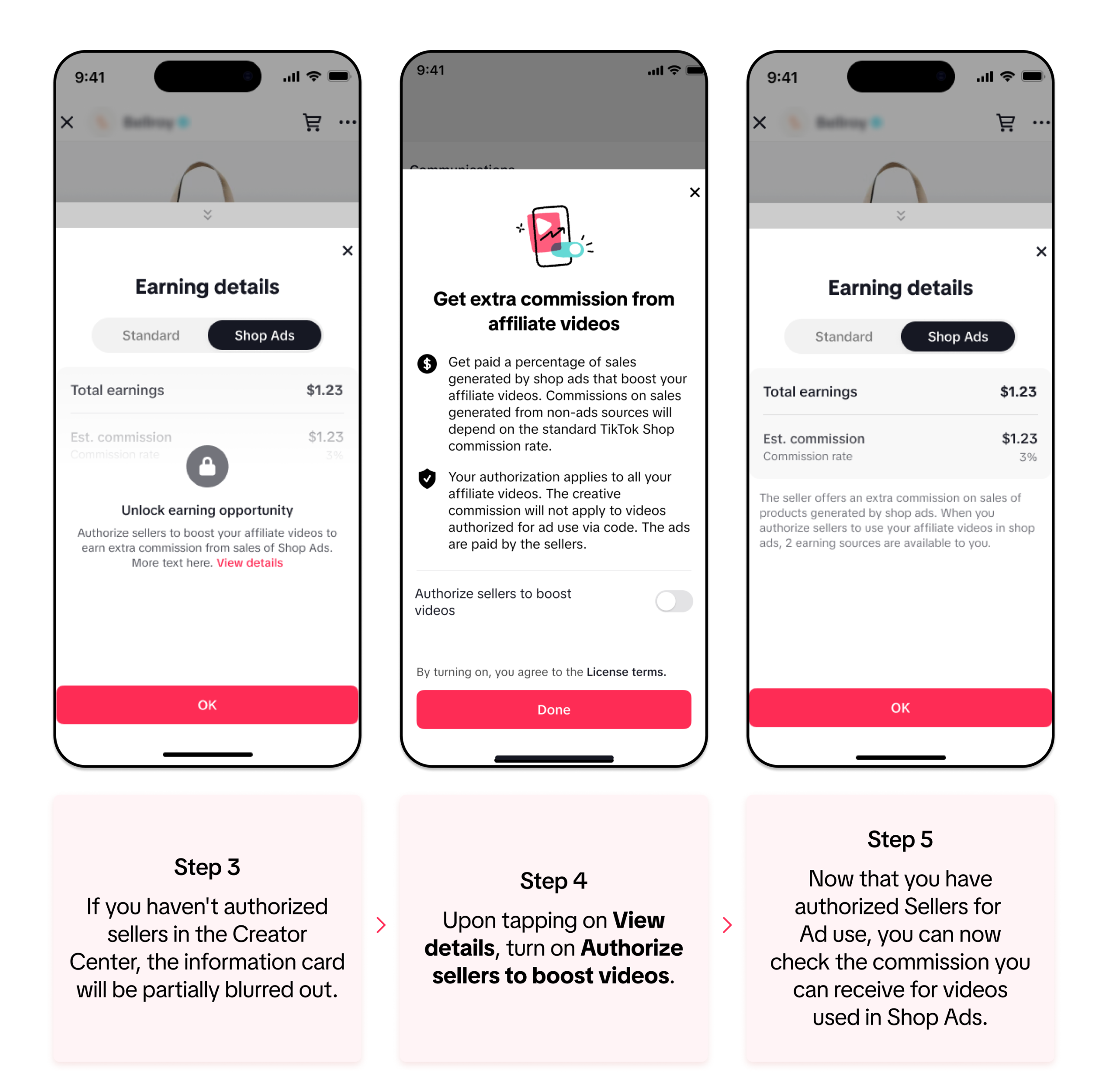
Image source: TikTok Shop Academy
The math that a 4.3 ROAS cannot answer
Illustrative example: a brand spends $1,000 on creator licensing and $2,000 on Meta media, and records $8,600 in attributed net sales. Media-only ROAS is 4.3x; after licensing, the revenue-to-acquisition-spend ratio is 2.87x. If contribution before both acquisition costs is 40% of net sales, the apparent residual contribution is $440 ($3,440 less $3,000). If only 70% of that revenue is incremental and incremental orders have the same margin, the acquisition investment produces a $592 loss. These are hypothetical inputs, not Cruva’s results.
Build a SKU-level cost ledger: net revenue less product cost, fulfillment, payment or marketplace fees, expected returns, creator commissions and media. Reconcile order IDs where available, rather than adding platform-attributed orders together. Use a matched-region or randomized holdout to assess total net sales across the channels that can be observed; where marketplace customer data is limited, use aggregate results and disclose the gap.
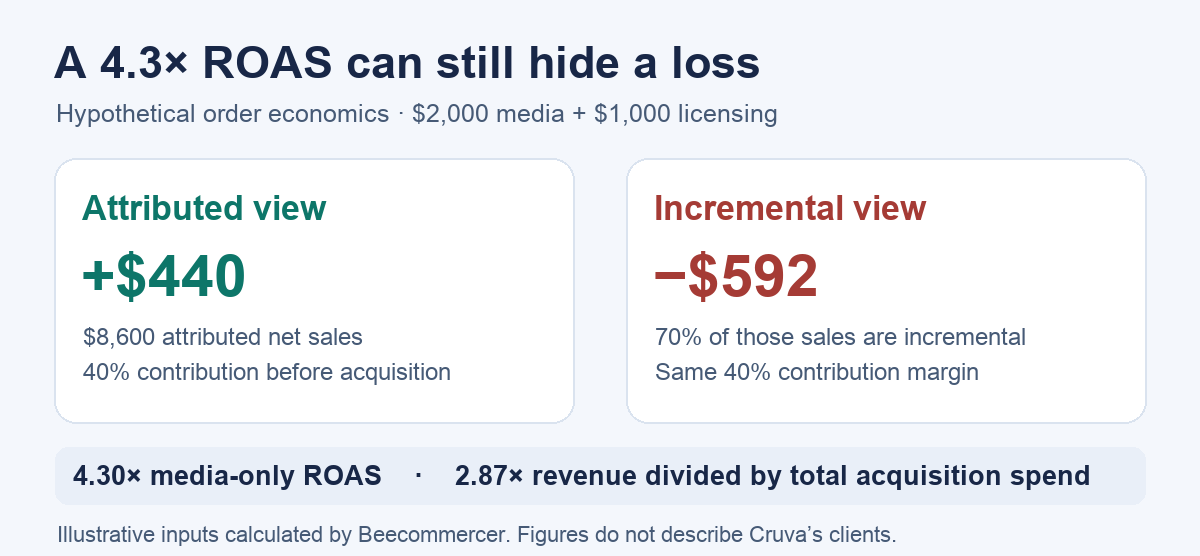
Image source: Beecommercer
The 30-day test: turn a holiday win into a repeatable system
Days 1–7: Inventory your licensed assets, tag each creative and align landing-page offers. Days 8–21: Compare a rights-cleared creator asset with a brand-produced control on the same destination, then test destinations separately if volume permits. Keep offer, audience and spend comparable; protect a holdout where feasible. Days 22–30: Reconcile net sales, refunds and creator costs. Review new-customer contribution and early repeat purchases; continue measurement past the holiday and return window before making a permanent budget shift.
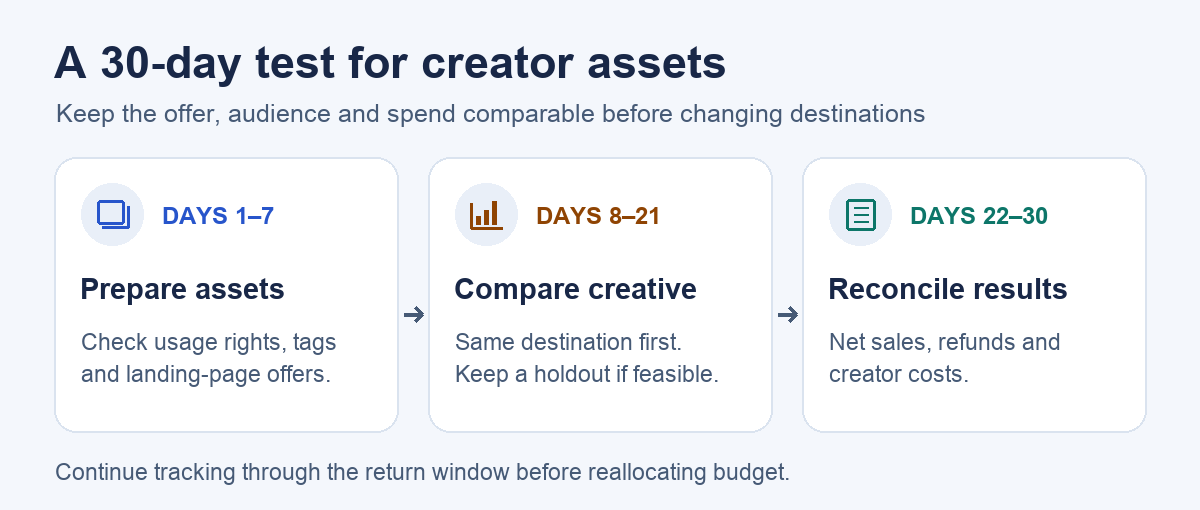
Image source: Beecommercer
TREND WATCH | WHAT ELSE MOVED
Livestream affiliates face opposite incentive changes
Whatnot confirms that its sales-based affiliate program closes November 30; pending commissions are scheduled for final payout January 20, 2027. Value Added Resource reports an eBay Live promotion of up to 10% commission on eligible sales from November 15 to December 12, based on a partner email. Publishers should check eligibility and replace expiring links; a temporary rate is not a durable unit-economics assumption.

Image source: eBay Press Room
SHEIN’s trade-policy shock makes local inventory a marketing decision
SHEIN’s November 25 HKEX filing shows Q3 European net revenue falling from $4.11B to $2.98B (−27.6%), while group net revenue fell 5.9%. Management links the pressure to higher prices after EU customs changes; local fulfillment now covers more than 40% of European deliveries. The EU’s transitional €3 customs duty has applied since July 1 per category of goods in small parcels valued below €150. The separate €2 per-item handling fee took effect November 1. Recalculate landed costs, delivery promises and contribution by market before scaling ads.
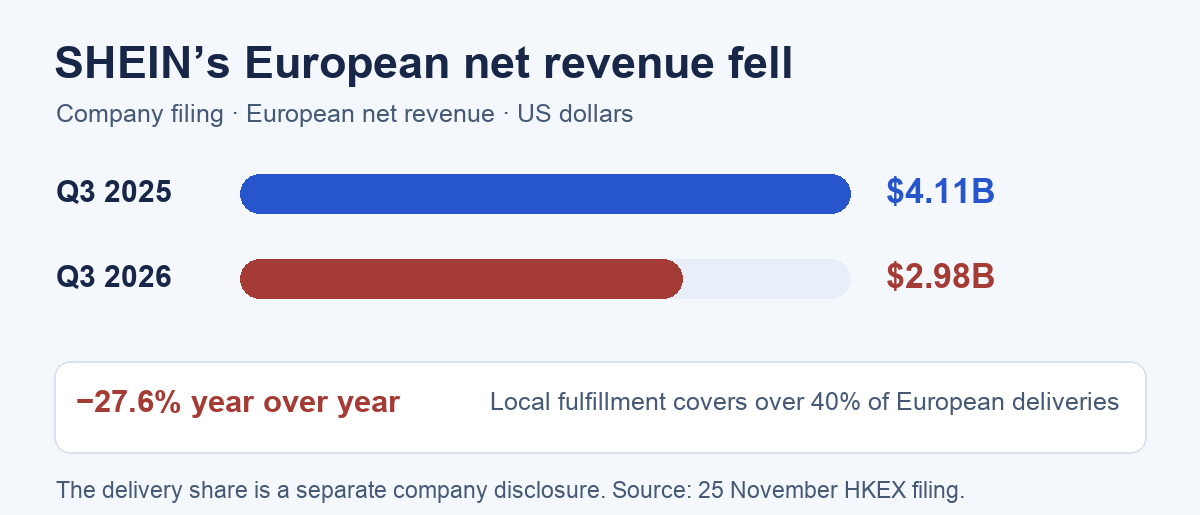
Image source: Beecommercer / SHEIN HKEX filing
Google Shopping adds a new demand signal; booking guidance expands
Google’s purchase signal badges show rounded recent Google-attributed purchase volumes on qualifying Shopping ads using item-level cart data. They are not total sales and are unavailable in the EEA, UK and Switzerland. Separately, revised Book Appointment guidance covers partner bookings, website bookings and qualifying calls; healthcare campaigns are excluded. Make conversion data accurate before asking bidding to optimize it.
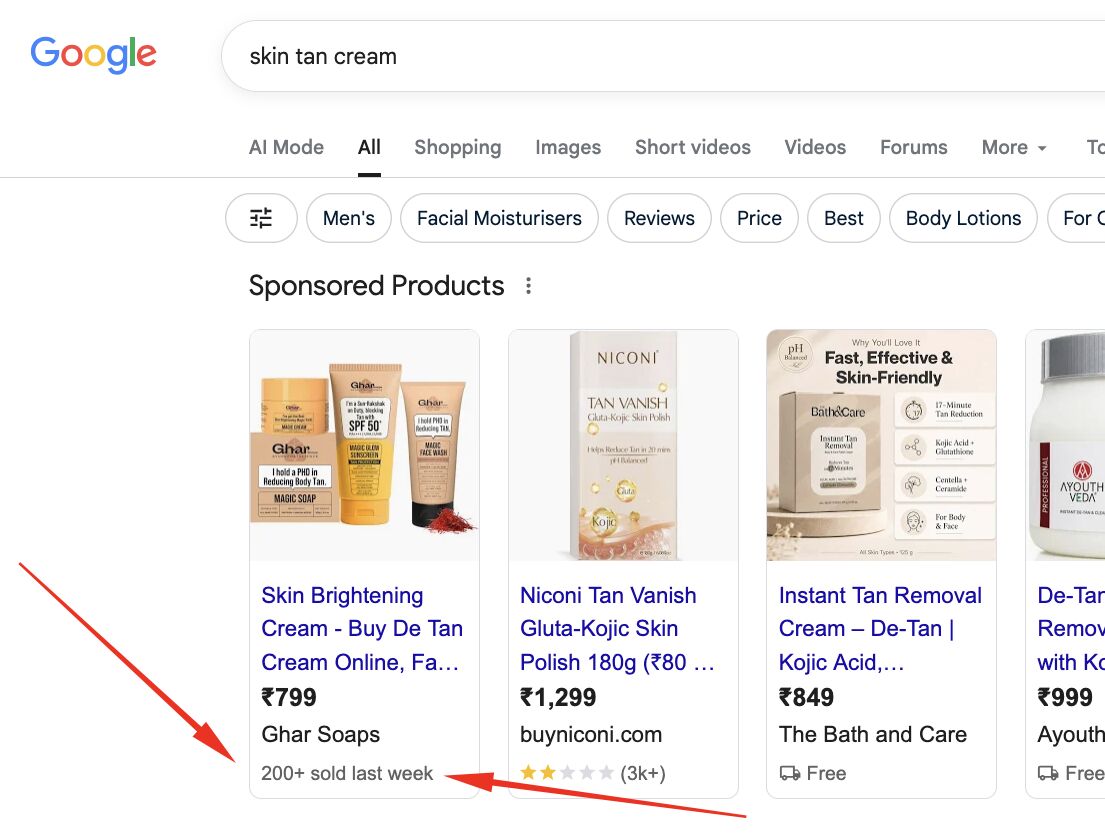
Image source: Arpan Banerjee / Search Engine Roundtable
AI search advertising still needs a fair comparison
MarTech’s author reports early B2B ChatGPT ad tests with similar CPCs to Google but weaker engagement and limited conversions. A separate Search Engine Land analysis uses referral traffic and query-length proxies to infer AI search value; these do not isolate AI ad placements. Keep tests capped, compare qualified outcomes with consistent attribution windows and avoid extrapolating B2B findings to consumer retail.
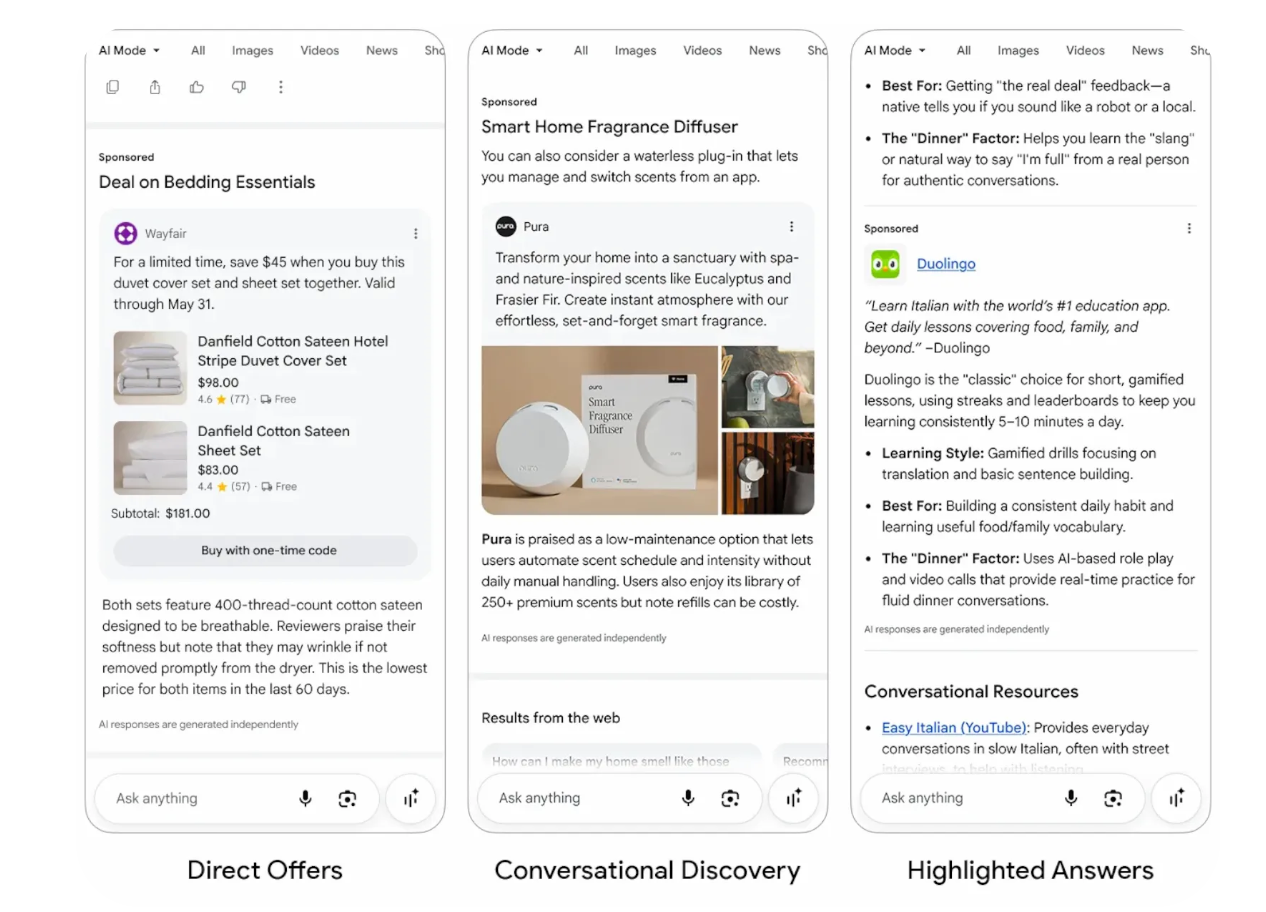
Image source: Search Engine Land
AI workflows are connecting content tools, not replacing review
Metricool’s own guide shows how a connected Claude account can schedule TikTok videos through its MCP integration. A practitioner’s SEO workflow guide similarly combines research, prioritization and human quality checks. Start with repeatable, low-risk tasks; require approval for publication, pricing or changes to live campaigns.

Image source: Metricool
THE OPERATOR’S CLOSE
Own the asset, not just the placement
Use Black Friday to learn which product stories travel across channels. Keep control of permissions, customer experience and contribution. One channel can create demand while another converts it; neither deserves credit twice.
The Beecommercer Team