

This guide explains affiliate marketing from both the publisher’s and the brand’s perspective. It covers choosing a niche, applying to programs, reading contracts, producing content, generating links, measuring clicks, acquiring traffic, improving returns and collecting payments. Ecommerce products and software subscriptions each have a worked financial example.
Build an operating process you can verify: offer evidence-based recommendations to the right audience, use approved promotion and tracking methods, and judge further investment using net commissions and actual costs from mature cohorts.
The guide includes 16 chapters, 14 genuine interface screenshots, three financial calculations, a 90-day implementation plan, and templates for program records, content briefs, link inventories and partner communications. Some screenshots show historical interfaces and help identify the relevant controls. All example figures are teaching assumptions, not earnings forecasts.
Beginners can read the chapters in order. Publishers with existing programs can start with Chapters 6–12. Brand operators may find Chapters 4 and 13–15 particularly relevant.
Understand the affiliate revenue chain
Affiliate marketing is a partnership in which a brand pays a promotional partner for agreed results. Brands supply products or services; publishers help people make buying decisions through content, communities, email, video, tools or other approved channels. A platform or the brand’s own system records eligible activity and reviews commissions under the contract. Publishers build value through useful decision support, audiences and distribution. Brands need valuable customers at a sustainable cost.
Several conditions must hold in sequence: the audience needs a solution; your content helps them decide; the referral link or lead registration is recognized; the subsequent action meets program terms; and the commission is approved and paid. A failure at any stage can leave you with traffic, or even sales, without collectible revenue.
Distinguish the roles in the partnership
Advertiser and Merchant refer to the brand or seller. Publisher, Affiliate and Partner usually describe the referring party. One business can perform both roles: an online store can recruit creators to recommend its products while recommending third-party services in its own help content. Keep separate accounts and manage commercial disclosures for each activity.
Affiliate networks generally provide program discovery, links, reporting and payment services. Brands can also run independent programs using dedicated software. Approval for a platform account, acceptance into a brand’s program and permission to use a particular channel are separate conditions. A platform feature does not grant permission to use it with every brand.
| Commission model | Example qualifying event | What the publisher must establish |
|---|---|---|
| Cost per sale or revenue share, CPS | Eligible order value multiplied by the agreed rate | The commission base and treatment of tax, delivery, discounts and refunds |
| Cost per action, CPA | A specified purchase, activation or other action | The action definition and any new-customer or subsequent-payment requirement |
| Cost per lead, CPL | A lead judged valid or qualified | Whether valid contact details suffice and how duplicates and existing customers are handled |
| Recurring commission | Eligible subsequent subscription payments | Duration and the effects of upgrades, downgrades, cancellations and refunds |
| Fixed fee plus performance payment | Content-production fee plus sale or lead rewards | Separate deliverables, performance obligations and ownership of usage rights |
These models explain contract structures; they are not available on every platform. CPA can describe performance payment broadly or a particular conversion defined by a platform. Follow the contract’s definition.
Ecommerce and B2B require different work
Physical-product decisions often involve compatibility, quality, price, delivery and returns. Software and B2B services also involve team workflows, integrations, implementation time, permissions, contracts and budget approval. Both can use affiliates, but the content required and the time needed to recognize revenue can differ substantially.
| Dimension | Ecommerce products | B2B software and services |
|---|---|---|
| Useful content | Testing, buying guidance, compatibility and comparisons | Workflow demonstrations, migration, integration and team selection |
| Actions to distinguish | Click, order, payment, refund and commission approval | Click, lead, trial, activation, opportunity, payment and renewal |
| Important costs | Returns, samples, content maintenance and acquisition | Test accounts, demonstrations, sales coordination, implementation and acquisition |
| Revenue assessment | Net commission from mature order cohorts | Actual payment and renewal commissions for the same acquisition cohort |
What publishers and brands should measure
Publishers first need to know how much net commission each traffic cohort ultimately earns and what that traffic costs. Brands must also ask whether orders are incremental, whether margins suffice and whether other channels receive overlapping rewards. Attribution to a partner means an order satisfied an attribution rule. It does not, by itself, prove the order would not have happened without that partner.
Begin with a focused project: one clear audience, one specific buying problem, a few complementary merchants and one primary acquisition channel. Aim to verify the complete journey from content to payment before opening dozens of platform accounts.
Choose an audience and a sustainable niche
Start by identifying the people and buying problems you can help consistently. Electronics is broad. Choosing portable monitors for small teams that frequently give remote presentations defines a clearer use case. Business software is broad; choosing a help desk for a five-person ecommerce team makes the content more concrete.
A high commission rate is only one commercial condition. A program can still lack value if the audience does not need the product, the product is difficult to use, refunds are common or your promotion cannot be approved. Establish demand first, then check product fit, your content capabilities and contract terms.
Validate the opportunity with five questions
First, do people genuinely need to make a choice? Gather recurring questions about budgets, compatibility, implementation requirements, limitations and alternatives. Public search results, product documentation, presales questions and community discussions can help. One or two comments cannot establish a market-wide conclusion.
Second, can you explain something existing material leaves unclear? You might test products under comparable conditions, calculate costs, demonstrate workflows, explain regional differences or turn scattered requirements into a usable decision process. Rewriting product descriptions alone rarely creates lasting value.
Third, can the merchant serve your target market? A shared language does not establish the same country, shipping coverage, currency, software data region or affiliate eligibility. Sending US readers to a store that cannot ship to them is unlikely to produce commissionable purchases, even with healthy click rates.
Fourth, can you afford verification? Physical testing needs samples, time and suitable conditions. B2B software may require paid accounts, synthetic data and an integration environment. Include these costs in the initial budget rather than counting only domain registration and hosting.
Fifth, are there suitable alternatives? If a brand removes commissions, discontinues products or changes terms, can you still serve the audience? A few credible alternatives reduce dependence. You do not need every possible program at the start.
Use a score to support selection
The following is a suggested internal scoring method, not an industry standard. Score each criterion from 1 to 5, multiply by its weight and sum the results. Resolve explicit promotion bans, payment ineligibility or poor product fit first. A high total must not conceal a failed eligibility condition.
| Criterion | Weight | Evidence to gather |
|---|---|---|
| Audience and demand fit | 25% | Specific use cases, genuine questions and reasons to buy |
| Content differentiation and verification ability | 25% | Feasible tests, demonstrations and informed assessment |
| Unit economics | 20% | Net commissions, approval rates, traffic and production costs |
| Merchant and program reliability | 20% | Clear terms, product availability, payment and support records |
| Maintenance burden and alternatives | 10% | Update frequency, substitute merchants and continuing content demand |
Record established facts, unanswered questions and your judgment separately. A high platform EPC is a reason to investigate, not an income guarantee: its audience, channels, period and commission status may differ from yours. Do not use it as assured revenue in a budget without your own evidence.
Build a connected content collection
A portable-monitor collection might include a buying guide, a two-product comparison, a connection and compatibility tutorial, a detailed review and troubleshooting guidance. Readers enter through different articles at different stages. Internal links should help them resolve the next question.
A help-desk software collection might include a requirements checklist, a comparison, an email-to-ticket migration tutorial, a pricing breakdown and team-permission setup. A vendor’s home page describes what its product offers. Your content should also explain how readers determine whether it suits their needs.
Select platforms and apply to programs
Identify the brands you want to work with first. Then determine which network, country program or partner system accepts their applications. A brand can use different platforms in different markets, with different commissions and terms.
Where common platforms fit into the search
| Platform or approach | A starting use case | Check before applying |
|---|---|---|
| Amazon Associates | Content recommending products sold on Amazon | Country site, content eligibility, qualifying-sales review and category rules |
| Awin | Brand products, retail and service partnerships | Advertiser market, program acceptance, permitted channels and link rules |
| impact.com | Contractual partnerships with individual brands | Contract, media properties, deep linking and commission eligibility |
| CJ | Finding brand programs in its network | Website requirements, advertiser approval and program terms |
| Rakuten Advertising | Brand partnerships for a website or online audience | Channel information, review, tax and address requirements |
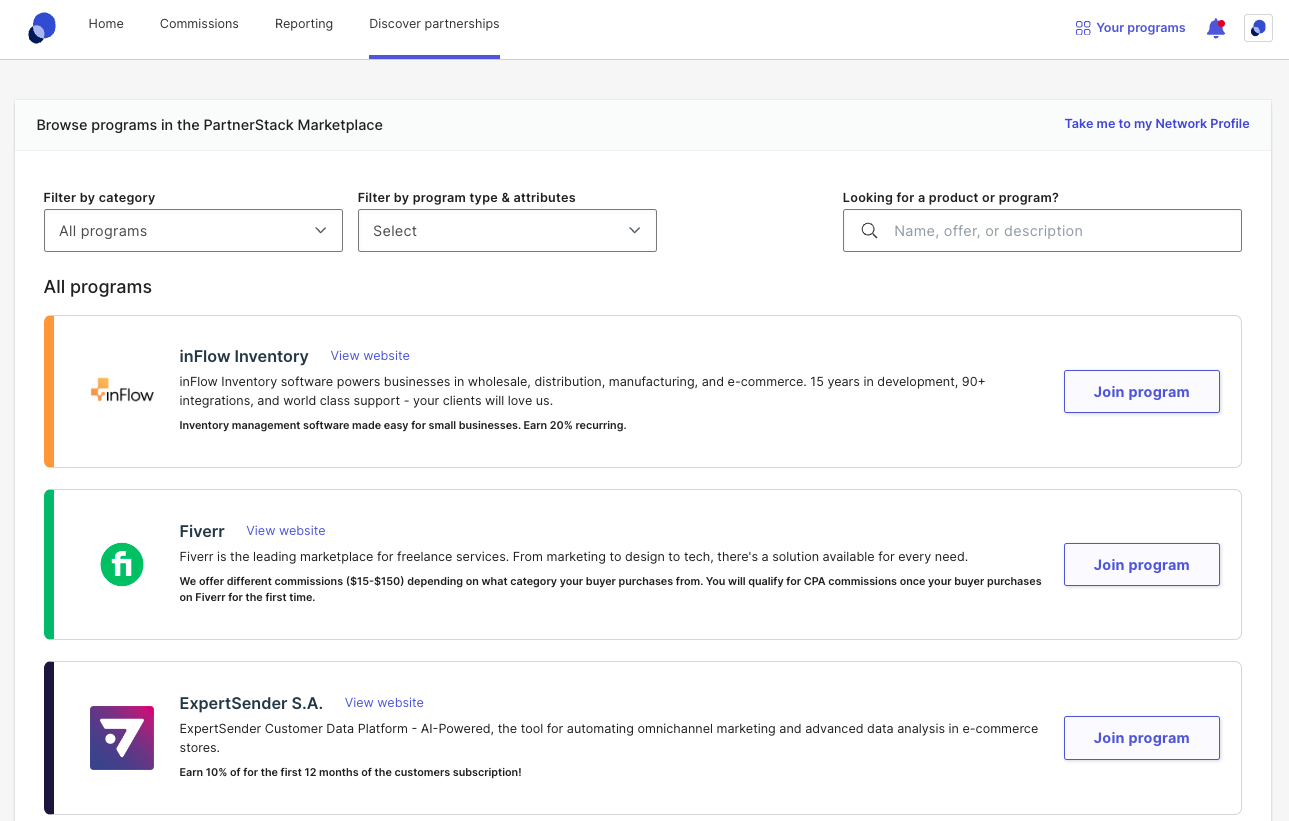
| PartnerStack | Software partnerships, referrals and B2B cooperation | Network and program applications, referral links and deal registration |
| Shopify Collabs | Merchant and creator partnerships | Current joining route, direct invitations and commission arrangements |
| Independent brand programs | Partnerships offered directly by a brand | Legal entity, tracking, contract, support and payment terms |
This table helps locate programs; it is not a ranking or an assumption that every entity or country qualifies. Free publisher registration and the cost of running a brand program are separate questions. Obtain current platform and service pricing when selecting a solution.
Two current conditions deserve attention. ShareASale closed on October 6, 2025, so tutorials using its former standalone workflow need updating. Shopify Collabs currently pauses new self-service creator signups, while brands can still invite creators directly and accept creator applications. Do not describe it as a marketplace every new creator can join directly.
Prepare a credible application
Explain who you are, whom you serve, how you promote and what content already exists. Prepare a concise introduction page, accessible channel links, several relevant pieces, audience markets and languages, genuine traffic sources, a contact email, disclosures and privacy information. If you have no traffic yet, state that the project is new and show completed content and a specific publishing plan.
Do not buy or fabricate traffic screenshots or claim an audience you do not have. Disclose plans for paid search, coupons, email, incentives or other methods material to program approval. Describing yourself as a content publisher and switching to undisclosed channels after approval is misleading.
Keep the applicant’s identity, tax information and payment information consistent. Whether a Hong Kong company, individual or another entity qualifies for a country program needs checking separately. Incorporation in a place does not establish tax residence there or automatically meet a payment provider’s requirements. Complete tax forms for your actual circumstances, not by copying example values.
What remains to check after registration
PartnerStack’s network application and a brand’s program application are different processes. Network approval does not join every program automatically. Amazon’s US program also separates application from later review: it currently requires at least three qualifying sales within the first 180 days before evaluating content and other conditions. Do not apply this US example to other country programs or use prohibited personal purchases to meet it.
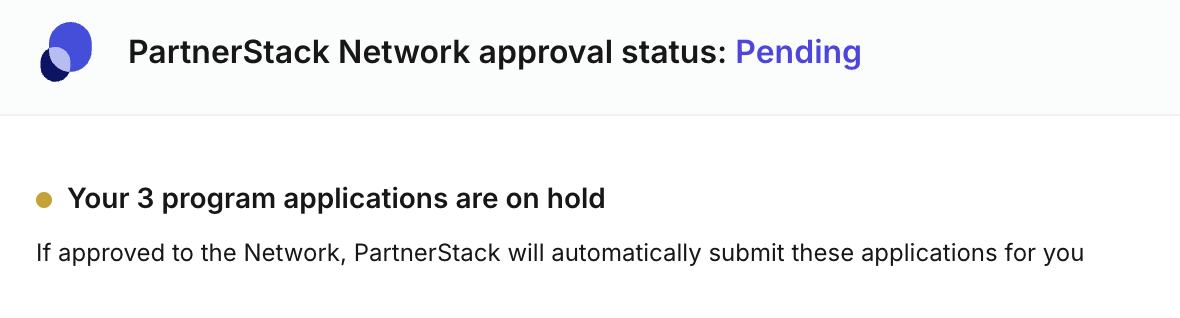
Maintain a program record with application date, owner, status, eligible markets, permitted channels, contract version, link status and next action. After rejection, investigate content relevance, website completeness and channel fit before supplying further information. Repeating an unchanged application rarely resolves its original problem.
Understand commission contracts and payment terms
The contract defines which results become revenue. Read the conversion event, commission base, rate or amount, customer eligibility, attribution window, exclusions, permitted channels, refund review, payment conditions and change notices. Turn each condition into a question the team can answer directly, rather than merely keeping a contract screenshot.
Read the rate together with its commission base
A 10% commission statement omits important conditions. Suppose a product lists at USD 120, its discounted merchandise value is USD 100, and tax and shipping are additional. If the contract commissions only the discounted merchandise value, the commission is USD 10, not 10% of the total customer payment. These figures illustrate the calculation; the actual program defines the base.
Rates can also differ by new or existing customer, category, subscription plan, coupon, region or promotion period. Compare expected net revenue for the same audience and product context. Comparing one program’s highest tier with another’s default tier is misleading.
Separate three different time periods
The attribution window determines how long a click or referral may receive credit for a subsequent action. Review or locking determines when normal adjustments end. Payment timing governs when commission becomes payable and reaches the recipient. B2B may also have a separate period for earning renewal commissions.
For example, a hypothetical program attributes a first payment within 30 days of the click and commissions eligible renewals for up to 12 months afterward. This does not mean a cookie lasts 12 months or that the customer will renew for 12 months. Record each period in a separate field.
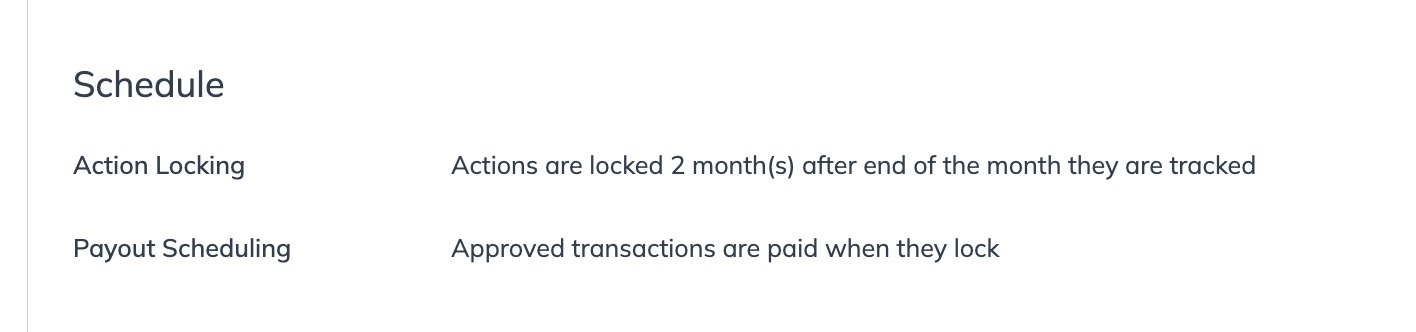
The locking period shown belongs to the example contract. impact.com does not impose it universally. Actual payment also depends on contract terms, brand funding and account payment settings.
Turn restrictions into operating rules
| Contract question | Operating rule to record |
|---|---|
| Is paid search allowed? | Permitted channels, direct-link policy, target regions and approval evidence |
| Are brand terms restricted? | Brand names, variants, misspellings and combinations with review or coupon |
| How are coupons commissioned? | Approved codes and treatment of public versus dedicated codes |
| Which customers or products are excluded? | Existing customers or opportunities, specified categories and plans |
| Why can an order be rejected? | Refunds, cancellation, duplicates, fraud, invalid leads and appeal deadlines |
| When can payment be collected? | Locking, thresholds, currencies, payment details, fees and delays |
| How do terms change? | Notice channel, effective date and treatment of existing links and customers |
The absence of a visible ban is not confirmation of permission. Obtain explicit written terms or program confirmation for paid search, brand bidding, remarketing, incentives and email. Keep that evidence alongside the relevant contract version so later reviews can establish the basis for your actions.
Build content that helps readers decide
Before clicking, readers often need to resolve uncertainty: whether a product fits their use case, whether the price includes necessary features, whether an alternative is better, and what a mistaken purchase or failed implementation would cost. Content should reduce that uncertainty instead of repeating purchase buttons throughout.
Make the website readable and trustworthy
A usable site needs clear navigation, readable mobile layouts, working links, author or team information, contact details, an editorial method, affiliate disclosures and appropriate privacy information. Explain how products are evaluated in the About page rather than relying on a generic promise to offer the best recommendations.
Organize entry points around reader tasks: establish a budget, compare two products, check compatibility or begin implementation. Related articles should advance the task. Inserting unrelated high-commission products weakens the selection logic.
Give each content format a clear job
| Format | The reader’s question | Evidence to provide |
|---|---|---|
| Buying guide | What criteria should I use? | Needs, trade-offs, total cost and selection standards |
| Best-picks list | Which options deserve priority under these conditions? | Candidate scope, comparable assessment and reasons for each pick |
| Individual review | Does this product actually suit me? | Test method, usage evidence, limitations and alternatives |
| Two-product comparison | Does A or B fit my needs better? | Differences under comparable conditions and use-case conclusions |
| Implementation tutorial | How do I complete the task after purchase? | Genuine steps, prerequisites and troubleshooting |
| Alternatives guide | What does the current product fail to solve? | Reasons to switch, migration costs and capability gaps |
Write a complete product review
Identify suitable and unsuitable users first, then explain the evidence. Organize the body around decisions such as connections, real working performance, maintenance costs and support. Software can be assessed through setup, everyday use, collaboration, integrations and limitations. Connect each conclusion to a test, screenshot, documented fact or explicit reasoning.
For hands-on testing, record dates, versions, conditions, procedures and sample scope. One tested unit cannot establish reliability across every production batch. Without actual use, publish a research-based comparison and explain its basis in specifications, documentation and verifiable material. Do not present it as hands-on testing. Original evidence, quantitative comparisons and key decision factors help readers understand and assess your conclusions.
Every recommendation does not need to suit everyone. A useful conclusion could be: suitable for readers who mainly use USB-C and need a lightweight external display; owners of older connections should check compatibility. Such conditions explain more than broad praise. Meaningful exclusions reduce unsuitable purchases and may reduce refunds and unproductive clicks.
Maintain prices and product information
Prices, stock, discounts, software capabilities and plan limits change. Date important comparisons and specify market, currency and tax treatment. If you cannot maintain exact prices, explain the pricing structure and direct readers to current official pricing instead of leaving an unverified lowest-price claim. Amazon’s US program has additional restrictions: display its prices and availability only through an Amazon-provided link containing that data, or authorized interface data such as Creators API obtained under the applicable license. Manually copying a price and dating it does not replace those requirements. Otherwise, direct readers to Amazon for the current price.
Use product images, trademarks, feeds and API content within their licenses and program rules. An image being visible on a merchant’s website does not establish permission to scrape and redistribute it indefinitely. Feed-generated pages also need your own selection logic, comparison or other useful information. Copying merchant descriptions with little original value can constitute thin affiliation under Google’s spam policies.
Assign responsibility for each article
Record content ID, target reader, principal merchants, last review, next review, important links and owner. Prioritize high-traffic and high-revenue pages. Check immediately after discontinuation, major price changes, product updates or program suspension. Maintenance belongs in content costs alongside publishing new articles.
Generate and deploy trackable affiliate links
Obtain links from approved programs using supported generation tools. Ordinary merchant URLs, ordinary URLs with UTMs and affiliate links are different. Reaching the product page proves that redirection works, not that your account will earn commission.
Understand four types of identifiers
| Identifier | Purpose | Typical placement |
|---|---|---|
| Inbound UTM | Identify the campaign bringing readers to your content | Email, social or other links pointing to your content site |
| Publisher or Partner ID | Identify the referring publisher | Platform-generated affiliate tracking link |
| SubID or ClickRef | Identify the article or placement producing a result | Reporting parameters supported by the platform |
| Internal content ID | Connect an article, button and analytics event | Content inventory, page attributes and GA4 parameters |
One link can contain parameters for different purposes, but maintain them through supported tools. Do not insert analytics parameters arbitrarily into a merchant’s redirect template or delete lengthy-looking brand metadata. In impact.com, add reporting parameters through the platform to avoid damaging reporting through manual edits.
Example one: Awin Link Builder
After program acceptance, select the advertiser and enter the product or category destination. The newer Awin interface example opens Link builder under Campaigns. Awin Classic and other accounts may use different menus. Follow your account’s current interface.
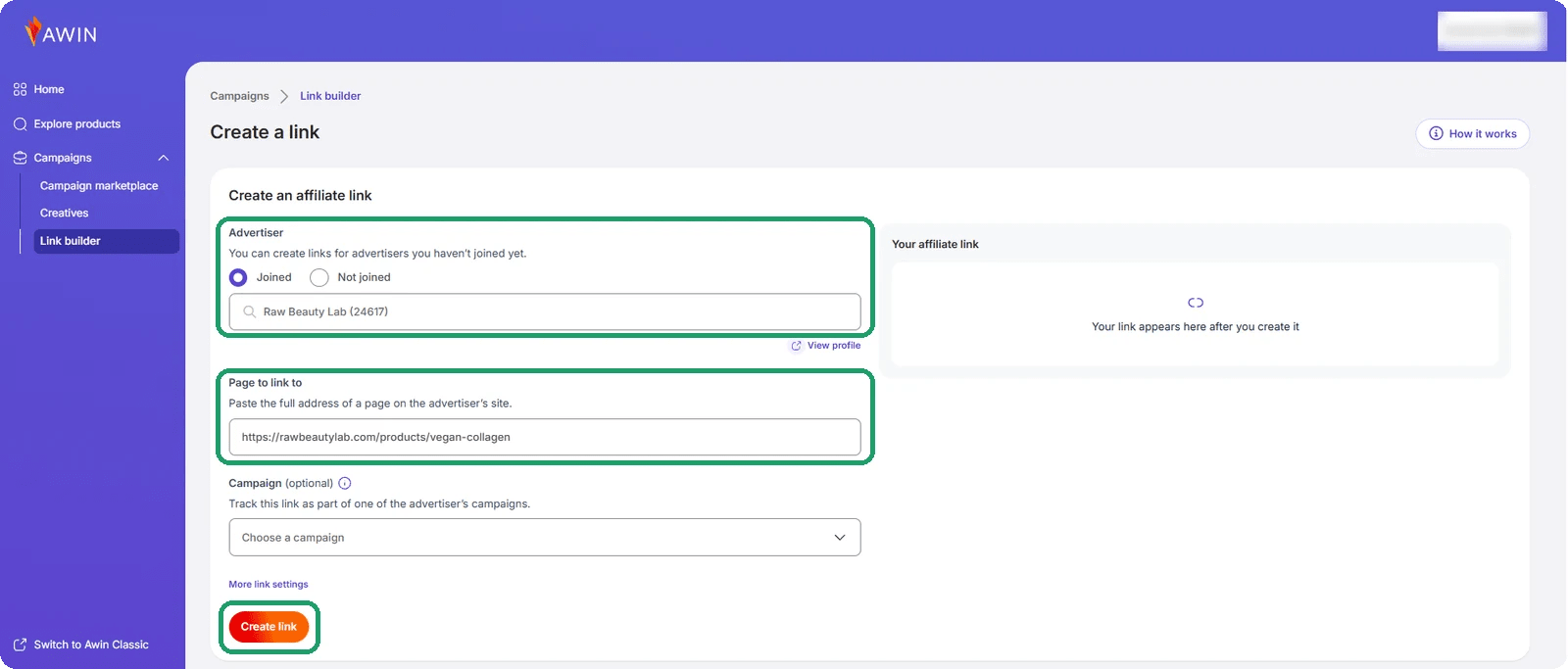
Check that Advertiser and Page to link to correspond before generating the link. Prefer the original product URL, retaining the path or variant parameters needed to identify the right item. Removing unrelated tracking must not remove information required to select the product or plan.
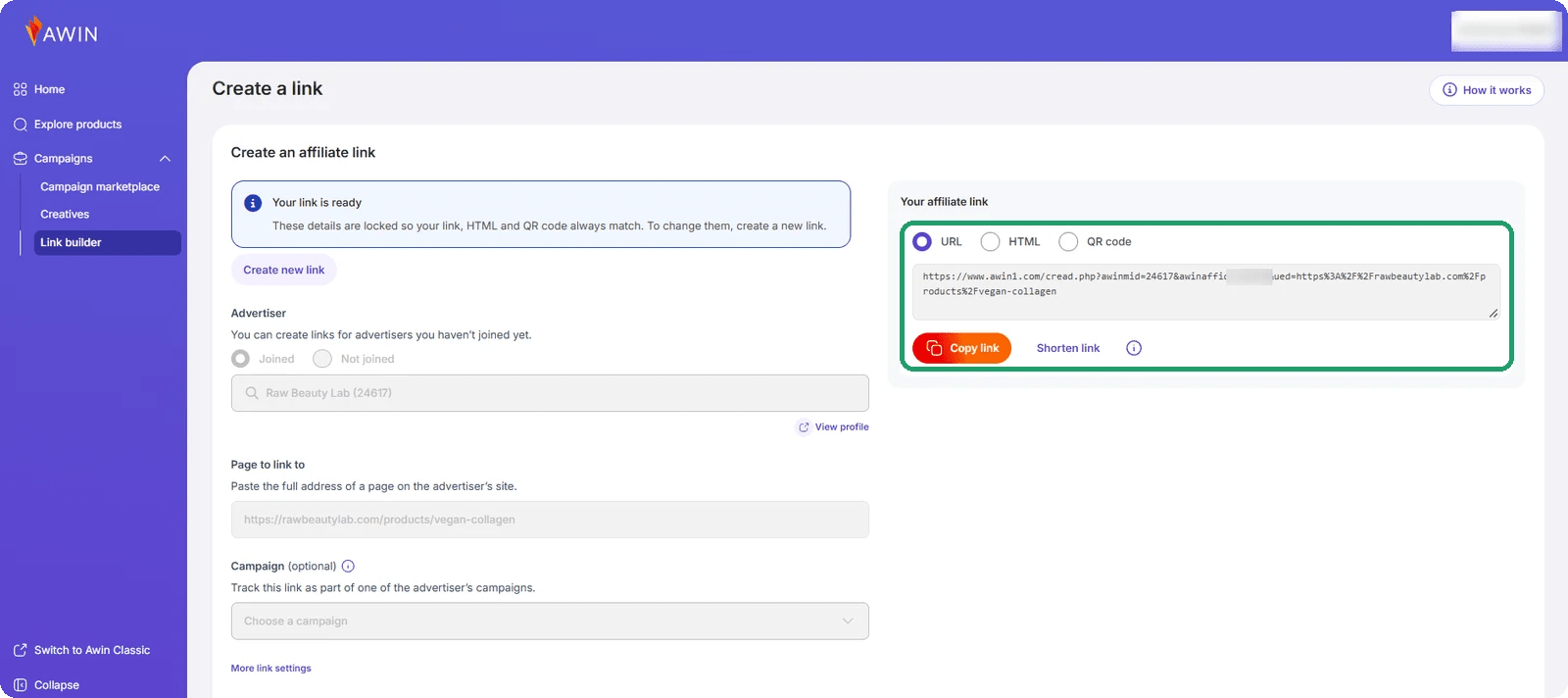
Copy the generated URL or HTML into the link inventory. A Not joined option does not mean every unapproved program will pay commission. Check automatic approval, active relationship status and program restrictions. Use the ClickRef settings supported by the current Link Builder to label articles and placements.
Example two: impact.com
After joining a brand, obtain a link through the home-page Create a link tool, the brand or an asset page. The home-page tool supports a landing-page URL or brand information; asset pages provide Get Tracking Link. Brands can disable link generation or deep linking. A failure to generate a link is not necessarily an operator error.
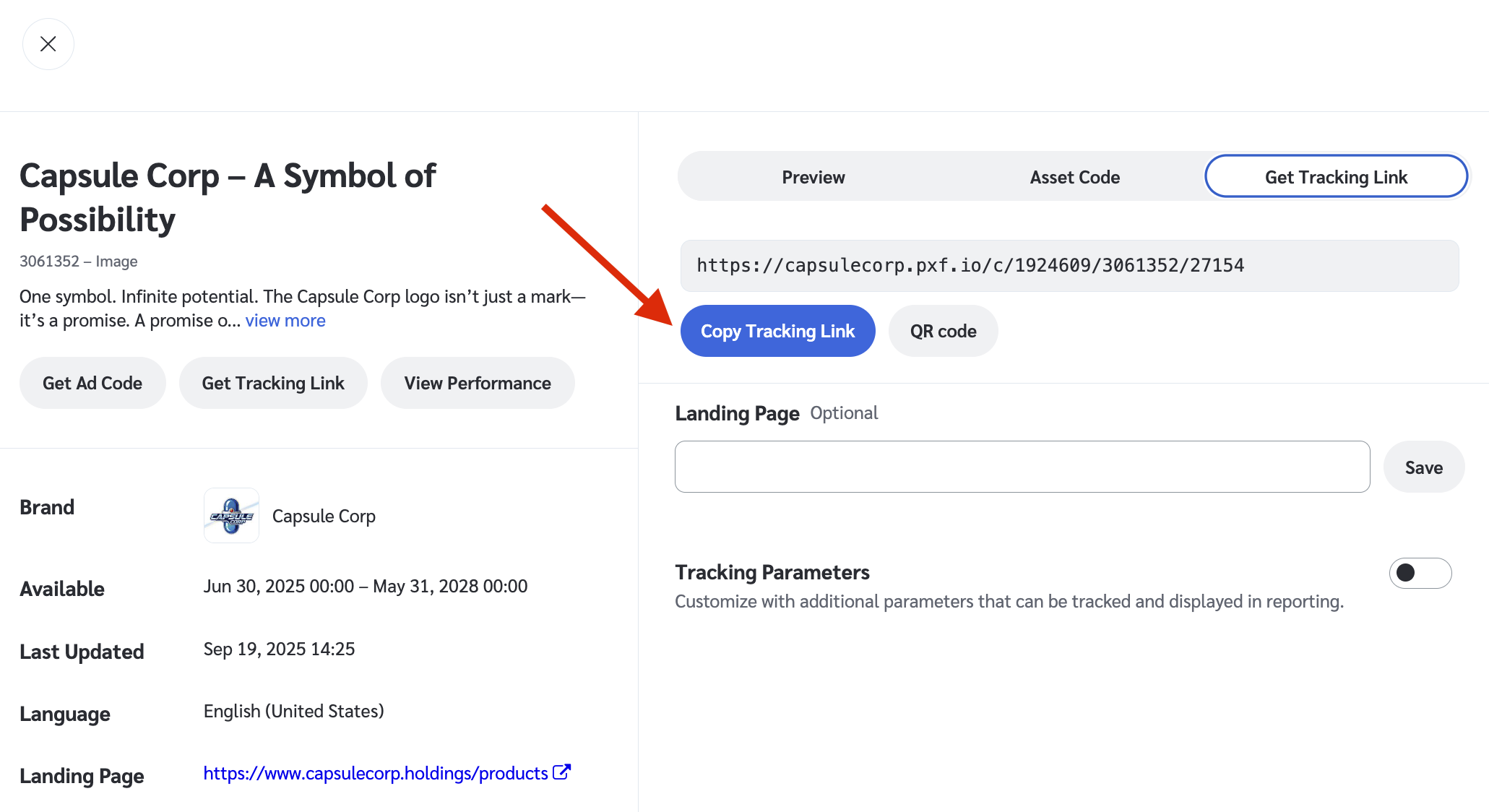
Identify the asset’s brand, copy-link button, Landing Page and Tracking Parameters. To analyze revenue by page and placement, enter stable labels in supported parameter fields, update through the platform and copy the result. Labels such as content01, tabletop and youtube01 are easier to maintain than arbitrary long text. Shared ID and Sub ID can have different visibility. Check the current permissions before entering data, and never place names, emails or other personal information in these fields.
Example three: Amazon SiteStripe
Sign in to the Amazon account associated with your Associates program, open the target product and generate a text link through SiteStripe. Check Store ID and Tracking ID, then copy the platform’s URL. If using a short link, use the generated result instead of removing tracking components yourself.
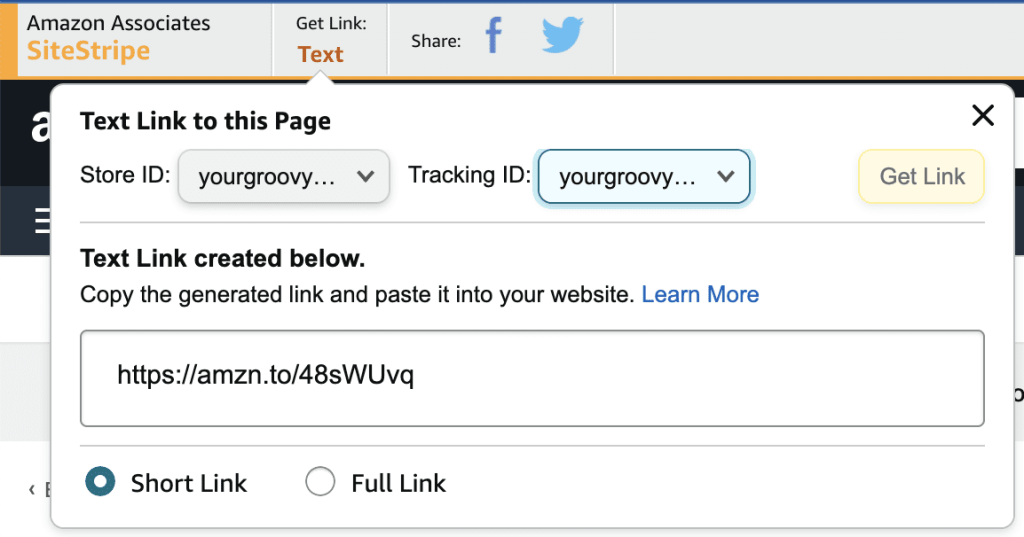
The historical screenshot helps identify Store ID, Tracking ID and link-generation controls. Its elements may differ from your current account. Legacy text+image links are no longer supported, so do not deploy them by following older tutorials.
Example four: PartnerStack custom links
Open Links in the relevant program and inspect its default link. If the brand enables custom links, choose Create a custom link, supply the title and description, select from the brand’s approved destinations and customize the link text in the permitted format. If the option is absent, check whether the program enables it. It is not universal.
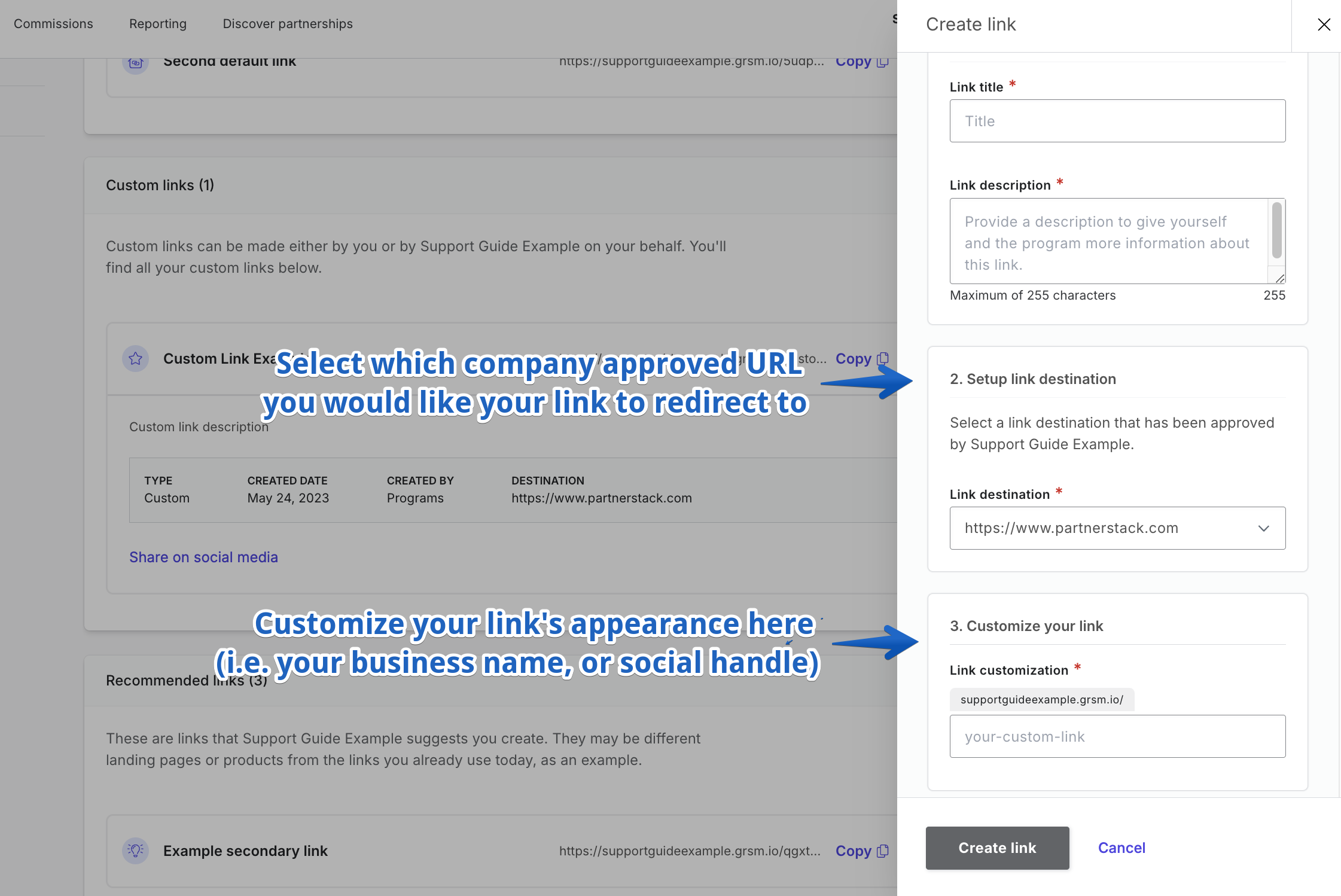
Custom link text and custom destinations are separate settings. Changing link text to your account name does not permit an arbitrary destination domain. The brand’s approved URLs help ensure the destination supports the required tracking.
Validate links before promotion
Test from the published page, not just the editor. Check the correct product, region, currency and plan on desktop and mobile, consistent button and body links, an active program, and the test click in reporting after a reasonable processing delay. Short links can take time to activate; allow for verification before promotion.
Record content ID, placement, platform, program ID, generated URL, destination, label, creation date and last check. Link-management software can help larger sites, provided its redirects and cloaking comply with program rules and retain tracking parameters. Do not validate commissions through prohibited purchases by yourself or family and friends. Use a merchant-approved test-order process where testing is needed.
Measure affiliate clicks with GA4 and GTM
Publishers can normally observe activity on their own sites, but cannot directly read merchant purchase events. Use GA4 to understand acquisition, reading and clicking; the affiliate platform to record partnership results; and payment records to establish cash received. Reconcile these three layers without treating them as interchangeable.
Start with outbound-click measurement
In the GA4 web data stream, check outbound clicks under enhanced measurement. The default event is click, with information such as link domain, URL and outbound status. It is not an automatic affiliate_click feature. Domains configured for cross-domain measurement do not trigger the default outbound-click event. Do not add a merchant domain you do not control merely to simplify tracking.
Open Explore, create a blank exploration and import Link domain, Link URL and Outbound dimensions plus Event count. Place link dimensions in rows and event count in values, then filter for the click event and genuine affiliate destinations. For a small set of links, this can establish whether readers click them.
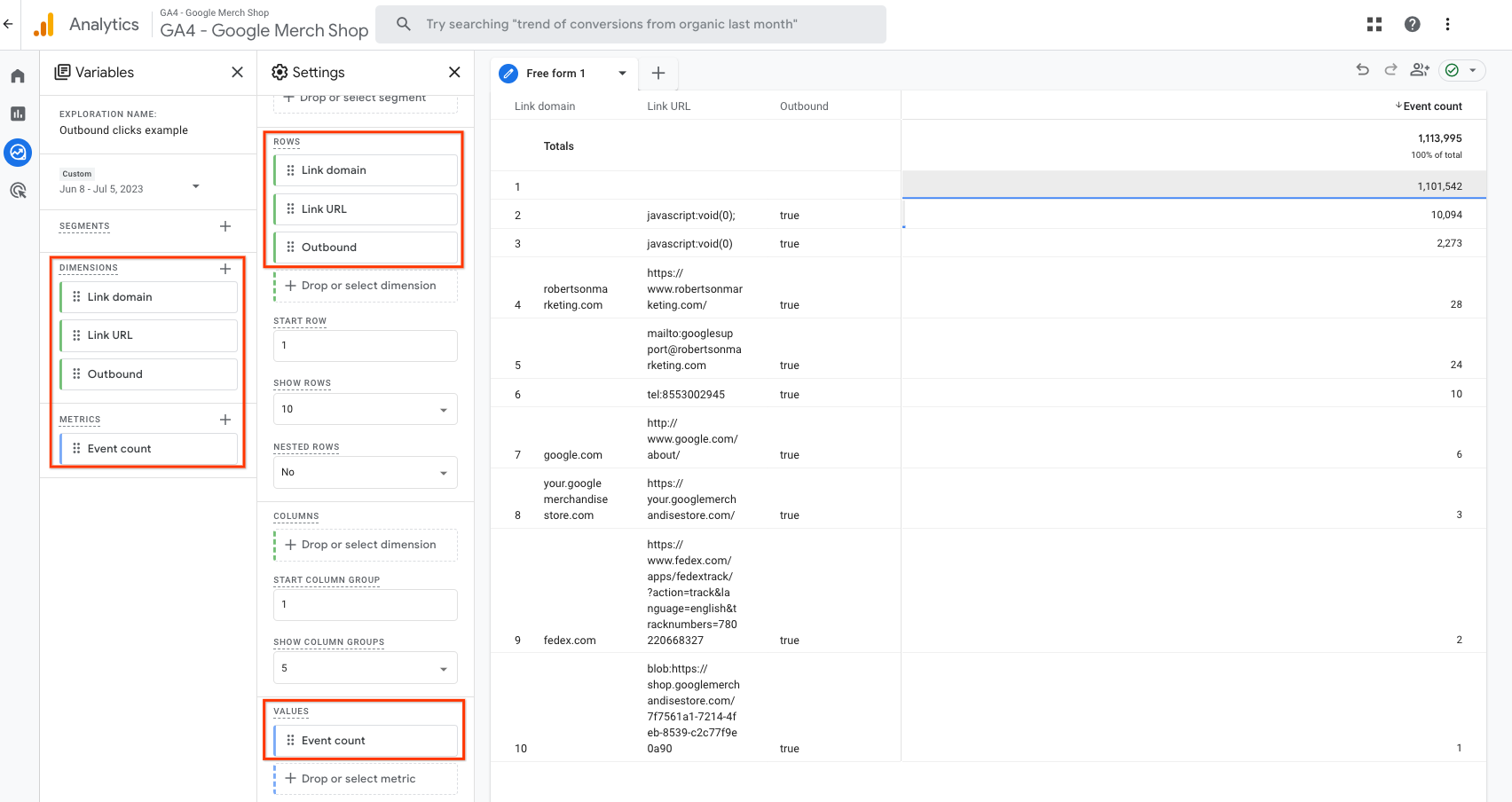
The screenshot enlarges dimension and row settings. Exclude unrelated links and null values using filters that match your implementation. The first redirect may go to a network domain instead of the final merchant. An internal /go/ redirect may not be covered accurately by default outbound measurement; test it and handle it separately where necessary.
Define a specific affiliate-click event
To distinguish programs, articles and button placements, define affiliate_click yourself. Give affiliate buttons stable metadata on the website and send one GA4 event through GTM. The following is a suggested data convention, not a built-in GA4 standard.
| Field | Example | Purpose |
|---|---|---|
| event | affiliate_click | Trigger one explicit affiliate-click event |
| program_id | vendor01 | Identify the program without depending on changing merchant names |
| content_id | guide01 | Connect the event to the content inventory |
| placement | comparison | Distinguish comparison tables, body links, top placements and other positions |
| affiliate_link_id | link007 | Connect the event to a stable link-inventory record |
Do not send names, email addresses or complete URLs containing personal information to GA4, whether or not the parameter is registered as a custom dimension. High cardinality is a separate concern: avoid registering random per-click unique identifiers as reporting dimensions. Prefer a small set of stable, interpretable categories for event parameters.
The website should execute this data-layer example once when someone clicks a marked affiliate link. The identifiers are placeholders to read from the actual link. Do not run it at page load and misreport every visit as a click.
window.dataLayer = window.dataLayer || [];
window.dataLayer.push({
event: 'affiliate_click',
program_id: 'vendor01',
content_id: 'guide01',
placement: 'comparison',
affiliate_link_id: 'link007'
});
Configure GTM in the following order. A click trigger can instead identify the links directly, but choose one sending path. Test clicks on icons inside buttons and on mobile, and prevent duplicate listeners.
1. Confirm that the correct Google tag is installed. Check for duplicate installations through plugins, code and GTM.
2. Create data-layer variables for program_id, content_id, placement and affiliate_link_id.
3. Create a Custom Event trigger matching affiliate_click exactly.
4. Create a Google Analytics GA4 Event tag, enter the destination stream’s Measurement ID (G-…), set the event name to affiliate_click, map those parameters and attach the trigger.
5. Check events and parameters with Preview and DebugView. Publish the container after validation.
Avoid duplication and misleading optimization
Automatic click and custom affiliate_click events can coexist, but can represent the same physical click. Do not add them together as two affiliate clicks. If GTM sends affiliate_click, do not also use GA4’s event-creation feature to generate the same event from that click. State the definition used in reporting.
Create the corresponding event-scoped custom dimensions to use custom parameters in standard reports or explorations. New dimensions do not retroactively repair historical data, and report processing can take time. An event not appearing immediately in a standard report is not sufficient evidence of tag failure.
An outbound affiliate click is an early-stage action. An advertising system optimizing for it finds people more likely to click, not necessarily people who generate approved commissions. Consider deeper-event feedback only with authorization, platform eligibility and reliable result matching. Never label a merchant-link click as purchase.
Validate attribution and investigate discrepancies
The journey from your content to a merchant order may cross network redirects, browser storage, consent controls, merchant conversion reporting, refund review and payment processing. Make these steps verifiable wherever possible without promising complete attribution for every referral.
Common attribution breaks
Changing devices, clearing browser data, declining applicable tracking, returning through another partner or buying after the window can affect attribution. Coupon attribution, app handoffs and cross-device matching also depend on the program’s implementation. Do not budget as if every platform supports them.
With last-click or other credit rules, also check event priorities such as dedicated coupons, registered deals or overrides between partner types. A referral window addresses only part of the conditions; it does not guarantee ownership of every subsequent order.
Prerequisites for server-side tracking
Brands can report orders through server interfaces to reduce some browser-reporting failures. They still need legitimately obtained matching identifiers, correctly transferred order data and valid attribution conditions. Awin’s Conversion API, for example, requires awc or applicable publisher and click information. Without valid matching data, server-side delivery cannot simply recover an unattributed order.
Verify order uniqueness, currency, tax treatment, refund updates and duplicate reporting. When browser and server integrations both send orders, use the platform’s supported deduplication method. Server-side technology does not remove applicable privacy and consent requirements.
Investigate using three evidence layers
First, inspect the website: the correct button, one intended event, and complete content and placement fields. Second, inspect the network: clicks for the program and label, with the correct market and destination. Third, inspect business results: an eligible order or lead, and the reasons it remains pending or was rejected.
GA4 and network clicks will not necessarily match individually. Consent, blockers, bot filtering, time zones, deduplication, failed requests and processing delays can differ. Align dates, time zones and filters before identifying concentrations by device, page or link version.
| Test scenario | Acceptance criteria | Investigate first if it fails |
|---|---|---|
| Normal desktop and mobile click | Correct destination and one intended event | Button URLs, mobile components and duplicate tags |
| New tab and icons inside buttons | Complete metadata without duplication | Click-element identification and navigation timing |
| Tracking accepted and declined | Behavior follows the actual consent configuration | CMP and tag-consent settings |
| Internal redirect or short link | Parameters survive, the program permits it and activity is recorded | Redirect chain, link manager and cache |
| Merchant-approved test conversion | Correct order status and value | Event definition, currency, deduplication and refund integration |
Do not resend events merely to make totals match. For missing-transaction appeals, retain permitted order or lead references, time, currency, referring content, labels and a clear description, and submit through approved channels. Avoid copying personal customer information into ordinary spreadsheets or email without a defined need and an appropriate processing basis.
Acquire qualified traffic through suitable channels
Match the channel to the user’s task. Search serves explicit questions, video demonstrates processes and experience, email maintains contact with subscribers, and communities address specific problems. Establishing one effective channel first makes diagnosis easier than maintaining many weak entry points.
Organize search content around decision stages
Group topics into problems, selection, brand comparison and implementation. Problem content explains when a solution is needed; buying content establishes criteria; comparisons narrow the options; tutorials show how the product completes a task. Give every page independent value instead of duplicating pages simply to cover more keywords.
Affiliate links do not inherently prevent search traffic. The substantive question is whether the content adds judgment, evidence or functionality. Copying descriptions and adding buttons risks thin affiliation. Generating text at scale does not replace research and maintenance.
Use video to show the process
Product videos can show connections, operation, details and limits. Software videos can demonstrate a real task from a blank account. State the problem, show evidence, then identify suitable users and the next step. Description links should reach the exact product or plan discussed, with clear commission disclosure.
Product pictures with promotional phrases rarely explain trade-offs. Use licensed brand assets and distinguish a brand’s demonstration from your own testing. Disclose samples, loans, sponsorships and commissions as applicable, rather than implying the content has no commercial relationship.
Make email useful over time
Offer buying checklists, tutorials or updates that encourage interested people to subscribe voluntarily. Explain future content and frequency in the welcome message and tailor recommendations to known interests. Record signup sources, offer easy unsubscribe and verify each program’s permission for email, text messages and direct messages.
Avoid blanket claims that every program permits email or that Amazon always prohibits it. Amazon’s current US guidance permits specified links in email, texts and social direct messages when conditions such as recipient opt-in and easy opt-out are met. Check the current terms for the relevant country program before implementation.
Answer the community’s question first
Provide a useful answer before adding a relevant link where the community permits it, and explain the relationship. Avoid repetitive bulk replies, pretending to be unaffiliated or using fictitious offers to attract clicks. Both community and program rules apply.
Apply three checks before buying traffic
First, does the advertising platform accept the destination? Google Ads requires original value and can reject pages that merely redirect without adding useful content. Second, does the program permit the channel, brand terms and landing route? Third, do mature results support the traffic cost?
Adding review, alternatives or coupon to a brand term does not automatically make bidding permissible. Negative keywords for brand variants, search-term reviews, ad-copy checks and location controls implement established rules. They do not replace program permission.
Amazon’s April 2026 US update expanded disqualified purchases involving paid or boosted advertising linking directly to Amazon, with limited exceptions. Current policy permits compliant search advertising that first directs people to the publisher’s own website. Ads must not link directly, or through redirects, to Amazon, and proprietary-term restrictions still apply. Do not treat this as a universal policy for other networks.
Before testing paid traffic, set an affordable loss limit and pause criteria. Resolve dead links, market mismatches and ineligible traffic before scaling. Without mature commission results, treat the budget as a learning expense instead of promising profitability from an estimated EPC.
Calculate revenue, profit and cash flow
All figures in this chapter are teaching assumptions, not industry averages or actual program earnings. Because platform definitions of EPC differ, this guide defines net EPC as the commission ultimately earned by one affiliate-click cohort, less collection or currency-conversion fees attributable to it, divided by that cohort’s affiliate clicks. Content and advertising costs are calculated separately.
Calculate using the same traffic cohort
A cohort is a defined group of traffic or customers, such as clicks in a month, a content campaign or customers first acquired in a month. Allow enough time for conversion, refunds and review. Dividing this month’s bank receipts by this month’s clicks can combine old revenue with current traffic and produce an economically meaningless EPC.
Separate transaction value, initial commission, approved commission, withdrawable commission and cash received. Merchant sales are not publisher revenue, and pending commission is not realized profit. impact.com statuses such as Pending, Locked, Clearing, Overdue and Reversed reflect distinct business stages.

PartnerStack also separates withdrawable funds from projected earnings. Do not add Available funds and Projected earnings as this month’s cash revenue. Check withdrawal and receipt records afterward.
Why a site can make sales and still lose money
Suppose a campaign receives 10,000 inbound ad clicks, all assumed to become valid visits for simplicity, and generates 2,500 network-recorded affiliate clicks. Attribution and refund review have matured: 100 orders were recorded and 80 finally approved. Each order has a USD 100 commission base at 8%. Allocated collection fees are USD 20, content and tools cost USD 200, and advertising costs USD 900.
| Measure | Calculation | Result |
|---|---|---|
| Affiliate clicks per inbound click | 2,500 ÷ 10,000 | 0.25 clicks |
| Recorded order rate per affiliate click | 100 ÷ 2,500 | 4% |
| Order approval rate | 80 ÷ 100 | 80% |
| Initially recorded commission | 100 × 100 × 8% | USD 800 |
| Finally approved commission | 80 × 100 × 8% | USD 640 |
| Net recognized commission | 640 − 20 | USD 620 |
| Net EPC | 620 ÷ 2,500 | USD 0.248 |
| Net revenue per inbound click | 620 ÷ 10,000 | USD 0.062 |
| Traffic budget remaining after allocated costs | 620 − 200 | USD 420 |
| Break-even inbound CPC | 420 ÷ 10,000 | USD 0.042 |
| Actual inbound CPC | 900 ÷ 10,000 | USD 0.09 |
| Cohort contribution profit | 620 − 200 − 900 | −USD 480 |
A common mistake is assuming a net EPC of USD 0.248 permits the same search-ad CPC. EPC here uses affiliate clicks; CPC uses ad clicks arriving at the content site. Each inbound click generates only 0.25 affiliate clicks on average. Even before content and tool costs, net revenue is only USD 0.062 per inbound click.
Allocate content and tool costs when assessing full-cost profitability, as the table does. A decision about a small traffic increase can use a separate marginal model considering only incremental revenue and costs. These models answer different questions. Do not switch between them merely to manufacture a profitable result.
Test the sensitivity of your assumptions
If affiliate clicks rise from 2,500 to 3,000 while order efficiency and approval remain unchanged, approved commission rises from USD 640 to USD 768. With collection fees still USD 20, net commission becomes USD 748. This is a conditional scenario. Additional clicks may have weaker intent, and conversion and approval rates may fall. A more prominent button can raise clicks while sending undecided readers away too early.
Budget with conservative, baseline and improved scenarios, identifying exactly which assumptions change. Use forecasts to scope tests. Scale using mature results from similar audiences and conditions instead of treating the optimistic scenario as a promise.
Maintain a separate cash-flow record
Track opening receivables, newly approved commissions, later adjustments, collections, fees and closing receivables by month. Cash and profit can occur in different months while advertising and production are already paid. Reserve working capital for slow-paying programs rather than increasing spending against pending dashboard amounts alone.
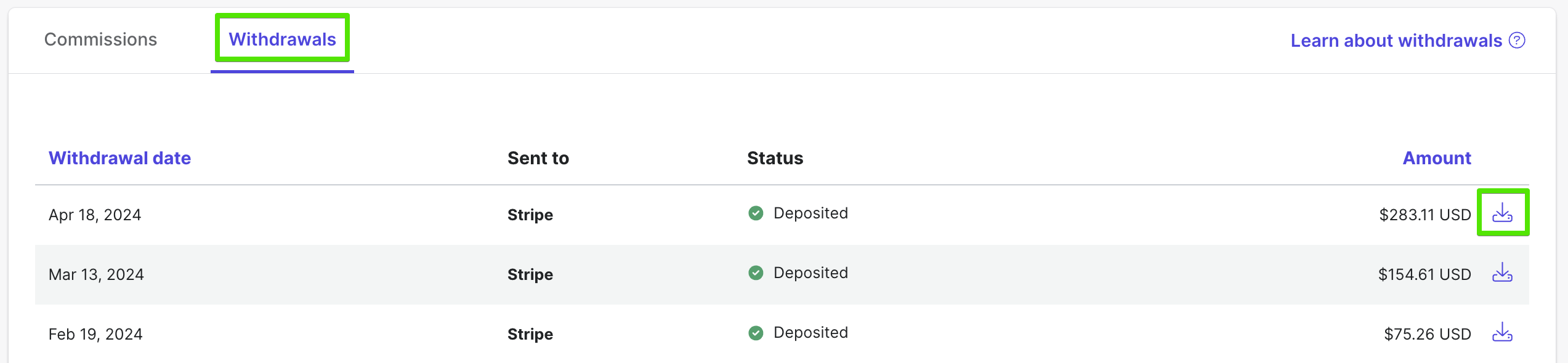
After a withdrawal completes, reconcile the currency and fees against the bank or payment provider’s actual receipt. Historical amounts explain the location of records; they are not an earnings level readers can replicate.
Diagnose the funnel and improve operations
Follow the journey to locate the stage most likely to lose results. Traffic, clicks, orders and commissions are connected but distinct measures. If visits grow without approved commissions improving, establish where new visitors came from, what they read and which program they clicked before expanding traffic further.
| Observation | Investigate first | Possible action |
|---|---|---|
| Impressions without many visits | Whether the title matches search intent | Write a truthful, more specific title and description |
| Reading without many affiliate clicks | Clear recommendations, audience fit and link placement | Add comparison evidence, suitable-use conditions and clear buttons |
| Affiliate clicks without many orders | Market, stock, plan and purchase-intent fit | Repair destinations and tailor recommendations |
| Orders with high rejection | Traffic eligibility, refunds or duplicate customers | Review rejection reasons and adjust channels and claims |
| Approved commissions grow but cash is tight | Changes in locking, payment and fees | Update receivables aging and control new spending |
| Revenue grows while profit falls | Faster growth in acquisition, content or maintenance costs | Calculate cohort contribution and stop inefficient scaling |
Fix identifiable failures first
Dead links, discontinued products, wrong markets, expired offers and broken mobile buttons usually deserve attention before button colors. Validate the complete journey after repair and record its date. Mixing pre-repair and post-repair data can misrepresent a technical fix as a change in reader preferences.
Then address content and intent. Someone searching for a monitor compatible with older equipment may find an article primarily recommending products for newer connections. It can rank well and still convert poorly. Add suitable alternatives and explicit limitations before acquiring more unrelated traffic.
Test a reasoned hypothesis
A useful hypothesis might be: readers cannot compare annual ownership costs, so moving that comparison before the recommendations may increase qualified clicks and approved commissions. Specify the main metric, guardrails, traffic allocation, observation window and stopping rule. Mature net commission per visit can be the primary measure; refunds, reading and complaints can serve as guardrails.
For randomized A/B tests, keep each user assigned consistently and evaluate against a predefined duration and sample plan. For before-and-after comparisons, record seasonal, acquisition-source, promotion and stock changes too. Do not attribute every difference to the page edit. Small samples require uncertainty and ranges instead of a winner declared from two or three orders.
Commission is delayed. Clicks can diagnose early behavior, but final judgment needs mature approvals and refunds. Avoid changing the title one day, the product the next and budget afterward, then attributing the whole week to a single change.
Monitor concentration by article and program
Measure the revenue shares of top articles, merchants and channels. If one program’s commission reduction could make the whole business unprofitable, prepare alternatives suitable for the same audience and maintain owned content and email relationships. Diversification should follow reader needs instead of adding unrelated merchants for their own sake.
Manage B2B leads and subscription commissions
B2B referrals often involve leads, trials, demos, procurement approvals and later subscriptions. People may not pay immediately, and their company may already be discussing a purchase with the brand’s sales team. Understand referral ownership and sales coordination before promoting.
Separate tracked referrals from deal registration
Link referrals use supported tracking to recognize registration or purchase. Deal registration requires partners to submit an eligible company or opportunity for the brand to review under agreed rules. PartnerStack Deal Submission can configure registration and stages, but each brand decides availability and the stage that earns commission.
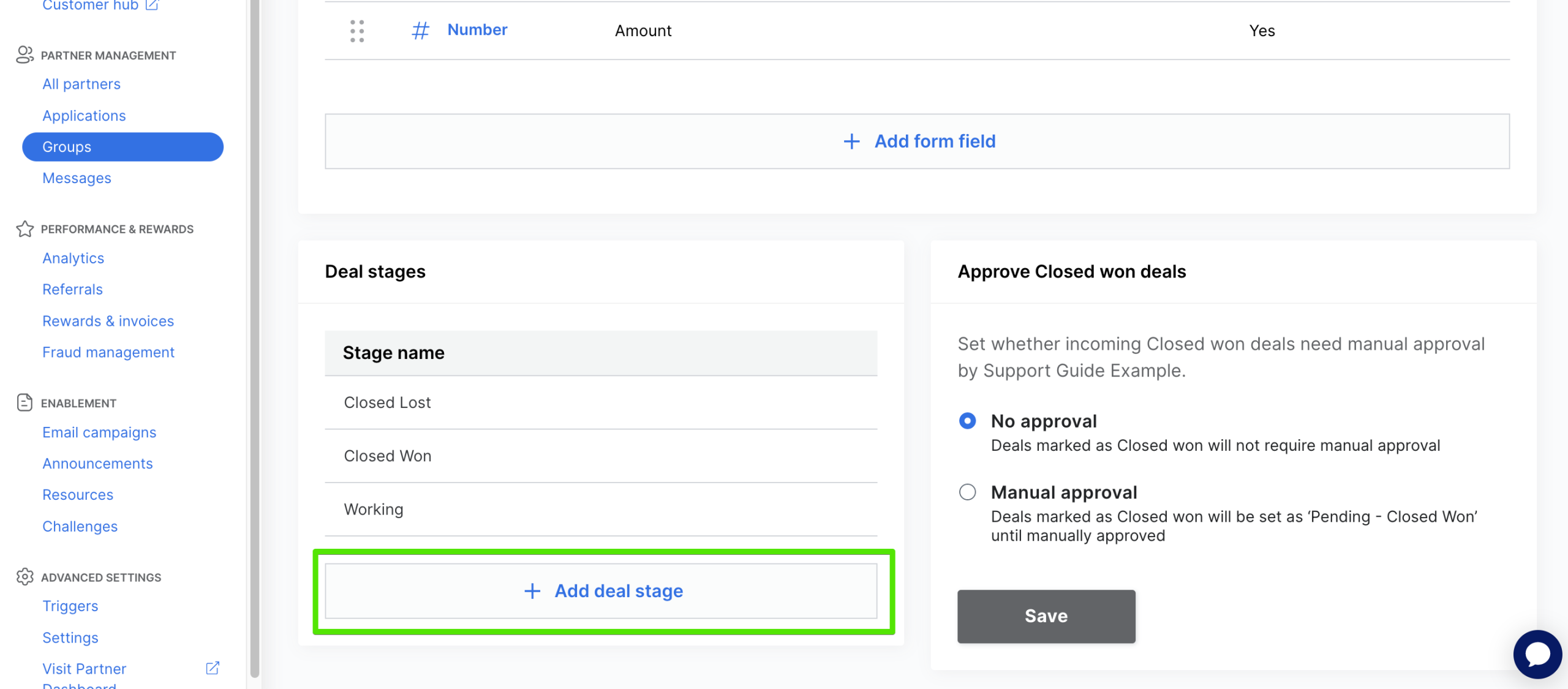
The screenshot illustrates configurable brand-side stages. Closed won, customer paid and commission confirmed are not automatically the same event. A contract can precede payment, and payment can still fail other commission conditions. Manage commission review separately from customer payment status.
| Stage | Definition to establish | Common mistake |
|---|---|---|
| Lead | Contactable, legitimately sourced and within the target audience | Treating every submitted email as qualified |
| Qualified lead | Meets program requirements for company, need or identity | Ignoring duplicates or existing opportunities |
| Trial and activation | Trial begins and key usage behavior is completed | Treating registration as demonstrated product value |
| Opportunity and closed deal | Sales acceptance, progression and contract conditions | Treating pipeline value as publisher revenue |
| First payment and renewal | Actual eligible payments within the commission period | Multiplying first-month commission by twelve |
Record source, acquisition cohort, acceptance or rejection date, reason, next step, ownership period and commission conditions. Share names and contact details only in approved systems with appropriate access and retention limits. Do not insert customer email addresses into SubID for easier lookup.
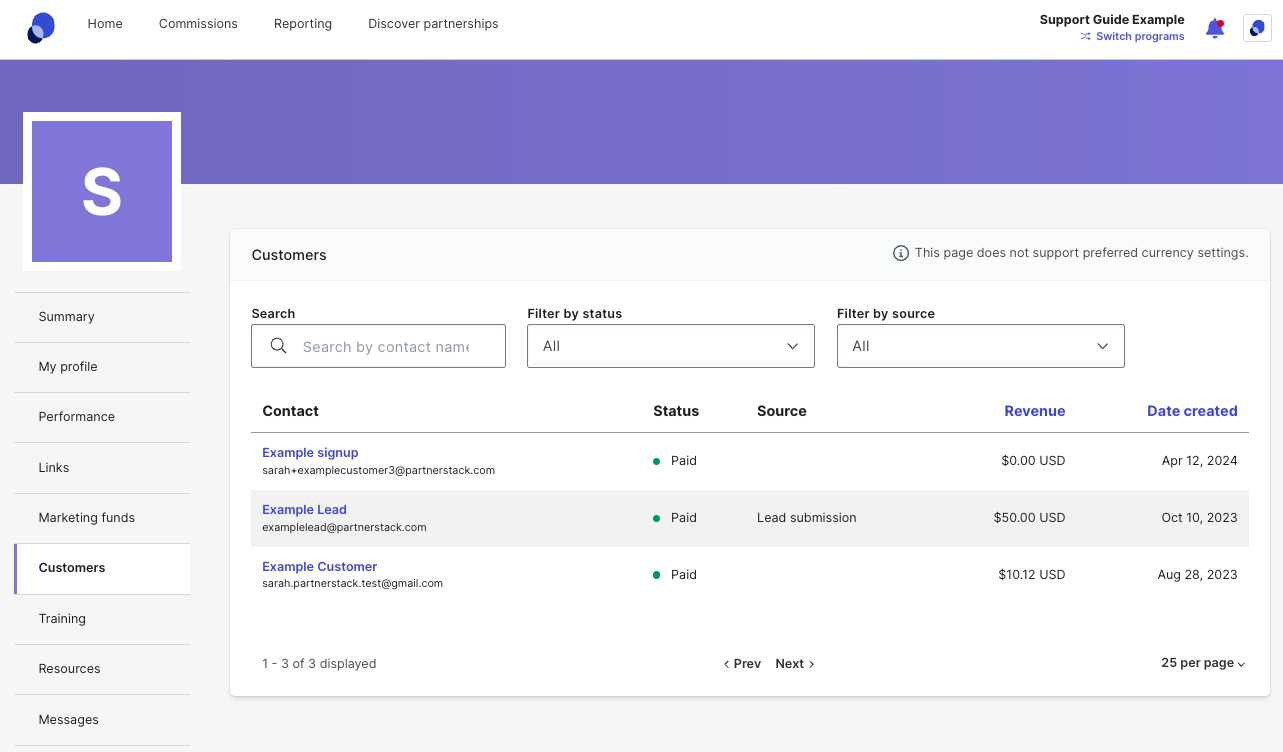
The customer interface separates customers, statuses, referral sources and revenue. Also connect each customer cohort to its payment periods so new trials this month are not mixed with renewals from older customers.
Calculate recurring commissions by customer cohort
Suppose software pays 20% of eligible paid subscription revenue for up to 12 commissionable months. January brings 40 trials and ten first-time paying customers. Each pays USD 100 monthly. Follow only that cohort, excluding later acquisitions.
| Month | Actual paying customers from this cohort | Initial commission for the month |
|---|---|---|
| January | 10 | USD 200 |
| February | 9 | USD 180 |
| March | 8 | USD 160 |
| April | 8 | USD 160 |
| May | 7 | USD 140 |
| June | 6 | USD 120 |
| Six-month total | 48 customer-months | USD 960 |
Suppose two USD 100 invoices are refunded, reversing USD 40 in commissions and leaving USD 920 confirmed. By the end of June, USD 780 has been collected and USD 140 remains receivable. Acquisition and content costs of USD 700 have been paid. Recognized contribution is 920 − 700 = USD 220; net cash inflow is 780 − 700 = USD 80.
If six customers continue paying in July, the next period’s USD 120 commission is a forecast rather than realized revenue. Multiplying the first month’s USD 200 by 12 gives USD 2,400 only under no churn, no refunds and continued eligibility. It is not actual LTV or guaranteed annual income.
Extend B2B content into adoption
Useful workflow tutorials explain required data, permissions, integration, plan restrictions and success criteria. Better-fitting referrals may improve activation and retention. Publishers must also define their own service scope and avoid promising unverified vendor capabilities, support or contract conditions.
How brands can build an affiliate program
Define what partners should accomplish: discover new customers, explain complex requirements, compare options, generate qualified leads or convert through a particular channel. Each task needs suitable partners, assets and rewards. A single rate without a clear partnership proposition rarely explains why a particular partner should invest.
Derive commission capacity from order contribution
The fictional ecommerce budget below uses discounted revenue excluding tax. Refund reserves should reflect history or a prudent assumption and avoid double-counting refunds already deducted from revenue.
| Per-order item | Amount |
|---|---|
| Net merchandise revenue | USD 100 |
| Product cost | −USD 40 |
| Fulfillment and payment fees | −USD 12 |
| Refund and service reserve | −USD 8 |
| Allocated affiliate technology and operations | −USD 5 |
| Contribution before commission | USD 35 |
| Desired retained order contribution | USD 20 |
| Commission capacity under these assumptions | USD 15 |
USD 15 equals 15% of net merchandise revenue in this model. It is the ceiling for these assumptions, not a recommended rate for every product. Margins, customer type, market and refunds alter the result. If a platform charges a percentage of commission, recalculate that linked expense rather than treating it as a fixed USD 5.
Software programs must consider margins, service and implementation costs, retention and collection timing. Recurring revenue does not justify an indefinite reward exceeding customer contribution. Budget fixed content fees alongside asset rights, deliverables and intended use.
Write rules the team can execute
Define eligible customers and events, commission base, permitted and prohibited channels, attribution and registration, refunds, review deadlines, payment, asset rights and term changes. Explain conditions for different rates, such as specified categories, valid new customers or agreed quality thresholds. Avoid relying on oral promises.
Assign internal owners. Growth manages recruitment and operations, technical teams tracking and data, finance payments and reconciliation, and sales B2B lead acceptance. One person can hold several roles in a small team, but each issue still needs a clear handling route.
Test the full transaction lifecycle before launch
Test clicks, purchases or lead registrations, order deduplication, cancellation, partial and full refunds, approval, commissions and payments. Check special paths individually, including app handoffs, cross-domain checkout, subscription renewals and coupons. A working home-page tag cannot establish commission tracking for every payment path.
Shopify Collabs and similar tools support recruitment and payments, but operators still need to understand holding periods, cancellation, refunds and billing. Follow the system’s holding-period and payment rules. Do not promise partners faster receipt than the contract and infrastructure support.
Recruit partners who fit the business
Build a reasoned shortlist: each partner’s audience, content quality, potential contribution and suitable products. In the first approach, explain the fit, available products or trials, commission structure, approved channels and support. A specific proposal helps partners assess the investment more than a bare signup link does.
After approval, supply usable product facts, positioning and limitations, licensed assets, destinations, link instructions, disclosure requirements, contacts and valid offers. Avoid unsubstantiated best-in-class, number-one or earnings claims. Continue answering product and tracking questions so partners do not have to guess.
Assess incrementality and investigate anomalies
Review new customers, margins, refunds, lead quality and repeat purchases by partner type before relying on attributed sales. Last-click orders alone do not fairly compare discovery content with checkout-stage coupon partners. Where feasible, run controlled comparisons by partner, geography or time; nonrandom before-and-after analysis provides supporting evidence only.
Sudden clicks, unclear sources, clustered orders, duplicate leads or unusually short conversion paths merit investigation, but a single anomaly does not prove fraud. Check technical, campaign and traffic changes before applying the contract, and retain an explanation that can be appealed. Prohibit cookie stuffing, hidden tracking triggers, fictitious orders and brand impersonation while providing legitimate partners a fair review.
Manage disclosures, content responsibility and data
Affiliate recommendations involve commercial relationships. Readers should know, when making their decision, that you may earn commission, samples, fees or other benefits. Disclosure helps them understand the recommendation, but does not make a false claim acceptable.
Put the relationship where readers can see it
US FTC guidance calls for clear, conspicuous disclosures close to the recommendation and related links. A footer or separate disclosure page alone may fail to explain the relationship at the point of reading. The words affiliate link alone may not be clear enough.
Adapt this general disclosure to the actual relationship: This page contains affiliate links. We earn a commission when you make a qualifying purchase through them. Separately identify gifted samples or paid sponsorships where applicable instead of hiding them behind a generic affiliate statement.
An English example is: We earn a commission from qualifying purchases made through the affiliate links on this page. Add a claim that the reader pays no extra only after establishing that it is true. Do not assume it is guaranteed across every program.
Communicate the relationship in the video and near relevant description links, rather than depending on viewers expanding the description or reaching the end credits. When a recommendation is both visual and audible, disclose clearly in both picture and sound, using the recommendation’s language. Markets differ. For UK audiences, also check opening advertising labels and identification of commercial sections; US wording is not a worldwide compliance conclusion.
Amazon’s US program additionally requires clear Associate identification with the statement “As an Amazon Associate I earn from qualifying purchases.” This identification does not replace any relationship disclosure needed near links in the relevant context.
Handle search-engine attributes separately from visible disclosure
Google recommends rel="sponsored" for paid or sponsored links; nofollow remains acceptable. This HTML attribute communicates the link relationship to search engines. It does not replace reader-visible disclosure or guarantee indexing or rankings.
<a href="https://example.com/replace-with-generated-link"
rel="sponsored noopener" target="_blank">
  View the official plan
</a>
Replace the placeholder URL with the program’s approved generated link before use. The target and noopener attributes control new-tab behavior and security. They do not handle affiliate attribution or disclose the relationship.
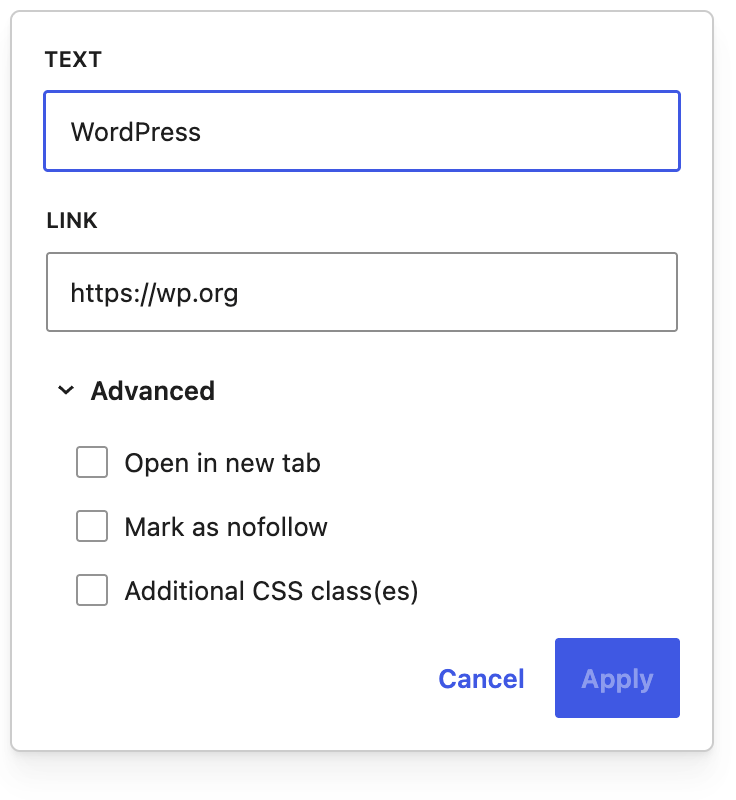
The WordPress panel shown offers Mark as nofollow, not sponsored. Use an editor feature, plugin or HTML that supports sponsored where needed, then inspect the final published output. A switch appearing in the editor is not proof that the link has the intended attribute.
Do not invent experience or reviews
Do not fabricate tests, customer feedback, sales, rankings or earnings. Authors must verify facts, evidence and quotation scope even when AI helps organize the draft. Generated text cannot substitute for hands-on experience that never happened. Both publishers and brands should maintain traceable product facts and evidence.
When collecting email addresses, advertising or installing analytics and affiliate tags, configure privacy information, consent or other applicable mechanisms for the target market and actual data flows. There is no single legal conclusion for every market here. Check local rules, platform terms and the real implementation; have a suitably experienced professional review complex cases.
Keep personal information out of public URLs, ClickRef and GA4 custom dimensions. Store tax records, customer leads, order references and payment information in appropriately restricted systems, with access based on the task. Data protection also reduces everyday operational mistakes.
Build a reviewable operation in 90 days
This is a suggested implementation sequence, not an earnings promise. SEO and B2B outcomes can take longer than 90 days. Base investment decisions on the real sales cycle, content value and evidence, rather than requiring every project to reach the same order count on the same day.
| Stage | Main work | Verifiable deliverables |
|---|---|---|
| Days 1–14 | Choose audience, use case and main channel; investigate programs and terms | Demand list, program-rules record, first applications and budget |
| Days 15–30 | Establish the site, editorial method, disclosure and tracking | First evidence-based articles, link inventory and acceptance records |
| Days 31–45 | Distribute consistently and check intent and reading paths | Source and page reports, repair queue and update log |
| Days 46–60 | Analyze mature click or lead cohorts and fix high-impact issues | Initial net-revenue model, rejection reasons and content improvements |
| Days 61–75 | Run limited permitted tests and observe downstream quality | One explicitly defined test’s results and limitations |
| Days 76–90 | Reconcile payments and decide whether to continue, adapt or stop | Commission-to-cash reconciliation and the next resource decision |
Plan an initial content set
An initial set could be one needs and buying guide, two comparisons, two evidence-based reviews and a tutorial. These counts illustrate a manageable workload; research quality takes priority. Reduce the scope when you cannot complete testing and clearly explain a research-based method.
Give each piece an observable purpose, such as understanding fit, reaching the relevant comparison or finding implementation steps. Immediate purchase need not define every article’s success. Never conceal important limitations just to increase clicks.
Review five areas each week
Check important content and links, changes in traffic intent, consistency between affiliate clicks and recorded outcomes, commission adjustments, and product or policy updates. Turn issues into assigned actions with deadlines and acceptance criteria rather than collecting another set of screenshots each week.
Each month, recalculate net commission and contribution for mature cohorts, then reconcile receivables and cash. B2B also needs lead acceptance, trial-to-paid conversion, renewal and churn. Brands should review partner activity, review speed, payment timeliness and customer quality.
Decide when to expand or stop
Expand coverage or budget after the same audience problem, content format and merchant combination work across comparable cohorts, with clear tracking, review and collections. Continue checking marginal performance as volume grows instead of assuming the original conversion rate will persist.
Change product, channel or investment when fit remains poor, a critical channel is prohibited, data cannot be verified or mature cohorts consistently fail to cover reasonable costs. If orders have not arrived but genuine search demand or qualified B2B opportunities exist, observe for the actual cycle and set the next decision date explicitly.
Frequently asked questions and troubleshooting
Can I start without a website?
Some programs accept social, video or other online channels; others require a website. Check the target program before deciding to build one. You still need a defined audience, compliant content, an approved linking method and disclosure. Having no website does not remove commercial-disclosure responsibilities.
Can I apply without traffic?
Investigate programs that accept new publishers, without assuming approval. Prepare complete relevant content, genuine channels and an execution plan. Address rejection reasons instead of fabricating traffic or repeatedly opening new accounts.
Why does a working link earn no commission?
The program may be unapproved, the channel ineligible, the destination wrong, the window expired, the order unsuitable, another credit rule dominant, or reporting and review unfinished. Check website clicks, network clicks and eligible business events instead of repeatedly clicking the link.
Can I just add UTMs to a merchant URL?
UTMs normally label analytics sources; they do not grant affiliate eligibility or commission attribution. Use links generated by an approved program or another referral method it explicitly supports. Manage UTMs and affiliate identifiers separately.
Can a coupon replace a link?
Only where the program explicitly supports that code-attribution model. Establish ownership, public distribution, conflict resolution with clicks and eligible orders. A regular discount code does not automatically establish commission ownership.
Can I advertise on a brand name plus review?
Check each program. Brand restrictions can cover variants and added terms, and advertising-platform policy applies independently. Even with permission, verify destination value and profitability. The word review does not by itself establish approval or profit.
Can an article link through several networks?
Check each program’s terms and asset rights. Explain the reader value of different merchants, such as market, delivery, plans or pricing structures. Do not replace every button with an unsuitable merchant solely to earn a higher commission.
Do I need expensive analytics or link tools?
Begin with platform reports, GA4, a clear link inventory and regular reconciliation. Add automation when maintenance volume, cross-platform reporting or labor costs become a real bottleneck. Consolidating reports will not repair incorrect contracts, attribution or measurement definitions.
How should I appeal a rejected transaction?
Read the rejection reason and appeal deadline, then submit necessary timing, order or lead references, currency, source page and labels through program channels. Ask which rule needs checking rather than simply asserting you deserve commission. Do not disclose personal customer information to unrelated people without authorization.
How long does consistent income take?
There is no universal timeline or income promise. Outcomes depend on audience, content, acquisition, eligibility, conversion and costs, alongside refunds and payment cycles. Establish unit economics with mature cohorts and assess consistency across successive results. One large commission is not evidence of a durable business.
Reusable operating templates
Program due diligence and terms register
| Field | Information to record |
|---|---|
| Program identity | Brand, platform, country program, program ID and contact |
| Audience fit | Audience, use case, region and available languages |
| Commission | Event, base, default rate, exceptions, caps and renewal period |
| Attribution | Click window, eligible customers, coupons, deal registration and override rules |
| Channels | Permission for websites, social, email, PPC, brand terms and incentives |
| Finance | Review, locking, payment, currency, thresholds, fees and tax information |
| Evidence | Terms URL, version date, written confirmations and next review |
Content-production brief
Before writing, record the target reader and task, existing conditions, three most important decision factors, candidate products, test or research method, facts to verify, suitable and unsuitable users, commercial relationships, destination links and maintenance owner. Check that the article answers these questions instead of only meeting a word count.
Write the recommendation as a complete explanation: because the reader needs to perform this task and already meets this condition, prioritize this option; if this limitation applies, consider that alternative. This connects context, evidence and conclusion.
Example link inventory
| Content ID | Placement | Program | Label | Maintenance details |
|---|---|---|---|---|
| guide01 | Comparison table | vendor01 | guide01table | Destination, generated link and check date |
| review02 | Body | vendor02 | review02body | Country, currency and program status |
| tutorial03 | End of procedure | vendor03 | tutorial03cta | Approved channels, owner and notes |
These are internal example labels. Check permitted characters, lengths and visibility before adding them to a platform. Store complete generated links and destination URLs separately in the actual inventory instead of manually shortening them to fit narrow table cells.
Minimum monthly-reconciliation fields
Record click or acquisition cohort, platform and program, recorded orders or leads, rejection counts and reasons, approved commissions, fees, collections, receivables, production costs and acquisition costs. Reconcile in one currency and retain exchange dates and rates. Label immature cohorts separately instead of ranking them directly against mature ones.
Example program-application message
Adapt the following English message to your circumstances. Every bracketed item needs completion and checking before submission.
Hello [Partner Team],
I publish [content type] for [audience] in [markets]. Our content helps readers evaluate [specific problem or product category]. Relevant examples are [URLs].
I plan to promote your program through [specific channels] and will clearly disclose the affiliate relationship. Please confirm whether [planned paid search, email, or other method] is permitted, including any trademark and landing page restrictions.
Our current audience data is [accurate figures or a clear statement that the project is new]. I would also appreciate clarification on commission eligibility, approval timing, and payment terms.
Best regards,
[Name and website]
Example missing-transaction or rejection inquiry
Hello [Partner Team],
Could you help review [transaction or lead reference] from [date and timezone]? The referral came from [approved page or channel] using [non-personal tracking reference]. The current status is [status].
I would like to understand whether the result was affected by tracking, customer eligibility, attribution rules, or another program condition. I can provide supporting records through your approved secure process.
Thank you,
[Name and publisher ID]