

Last updated on November 19, 2026 at 10:19 AM
A shopper watches a creator demonstrate a coffee maker, swipes through products, checks the current price and heads toward checkout. For years, a brand had to stitch those moments together across video, search, a product page and a separate shopping campaign. Google’s November 18 Demand Gen Drop shows how much of that journey the advertising platform now wants to connect.
The move is not simply “more AI in ads.” It is a commercial redesign of video: product information becomes an ad asset, trusted creators become distributable paid media, and a shorter checkout path brings the transaction closer to discovery. For ecommerce operators, that raises an important question: which part of the funnel should be improved first, and how will the brand know whether it produced profitable incremental demand?
THE BIG STORY | GOOGLE DEMAND GEN & SHOPPABLE VIDEO
The next video ad is part creative, part product feed, part checkout
Four capabilities now sit on the same shopping path
Google’s holiday release highlights four tools already relevant to Demand Gen advertisers: Merchant Center product feeds, checkout links or eligible UCP-powered purchasing, creator partnerships boost, and seasonality adjustments for Target CPA or Target ROAS bidding. Each handles a different form of friction. Together they make a YouTube ad more like a browseable storefront, although the specific eligibility rules and surfaces are not identical.
The distinction matters. Google is packaging a connected vision, not announcing that every advertiser can switch on every capability globally. A feed may be broadly useful; an accelerated checkout annotation is subject to geography and device; UCP checkout is still limited to participating merchants. A responsible rollout starts with those boundaries rather than assuming a single new campaign type can do everything.
| Layer | Operational job and measurement question |
|---|---|
| Catalog / feed | Show accurate products, prices and availability. Are eligible SKU coverage, product-level sales and margins improving? |
| Creator video | Turn demonstrations and product reviews into paid placements. Does this creative add qualified buyers beyond brand assets? |
| Checkout path | Let ready-to-buy viewers reach a valid merchant cart or approved checkout. Do completed orders improve without sacrificing disclosures? |
| Short-sale bidding | Inform Smart Bidding about an expected temporary conversion-rate shift. Does contribution profit rise during the event? |
This table interprets Google’s release. Capabilities have different account, market and placement restrictions.
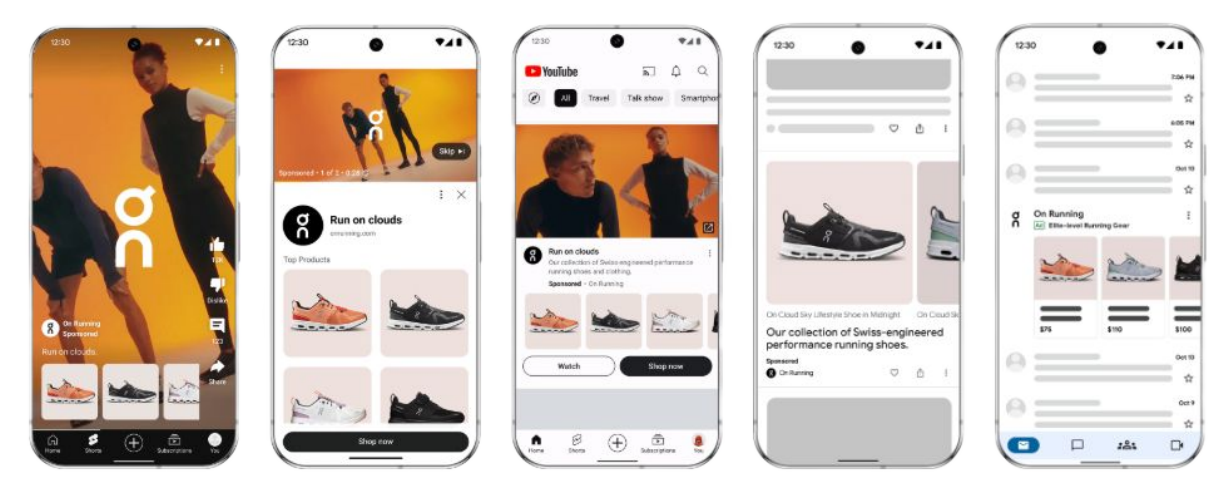
Image source: Google
Product feeds are now part of the creative system
In a traditional video campaign, a polished asset can create desire while the catalog remains somewhere else. Demand Gen product feeds connect that desire to actual inventory. Google’s support documentation says the Merchant Center catalog supplies product imagery and details for automatically rendered ads, including videos paired with products. The feed is no longer just a backend for Shopping: title, image, price, product grouping and destination URL can determine what the consumer sees when the video is served.
That increases the value of ordinary merchandising discipline. If a high-performing clip promotes a color that is unavailable, a mismatched variant or an obsolete sale price, automated distribution scales the inconsistency. Google recommends square catalog images for broad coverage, accurate price and stock data, and enough eligible products for personalization; new feeds can take up to three days to gain approval. The right pre-Black-Friday task is therefore a product-data audit, not an indiscriminate budget increase.
Google cites Petco as a case in which Demand Gen product feeds accompanied a 6% increase in purchase intent, 71% more store visits and a 30% increase in overall omnichannel ROAS. These are Petco-specific, Google-published outcomes with multiple business levers; they are not a universal forecast, nor do they isolate the causal contribution of a feed for an unrelated retailer.
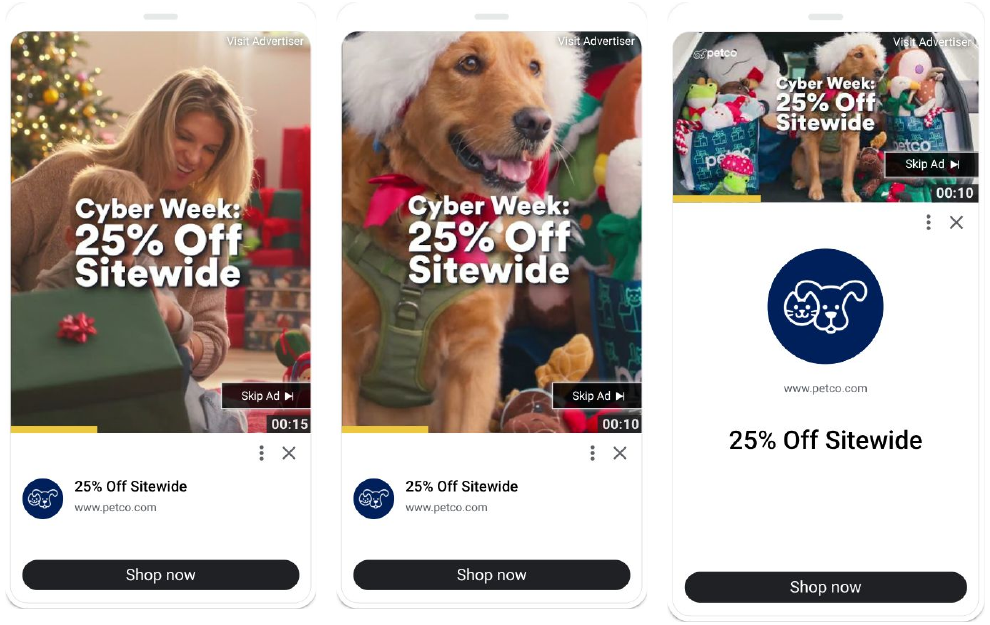
Image source: Google / Petco
Creator content moves from endorsement to distribution
A second shift is turning existing YouTube reviews and demonstrations into assets that can be promoted deliberately. Creator partnerships boost lets an advertiser link an organic creator video, use it in advertising and access relevant view and audience signals. The co-branded partnership format is supported in certain Demand Gen In-feed and Shorts placements. Separately, Google’s affiliate partnerships boost aims to promote eligible organic YouTube Shopping affiliate videos, with shopping calls to action.
The commercial value is more specific than “authenticity.” A good creator answers objections a catalog cannot: what a product looks like in use, whether setup is difficult, who it suits and what trade-offs a buyer should accept. Brands should license ad usage properly, maintain clear paid-partnership disclosures and test creator footage against a comparable brand-made asset under stable audience, budget and measurement settings. Google presents a Javvy Coffee example with a 50% higher conversion rate from boosted creator content, but one advertiser’s result cannot substitute for the brand’s own controlled experiment.
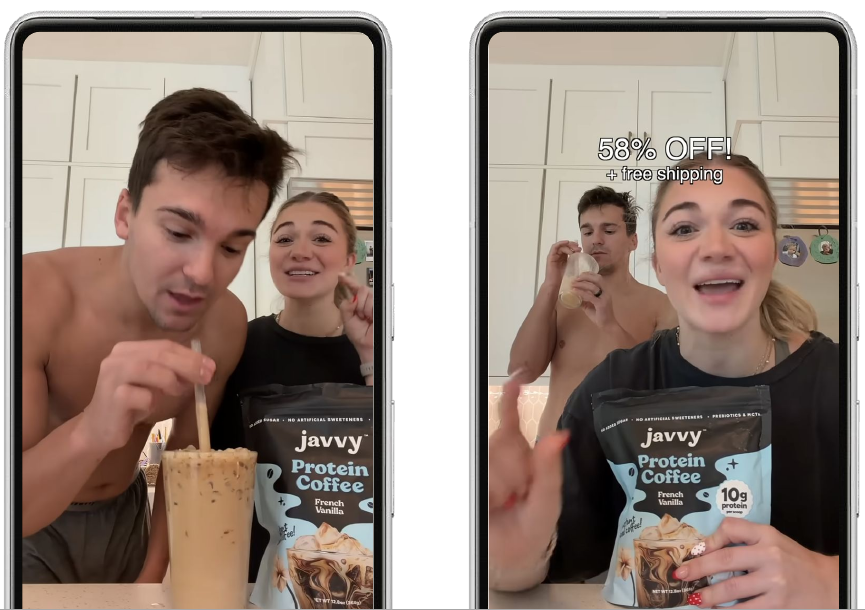
Image source: Google / Javvy Coffee
Shorter checkout is valuable only when the merchant is ready
Google’s standard checkout-link feature can send eligible shoppers straight to a merchant cart or checkout page instead of requiring a separate product-detail-page visit. The Merchant Center documentation currently limits this advertising checkout display to specific U.S. YouTube and Display ad formats, with mobile and tablet support rather than desktop. The merchant must provide a functional URL; required product warnings, shipping terms and other disclosures still need to be visible where the buyer lands.
The Universal Commerce Protocol is a related but different path. Google describes UCP-powered checkout for eligible listings in AI Mode and Gemini, with a phased early-access program for select merchants and geographic eligibility in the U.S., Canada and Australia. It should not be treated as a universal Demand Gen feature available to every retailer. In both routes, a shortened journey creates a new analytics responsibility: a decline in PDP visits is not necessarily a decline in business value if more users reach a valid cart and complete a profitable order.
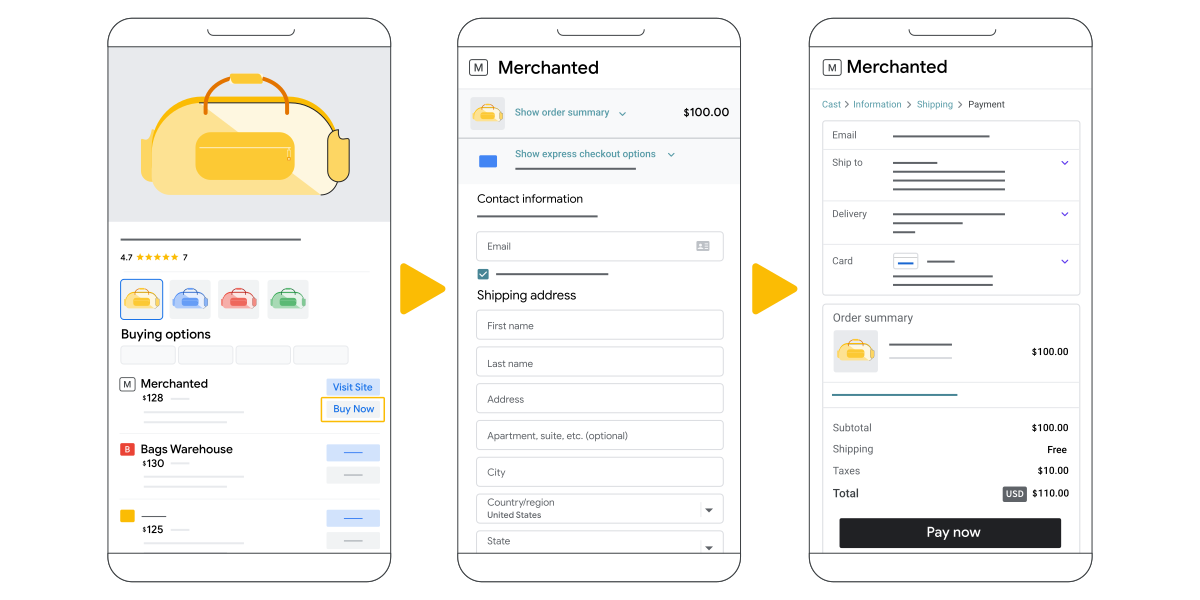
Image source: Google Merchant Center Help
Seasonality adjustments are a scalpel, not a holiday autopilot
Demand Gen now supports seasonality adjustments with Target CPA and Target ROAS, according to Google. These inform Smart Bidding that conversion rates are likely to move materially during a short event; they do not override the basic economics of an offer. Google recommends using them for unusual, brief changes—typically one to seven days—not for ordinary seasonal patterns that the algorithm already learns or for a month-long promotion.
Teams should first model the expected change in conversion rate, average order value and contribution margin. A three-day promotion with materially higher conversion rates may justify an adjustment. A shallow discount that attracts low-margin orders may not. The metric to protect is profitable incremental sales, not whether the platform reports a larger volume of attributed conversions.
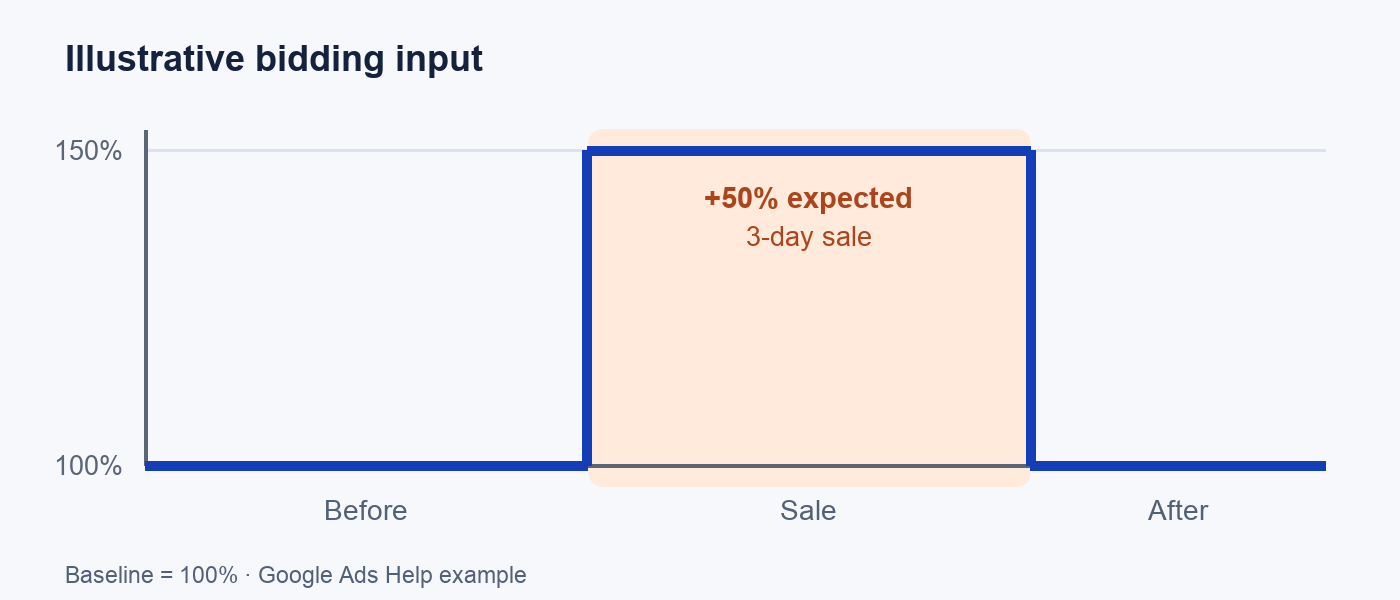
Image source: Beecommercer, based on Google Ads Help
A practical 30-day operating test
Week 1 — Establish the control and check the data. Select a high-contribution product group with stable stock and creative rights. Reconcile Merchant Center pricing, variant IDs, landing and checkout URLs, geo eligibility, purchase-value tracking and margin by SKU. Document the existing Demand Gen results before changing anything.
Week 2 — Change one meaningful lever. Test a creator demonstration against a brand-led video while keeping bids, target audiences and the featured product set comparable. Where product feeds are not already in use, a separate, controlled feed-on test can answer a different question; do not combine both changes and then attribute the result to one of them.
Weeks 3–4 — Verify the full path. Segment mobile cart starts, purchase completions, new-customer share, returning customers and profit after ad cost, shipping, discounts and creator fees. Use a time-bound seasonality adjustment only if a short sale truly warrants one. Monitor inventory availability daily; if fulfillment or pricing is broken, fix the store before scaling spend.

Image source: Beecommercer
TREND WATCH | WHAT ELSE MOVED
Home Depot’s digital sales grew faster than its overall retail business
In its November 17 Q3 earnings release, Home Depot reported $43.4 billion of sales (+4.9% year over year) and 2.2% comparable-sales growth. Its official earnings-call transcript says sales leveraging digital platforms increased approximately 13%. Management credits site speed, AI-enabled search and fulfillment improvements among the drivers; the figures are not an experiment proving any single technology caused that growth.
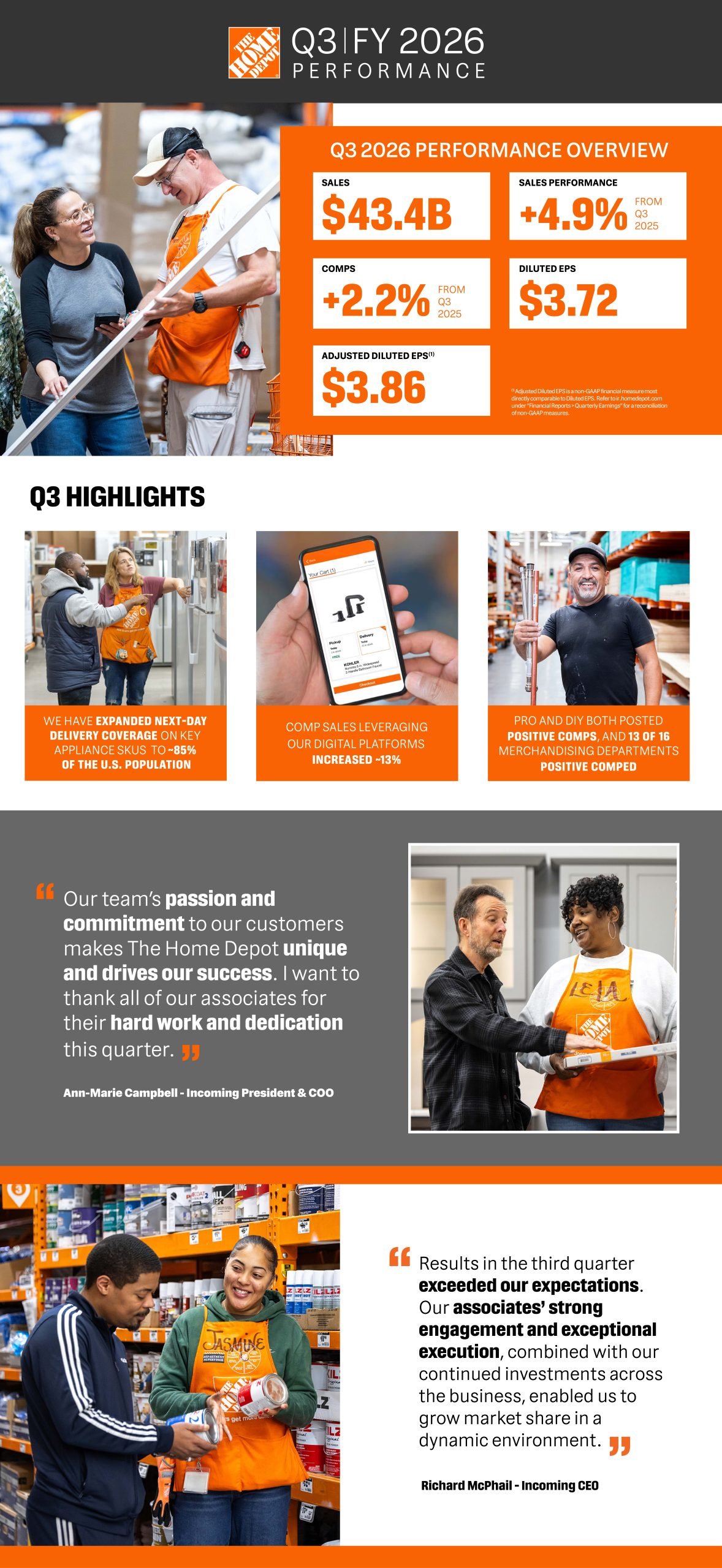
Image source: The Home Depot
Klarna is moving from payment method to shopping intermediary
Klarna’s official Q3 report shows $36.1 billion of GMV (+10%) and $1.009 billion of revenue (+12%). Its shopping-browser business has facilitated more than $34 billion of GMV since 2020, while an AI assistant for WhatsApp, iMessage and the Klarna app is in limited early-user testing with pre-registration open. This is a distribution and affiliate-attribution watch item, not a fully rolled-out universal buying agent.
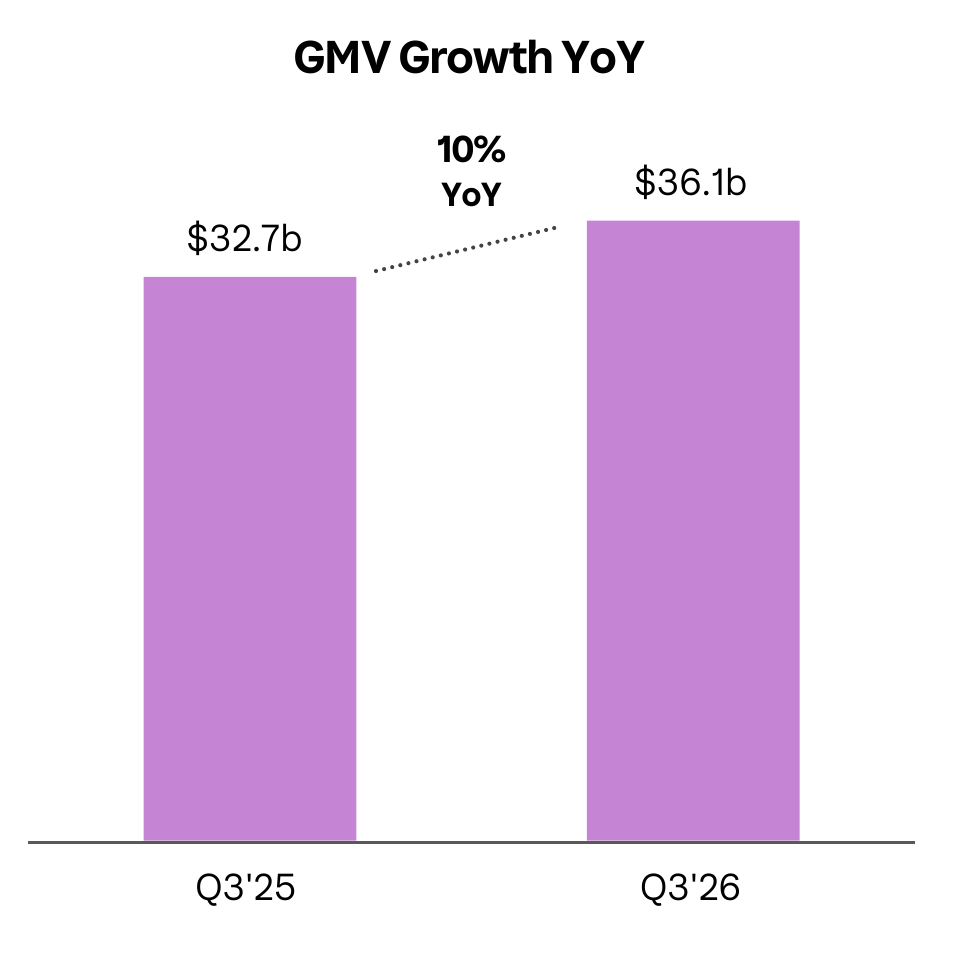
Image source: Klarna Q3 2026 Earnings Release
Google’s November core update is still rolling out
Google’s Search Status Dashboard records a global, all-language November 2026 core update starting November 10, with a rollout that may take up to two weeks. Ecommerce teams should annotate changes in Search Console, avoid attributing every traffic fluctuation to the update, and wait for the rollout to finish before drawing conclusions from short-term ranking shifts.
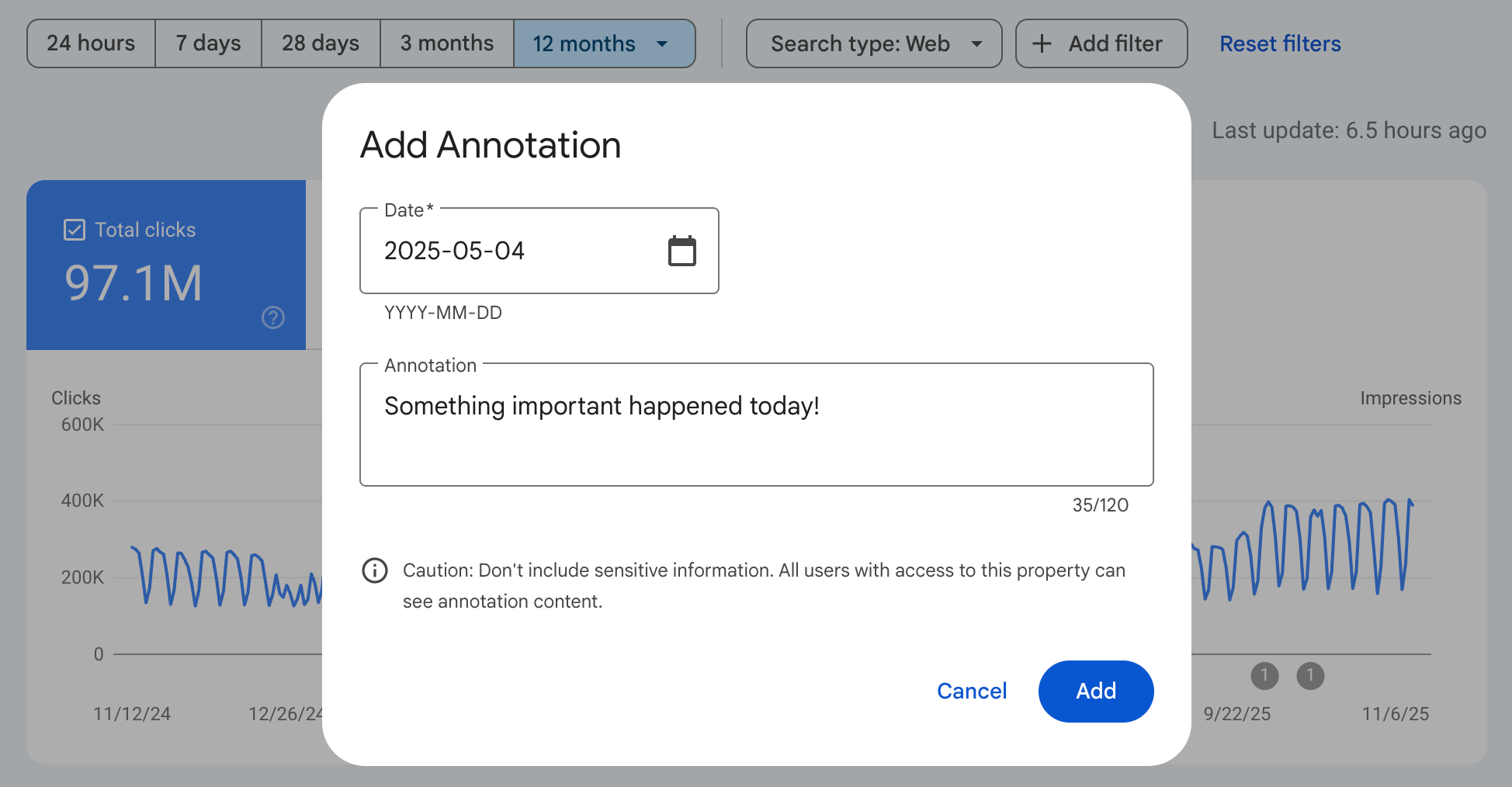
Image source: Google Search Central · CC BY 4.0
AI visibility vendors are starting to measure influence, not just clicks
Semrush introduced “AI-influenced traffic,” a predictive estimate of visits that may follow a brand mention in an AI answer through direct traffic, branded search or an AI referral. It is a modeled benchmark, not a directly observed session source or proof of incremental revenue. Kevin Indig’s Q4 AI-search meta-analysis similarly warns against overinterpreting any single study.
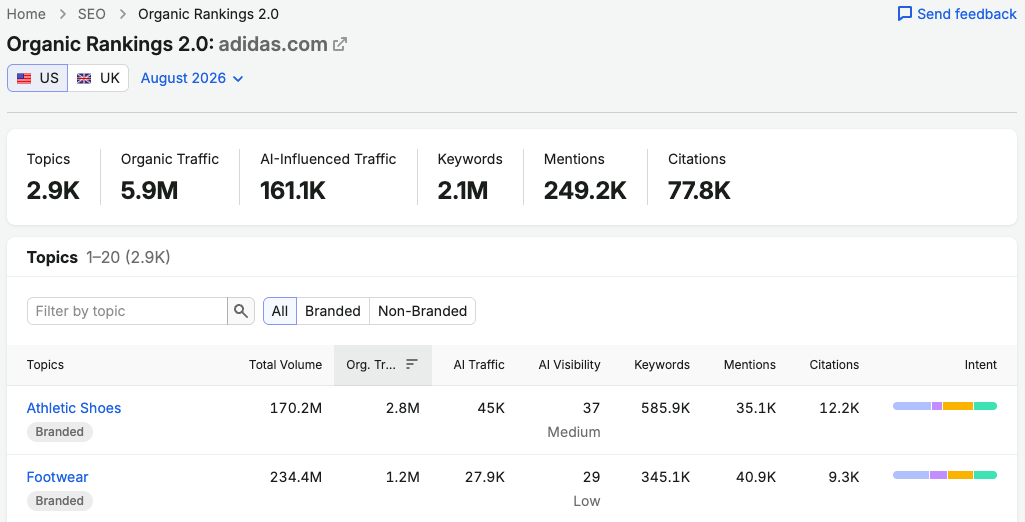
Image source: Semrush
THE OPERATOR’S CLOSE
Make the shopping path more useful before you buy more reach
The common thread is not that every platform needs an agent. It is that discovery, product evidence and transaction design are becoming inseparable. Before the holiday rush, a merchant can do more with a precise feed, a product-demonstration video and a reliable cart than with a broad campaign that produces attractive engagement numbers but poor unit economics.
The Beecommercer Team