
A visit to Dreame can begin with a wet-dry vacuum deal, an Italian hair-dryer product page or a search for a robot vacuum. In October 2026, Semrush estimates that 72.38% of worldwide visits to dreametech.com came from mobile devices. The challenge is to help that shopper recognize the right store, pick a model and understand the terms of buying it within a few screens.
The mobile share hides different shopping journeys
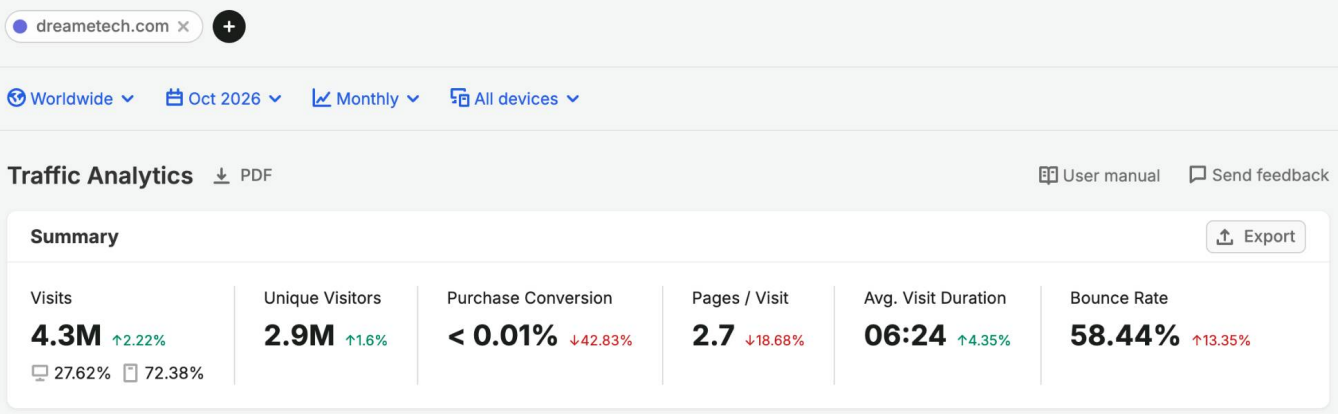
Semrush estimates 4.3 million visits and 2.9 million unique visitors in October, up 2.22% and 1.6% respectively from the prior month. The series is lower than the roughly 6.1 million visits shown for May, with a rebound in August. October's 2.7 pages per visit fell 18.68% while average visit duration rose to 6:24. A campaign page that answers a question in one visit and a store page that sends shoppers back to search can both produce fewer page views. Use landing-page events and checkout data to see which happened.
The US accounted for 20.03% of October visits. Italy, France and Germany together accounted for 46.26%. In Italy, 88.43% of visits were mobile. The wet-dry vacuum Prime Day landing page accounted for 3.86% of traffic in the Top Pages view. The Italian homepage registered 3.21%, just ahead of the main homepage at 3.20%, and the Italian Pocket Pro hair-dryer product page registered 2.77%. These shares give the team places to start investigating. Sales by category and market come from order records.
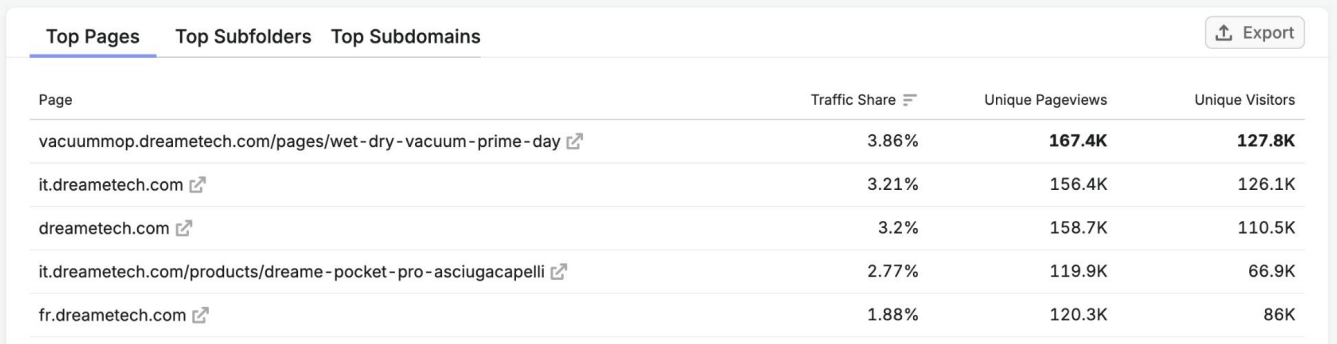
On the Italian Pocket Pro journey, check that a mobile visitor can see the precise model, local plug, stock and delivery before checkout. On a wet-dry vacuum sale page, verify the advertised bundle and whether accessories are included. Use local-store and category labels in analytics. Combining both journeys under one mobile conversion rate can hide which storefront needs work.
Read the competitive set as a web comparison
In Semrush’s October Market Overview, the 82 analyzed domains recorded an estimated 24.9 million visits. Within that set, roborock.com accounted for 37.46%, alza.hu for 20.94% and dreametech.com for 17.11%. The separate dreame.com row shows 6.49%. Keep the domains separate when comparing visits. The presence of a multi-category retailer such as Alza also makes the denominator materially different from appliance sales.
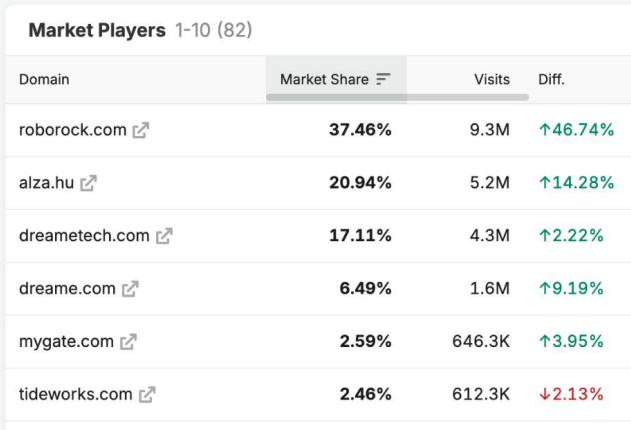
A practical comparison starts with pages serving the same buying task. Compare the first mobile screen for two robot vacuums in the same market, then inspect how each page handles dock size, consumables, warranty and the route to purchase. A broad traffic ranking helps choose whom to compare. It takes a separate study of comparable products and sellers to understand why shoppers choose one offer.
Help buyers choose the model before asking them to buy
Dreame’s US comparison page lets shoppers line up models and show differences. Its overview distinguishes the X60 Max Ultra Complete, X60 Ultra and L60 Pro Ultra by suggested use. Further down it separates threshold crossing, robot height and dock dimensions. Those fields answer three different questions: whether the robot can cross the doorway, whether it fits under furniture and whether the dock fits in the available space. Dreame US model comparison
The X60 comparison shows different heights with the navigation module raised and lowered. The threshold figure also depends on whether the step is single or double. A short mobile model card could carry those conditions into the product page along with the full model name, dock footprint, included accessories and the correct warranty link. Keep the comparison selection when the shopper opens a product. Test whether this helps reduce backtracking and wrong-model returns. X60 Max Ultra Complete product page
Public ads reveal three different buying tasks
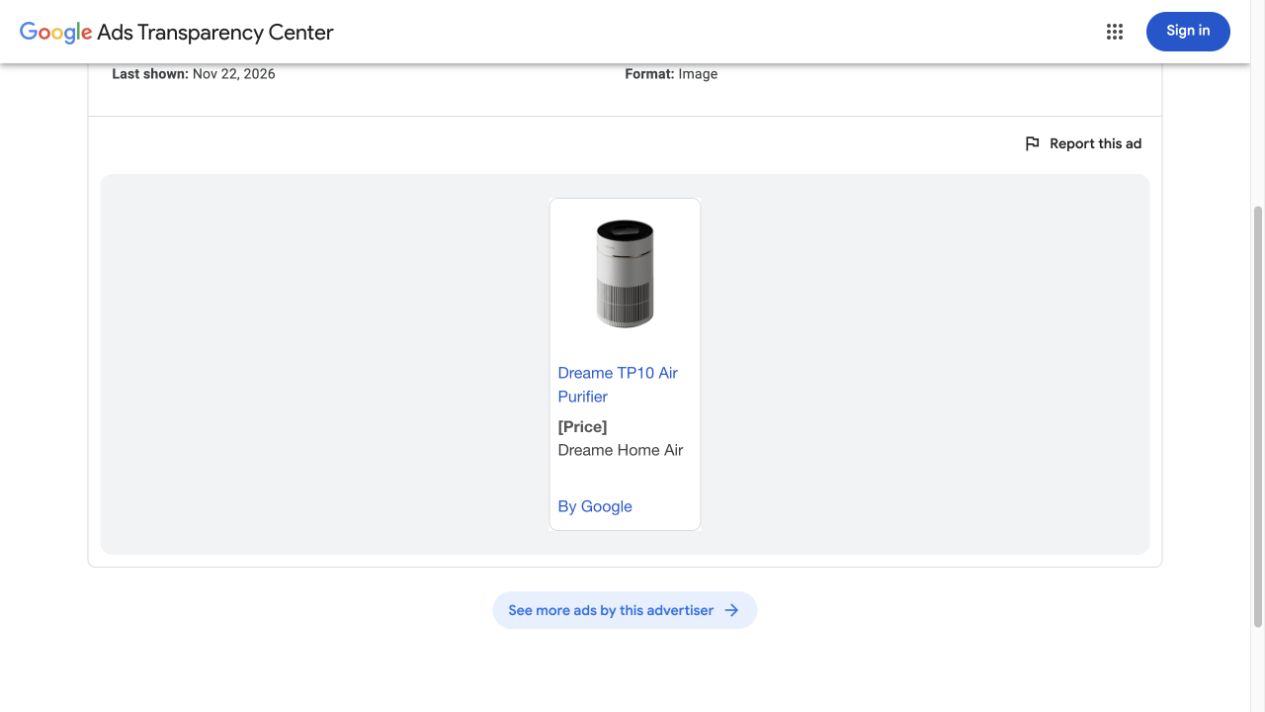
Google’s US transparency view shows a TP10 air purifier image ad from Dreame Technology USA Inc., last shown November 22, 2026. It puts the model and category first. An air-purifier landing page should make its room-size test basis, replacement filter and recurring cost easy to find. A shopper clicking on a named product needs that product and the matching seller ahead of a broad brand story. Google ad details
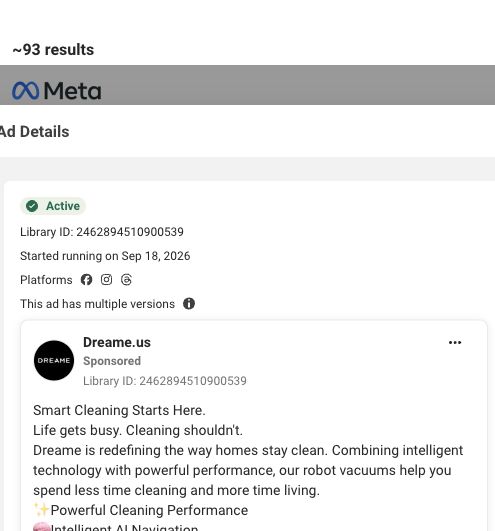
A Dreame.us Meta sample active at the November 23 check introduces robot vacuuming and mopping, navigation and an offer of up to 10% for new customers. The sample began September 18 and the inspected version points to the L40s Ultra CE. The broad creative can attract people still comparing models, while the destination narrows the choice immediately. Put the exact CE model, what comes in the box and how new-customer eligibility works near the first purchase button. A checkout discount failure is a different problem from a shopper who wanted another L40s variant. Meta robot vacuum sample
A second Dreame.us sample sells several styling jobs in one AirStyle Pro set and goes to the separate beauty storefront. Here, a short attachment demonstration can answer more than a general list of features. Show which attachment creates the result, which attachment ships with the advertised set and whether the deal applies to that variant. Keep campaign and order records mapped to the storefront and product. Public ads show messages and destinations. Spend, conversion and incremental orders need campaign and store data. Meta AirStyle Pro sample
Search and AI answers need precise regional product facts
Semrush estimates 1.3 million organic traffic and 148,100 organic keywords in its worldwide desktop SEO snapshot on November 22. In its separate US keyword table, “dreame” and “dreame vacuum mop” rank first. An operator can serve brand and category searches differently: route exact model names to the corresponding product or support page, and help category shoppers compare floor type, thresholds and routine maintenance before they choose.
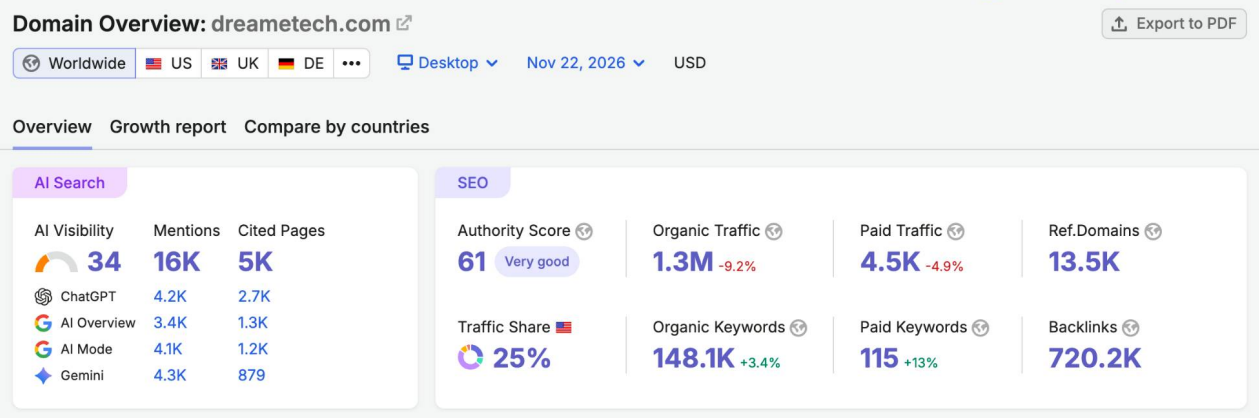
The November 21 worldwide AI Visibility snapshot is 34/100, with 16,000 mentions and 8,300 citations across the platforms tracked. One US comparison topic pairs L10S Pro Ultra with L20. Give each market a stable model comparison and model-specific accessories and support links. Then sample answers for regular questions such as whether a roller fits a particular model or which threshold height applies, and check the answer and cited destination together.
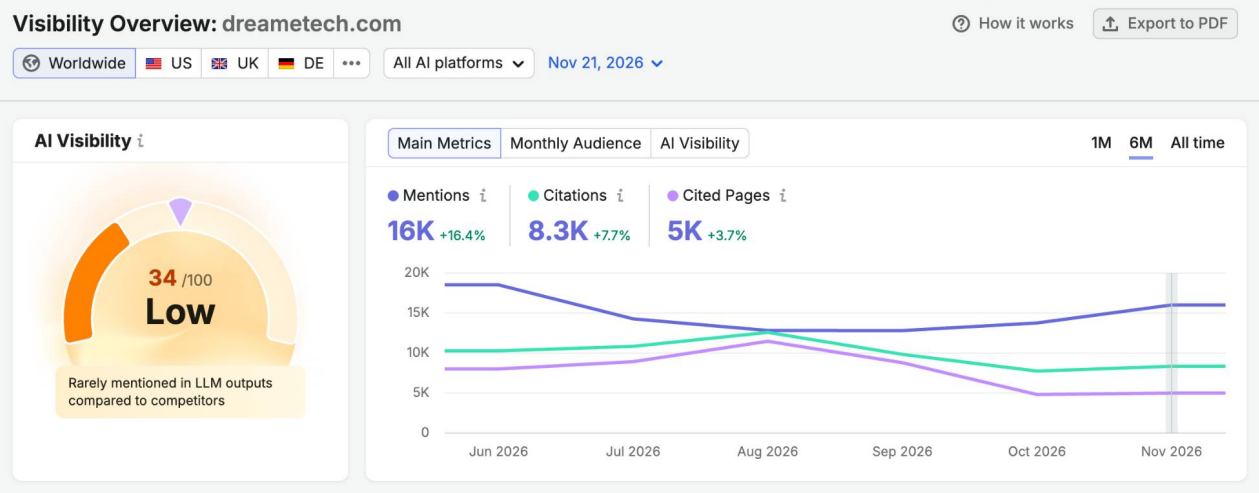
Refresh product facts when ranges change. Name the model as the local customer sees it, and include the underlying dimensions and test conditions in the page text. Track answer accuracy and referral sessions separately. A citation count alone gives the team no evidence of a paid order.
Measure service through the last completed step
The Dreametech profile for www.dreametech.com displayed 1.7/5 from 116 reviews when checked. It includes accounts from multiple markets and sellers. One Amazon buyer described a replacement with a label but no carrier scan and requested a refund. Another reviewer said a roller failed and a repair label had been promised, with no completed repair reported. A separate reviewer praised prompt replies after a leak without describing a finished remedy. In a Reddit thread, a commenter reported receiving a repaired machine that worked. These accounts show which stages to check in company records. Trustpilot profile · Amazon purchase review · Roller repair review · Prompt reply review · Reported completed repair on Reddit
The US after-sales policy lists eligible sellers and distinguishes coverage for the robot body, battery and consumables. It also uses calendar days in one refund passage and business days in another. Show the policy that applies to the actual seller and order at checkout, and confirm the applicable timeline in the support reply. A useful service record follows diagnosis, label issue, carrier collection, warehouse receipt and the actual remedy. Count a refund once it is issued and a repair once the repaired device is delivered. Track repeat faults after delivery. Dreame US after-sales policy
A 90-day verification plan
Build baselines by market, device and seller before changing spend. The three phases start with the mobile buying journey and finish with completed service outcomes.
Days 1–30 | Match the mobile ad and landing page
| Actions |
|
|---|---|
| Metrics |
|
| Decision |
|
Days 31–60 | Test region-specific model selection
| Actions |
|
|---|---|
| Metrics |
|
| Decision |
|
Days 61–90 | Connect orders to completed service outcomes
| Actions |
|
|---|---|
| Metrics |
|
| Decision |
|
Sources and scope
Semrush Traffic Analytics and Market Overview cover October 2026. SEO is from November 22 and AI Visibility from November 21, 2026. These are modeled metrics with distinct scopes. Website, Google and Meta sample checks and public-review research were completed November 23, 2026. Review examples are individual accounts used to identify service steps to investigate.