

A heat press purchase begins a longer making process: designing, choosing materials, cutting or printing, transferring, and finishing something to wear, give or sell. Helping a customer complete that first project can answer questions that a specification sheet leaves open.
HTVRONT brings machines, materials, design tools and instruction into that process. Its traffic gives these entry points reach; customer feedback adds another test: whether delivery and support help buyers keep making. The operating opportunity is to connect acquisition content with successful use.
Organize the store around a complete project
Connect the finished item to the tools and materials
The HTVRONT homepage sets out a sequence from IdeaStudio design through cutting and weeding to heat transfer and a finished creation. Separate recommendations for machines and materials help shoppers work backwards from what they want to make.
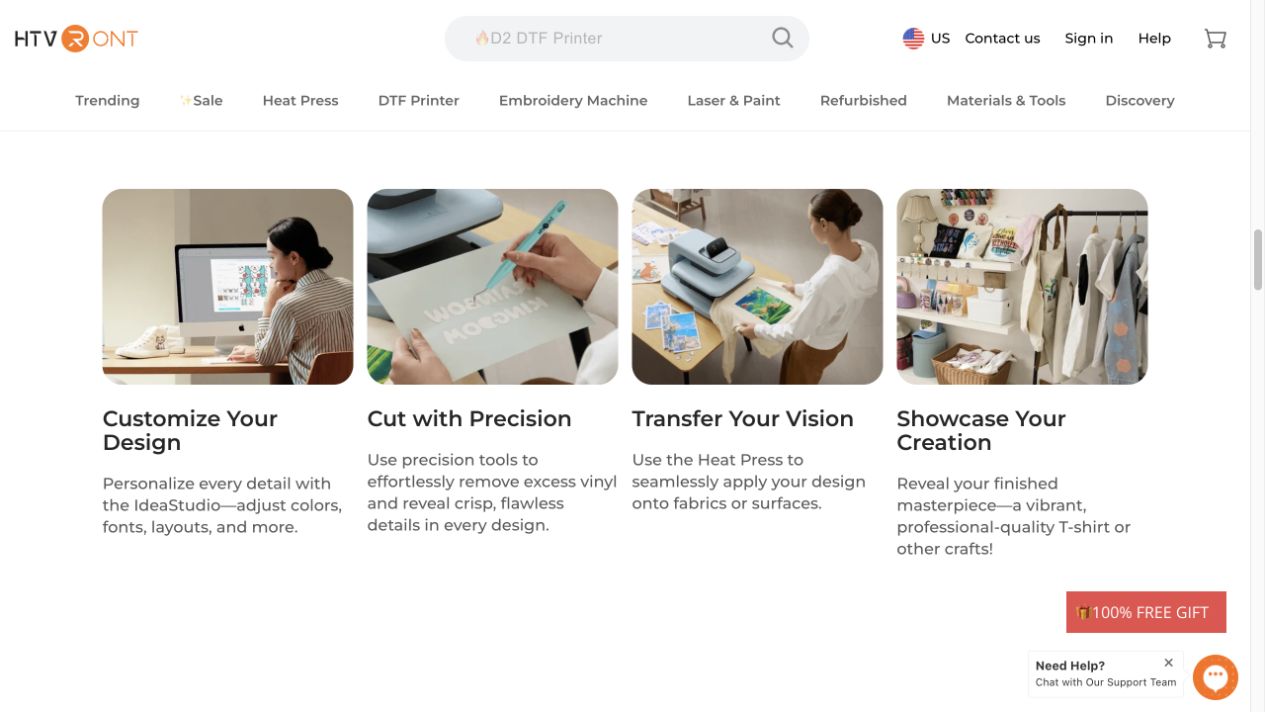
This structure can reduce missing steps before a first project. Its effect needs separate measures for equipment purchases, compatible material purchases and successful first use; a clear workflow alone does not establish higher conversion or repeat buying.
Put material compatibility beside product selection
The heat press category introduces uses including clothing, hats, tumblers and phone cases. A settings guide appears before the product listing, alongside filters for type, size and weight.
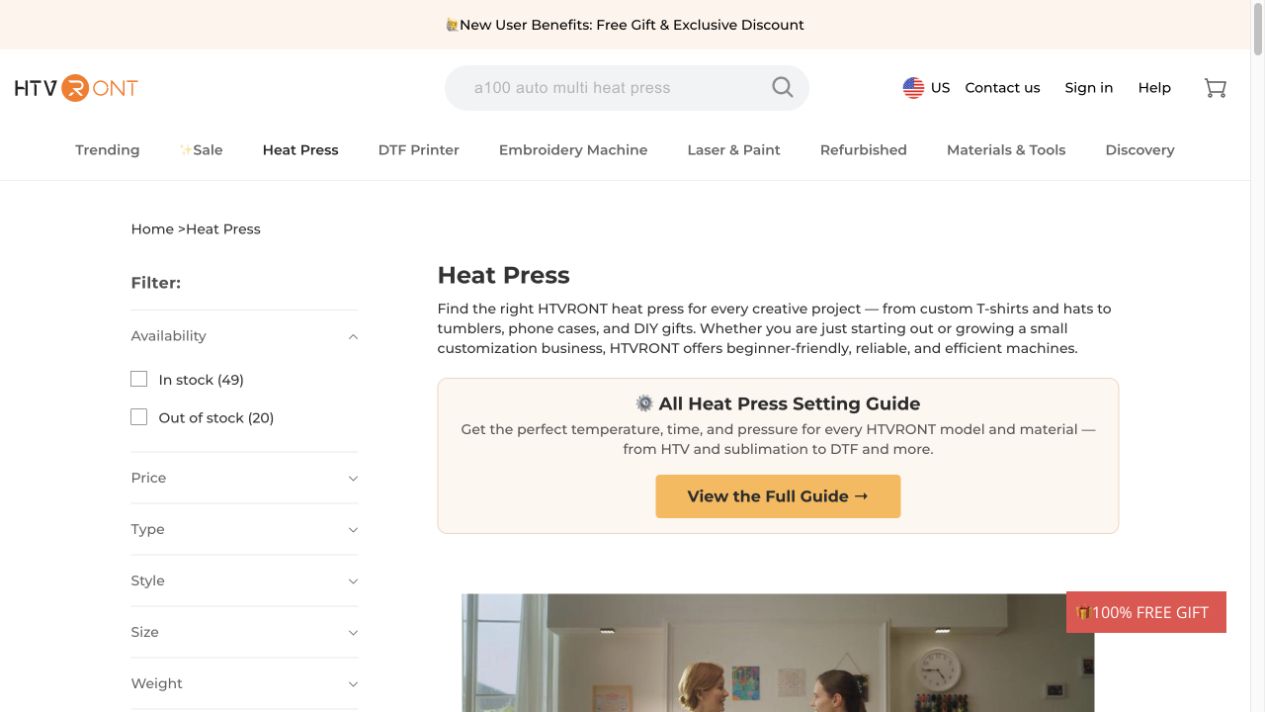
That placement addresses a practical buying question: will this setup work with my material? Guidance should identify the relevant model, material and process. A general settings table cannot settle every compatibility question.
Carry the same product context into support
The official knowledge base covers design software, heat presses, DTF printing and other categories, with setup, connectivity, troubleshooting and video instruction.
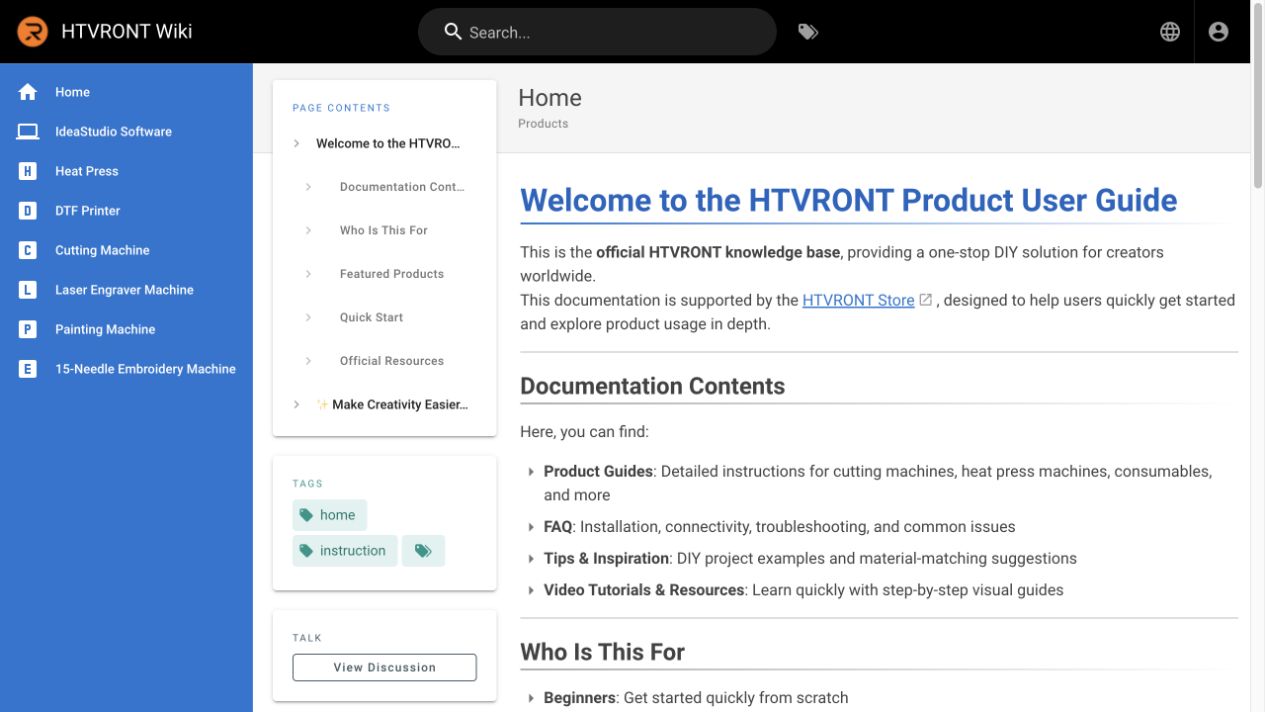
Useful support outcomes include completing setup and returning a machine to use. Linking the right model and material information across buying guides and help pages can also save customers from describing the same problem again.
Read traffic growth alongside visitor quality
Similarweb estimates 1.199 million visits to htvront.com from April to September 2026, averaging 199,988 a month, with 3.70 pages per visit and an average duration of 1:38. Mobile web accounts for 67.07%. These are visits and engagement measures, rather than customer or order counts.
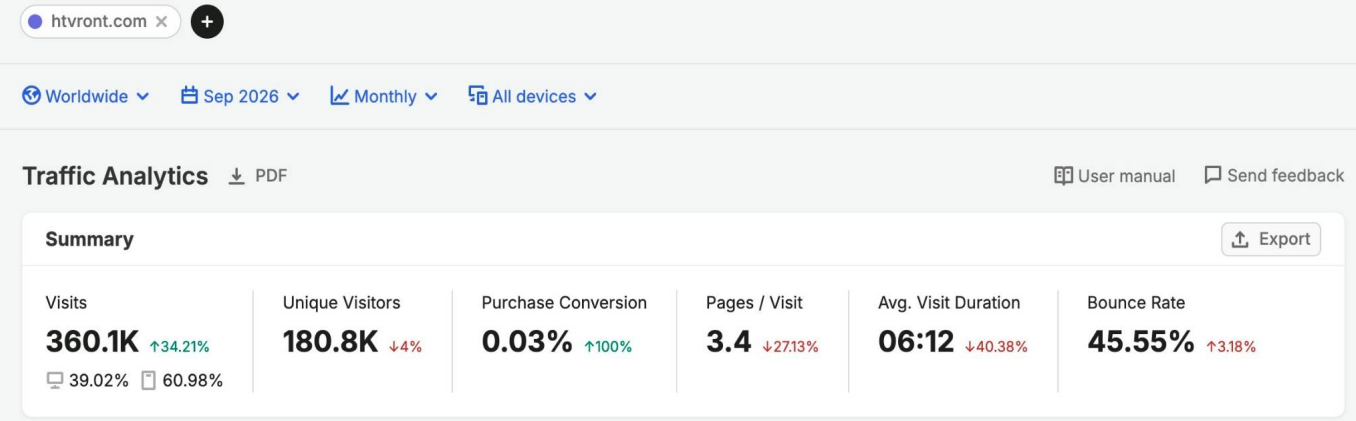
For September, Semrush estimates 360.1K worldwide visits across devices, up 34.21% month on month. Unique visitors fell 4%, while pages per visit and average duration also declined. More visits therefore need to be checked against new-customer and purchase outcomes. The providers’ different periods and models should be read separately.
On-site search also has a prominent share among Semrush’s top pages. This warrants checking whether shoppers find products efficiently or need more selection guidance; page traffic cannot distinguish those explanations.
Semrush places HTVRONT at 3.89% of visits within an automatically selected comparison set of 82 domains in September.
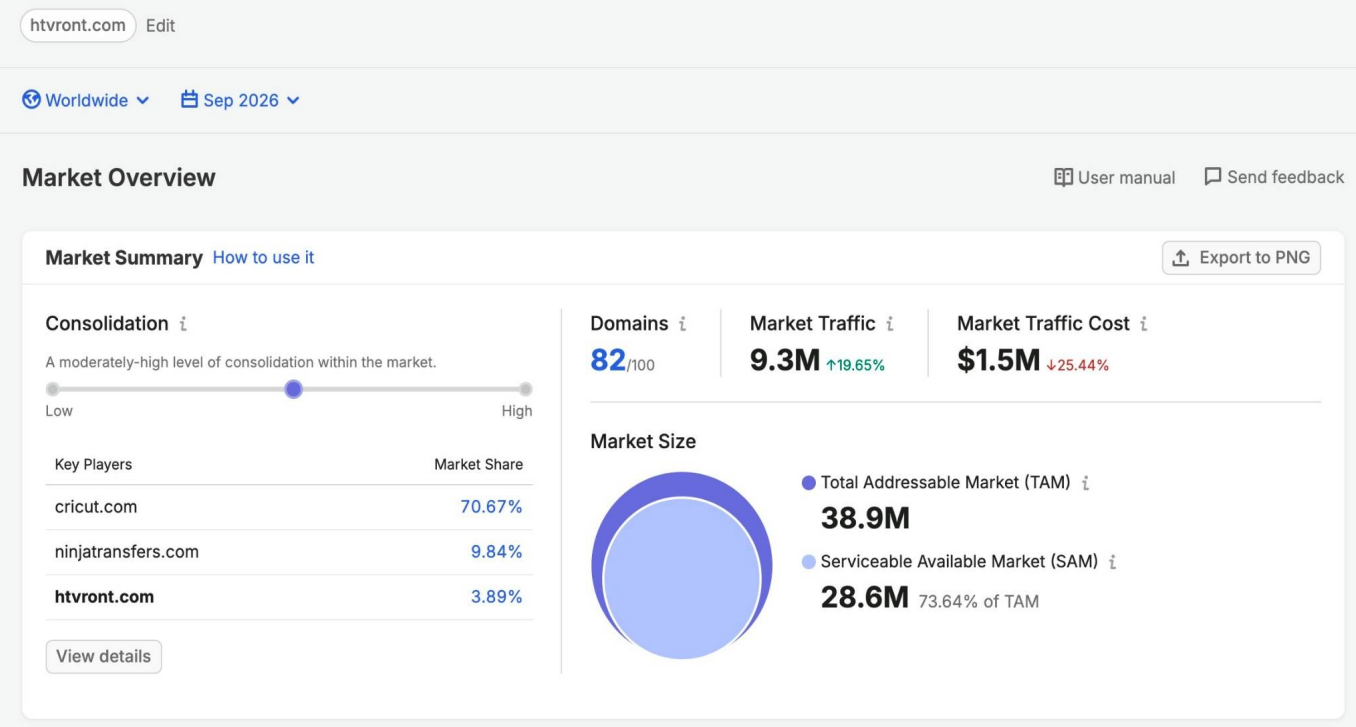
This is relative website traffic within that set. It does not establish HTVRONT’s share of heat press or DTF equipment sales, especially when the domains represent different business models.
Evaluate affiliate acquisition through retained orders
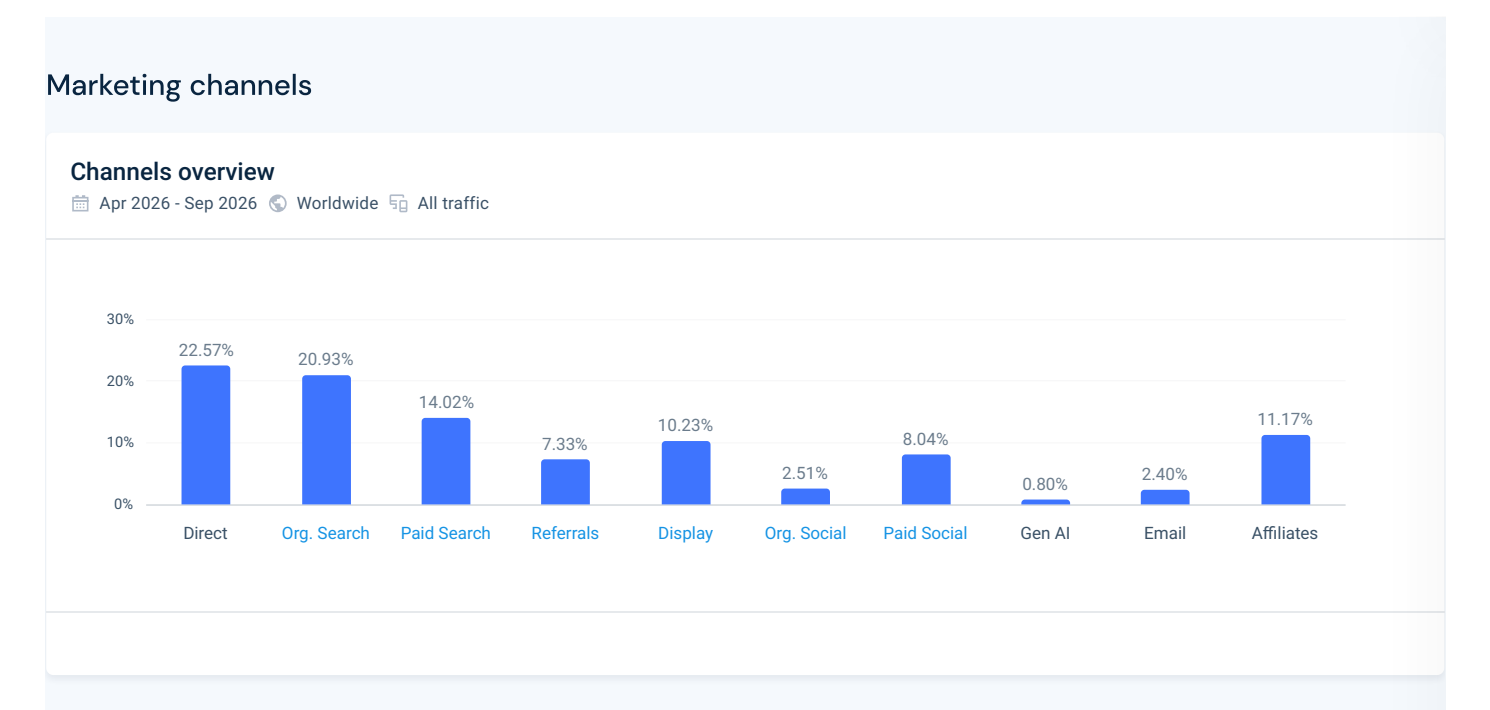
In Similarweb’s six-month channel mix, organic search contributes 20.93% of visits and paid search 14.02%, or 34.95% combined. Direct visits account for 22.57%, and affiliates 11.17%.
The official affiliate program advertises at least 8% commission on qualifying purchases, a 45-day tracking window and participation through Impact and Awin. These are program terms, not observed creator earnings; cancellations, returns and attribution rules affect payable commission.
A useful operating comparison follows each partner’s content through model selection, retained orders, returns and support costs. A channel’s share of visits cannot answer whether its sales remain profitable after those costs.
Give category searches and how-to questions different destinations
Similarweb classifies September organic search traffic as 69% branded and 31% non-branded. Its query examples span category shopping, such as “dtf printer” and “heat press,” and practical help, including “htvront h17 software” and “removing print from clothes.” Provider classifications are imperfect: some branded queries appear in the non-branded examples.
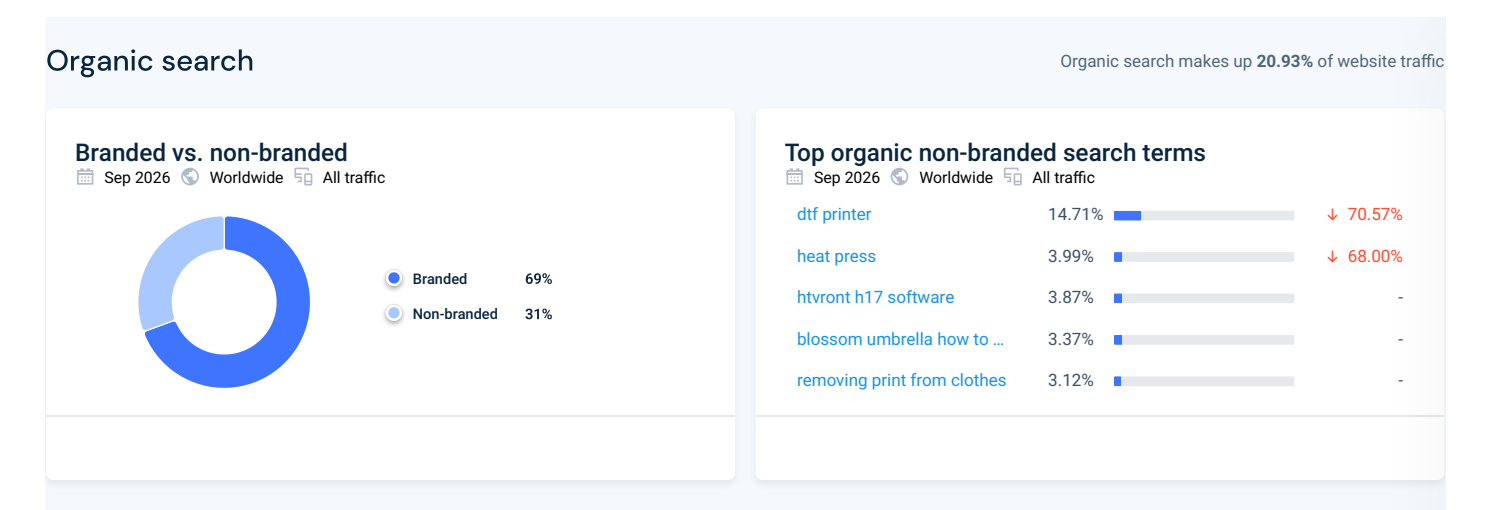
Those needs call for connected content: explain the process, compare models and materials, then offer a project that readers can reproduce. Some help searches come from existing owners, so organic traffic should not all be treated as new buying intent.
Semrush’s October 25 worldwide desktop overview estimates 46.3K organic search traffic and 13.9K keywords. The US keyword panel likewise combines brand, category and practical searches.
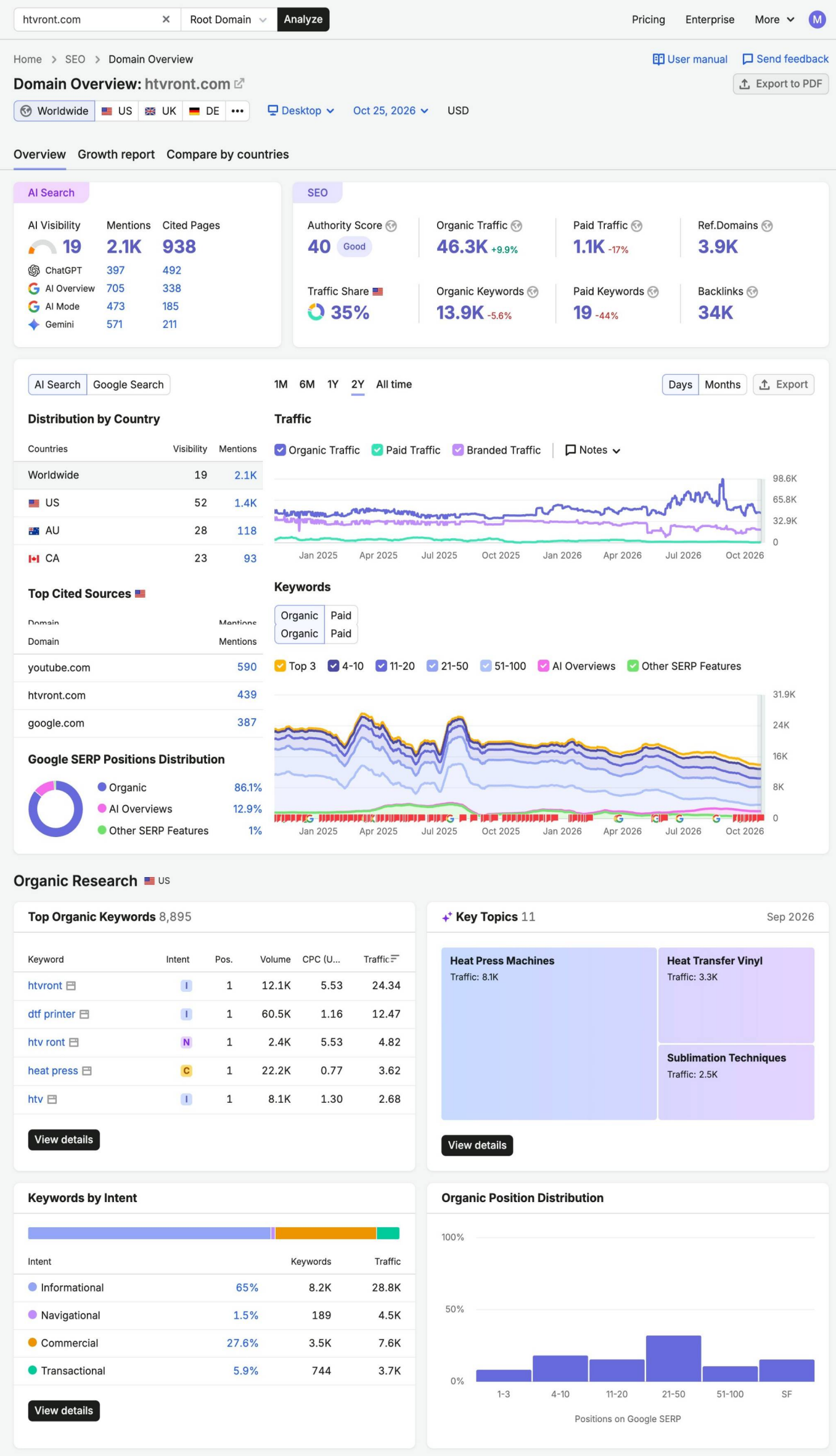
The US intent panel’s 65% refers to informational keywords, rather than a share of visits or sales. Tutorials should be assessed by how they help selection, successful projects and fewer repeat support contacts.
Take social viewers to a setup they can actually use
Similarweb puts social referrals at 10.56% of visits during the six months. Within social traffic, YouTube contributes 61.49% and Facebook 36.16%, together 97.65%. Those platform shares use social traffic as their denominator.
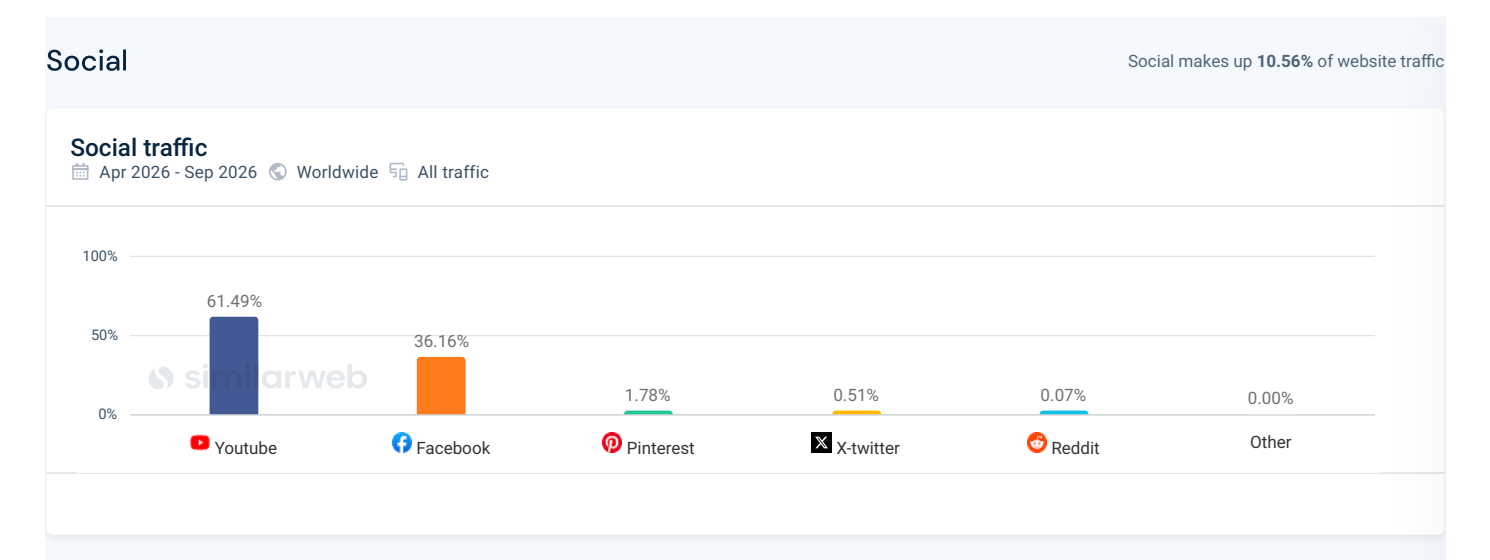
Finished-project demonstrations, material explanations and complete making sessions are useful formats to test. Link each to the relevant machine and consumables, then compare selection behavior, retained orders and support issues across sources. Platform traffic alone does not establish conversion performance.
Prioritize the US mobile buying journey
In Similarweb’s six-month geography data, the US represents 65.89% of visits, followed by Australia at 5.34%, Canada at 3.72%, Germany at 3.51% and the UK at 3.19%. These describe this domain’s visitors, rather than global customers or revenue.
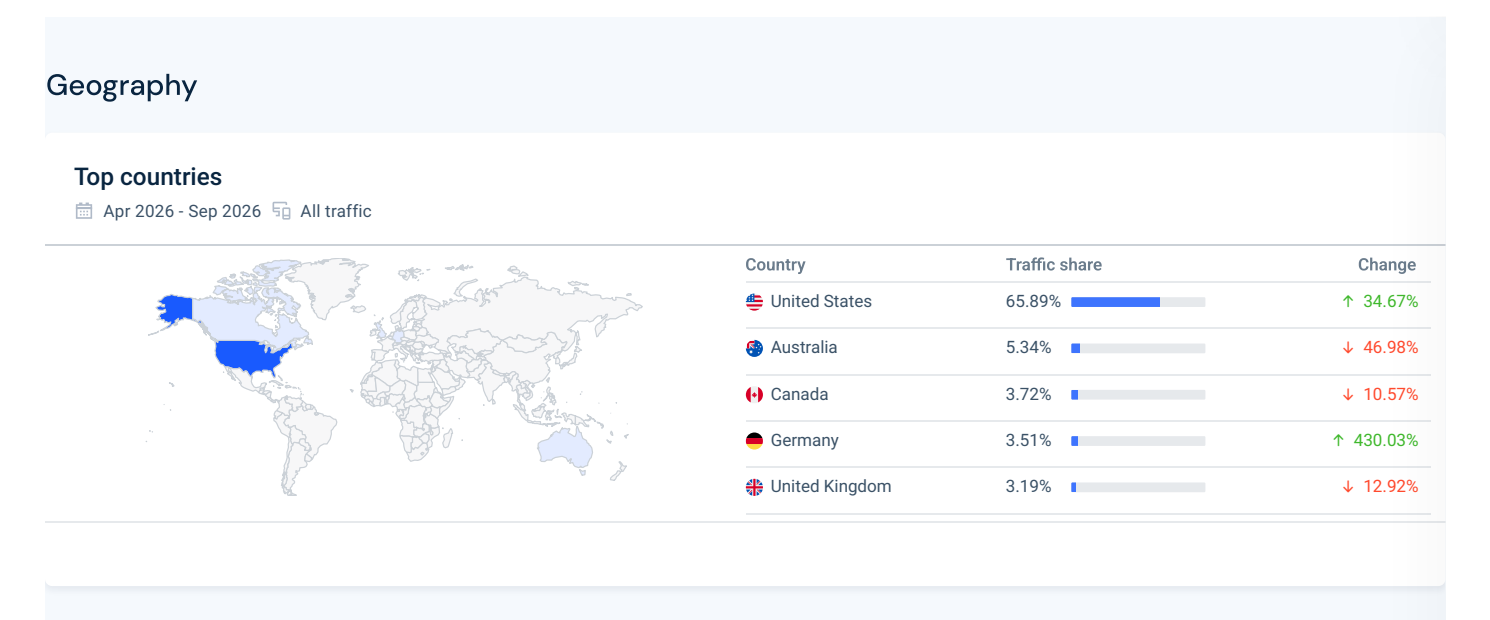
Semrush also places the US first in September, at 70.01%; within US visits, approximately 73.33% are mobile. Check whether shoppers on a phone can understand compatible materials, delivery arrangements and model-specific warranty conditions. Actual orders should guide market budgets.
Separate AI mentions from the breadth of useful citations
Semrush’s October 24 worldwide AI visibility score is 19/100, with about 2.1K mentions, 2.4K citations and 938 cited pages. The displayed changes are +6.3%, −25.4% and −28.2% respectively; the comparison baseline is unspecified.
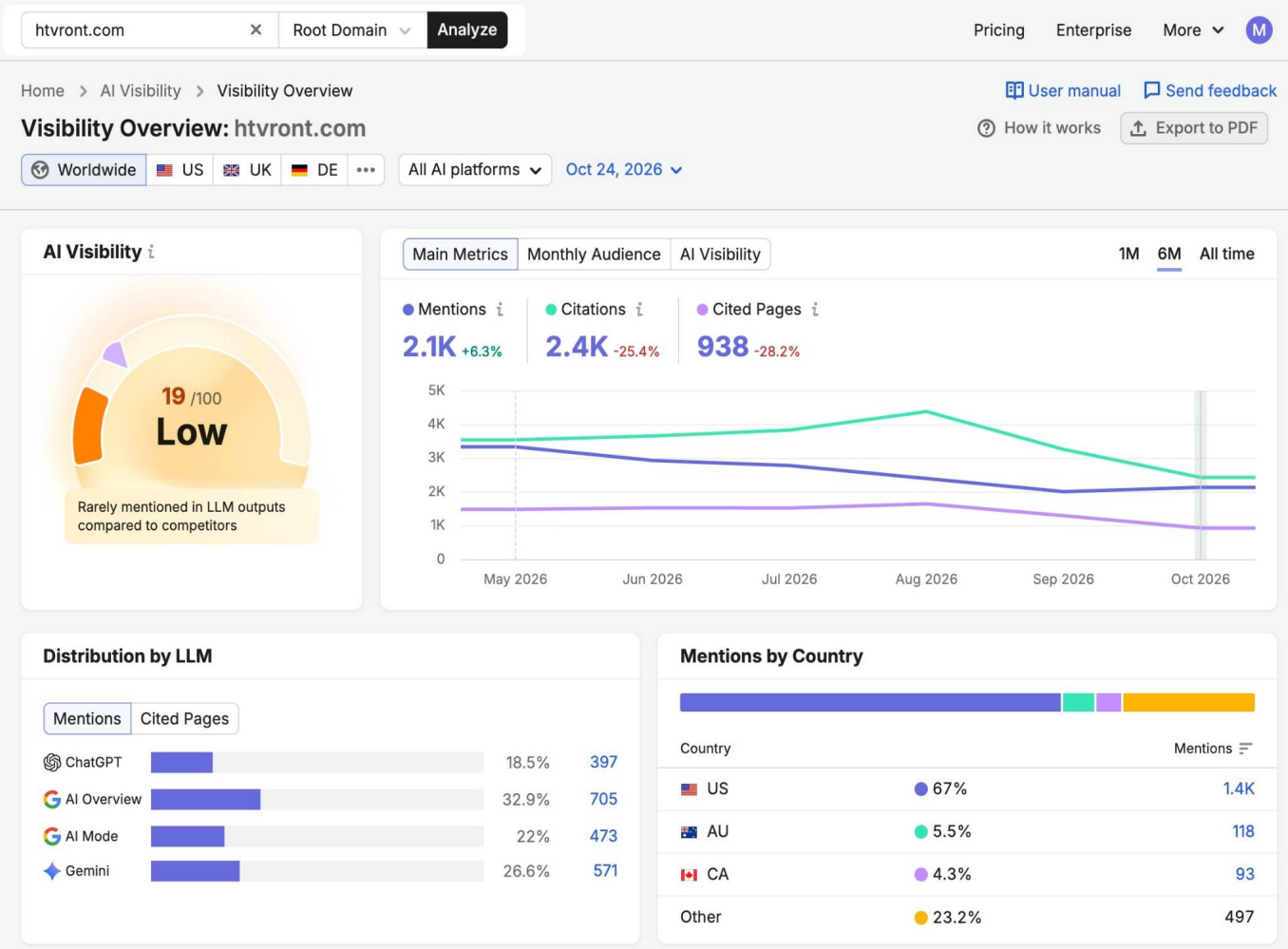
The October 25 SEO overview shows a separate US score of 52. That cannot be read as growth from the worldwide score of 19. Scores, mentions, citations and AI referral visits measure different things.
Model comparisons, material compatibility and maintenance answers offer concrete publishing priorities. Track whether a consistent set of questions receives accurate, applicable citations, alongside whether those answers help buyers choose and use products.
Use Google store reviews to examine the shopping experience
On October 26, the US Google store page displays 4.5/5 from 1,144 reviews and a Top Quality Store badge. This is a store rating, rather than a verdict on a particular machine’s durability.

Google’s rating methodology draws on eligible review sources; the total should not be assumed to contain only independently collected Google reviews. The badge also reflects shopping factors such as delivery and returns. Selected entries labelled Google illustrate different stages of ownership:
| Review | Reported experience | What remains open |
|---|---|---|
| Hernan López 5 stars · August 18, year not shown | Order arrived quickly and in good condition; translated by Google from Spanish | No evidence here of long-term machine use |
| Tammi Thompson 5 stars · March 16, 2025 | Auto Heat Press 2 arrived and was set up; researching pressure before trying it | Successful pressing had not yet been reported |
| Kat Sbabo 1 star · December 6, 2025 | Machine powered on but the plate would not lower; described email-only support | No confirmed resolution in the visible entry |
| Michelle Healy 2 stars · August 10, 2024 | Found the website easy to use but said a July 28 order had not arrived | Delivery was unconfirmed at the review date |
Recent and helpful sorting expose different feedback, including older complaints. This selected sample cannot estimate current issue rates. The useful operational distinction is between a smooth transaction, successful first use and an unresolved service problem.
Read Trustpilot’s platform notice alongside specific service outcomes
On October 26, the htvront.com Trustpilot profile says its rating is unavailable because of a guidelines breach and states that fake reviews have been removed. These are Trustpilot’s statements, not an independent finding here about company conduct. They do not establish that every customer account is false.
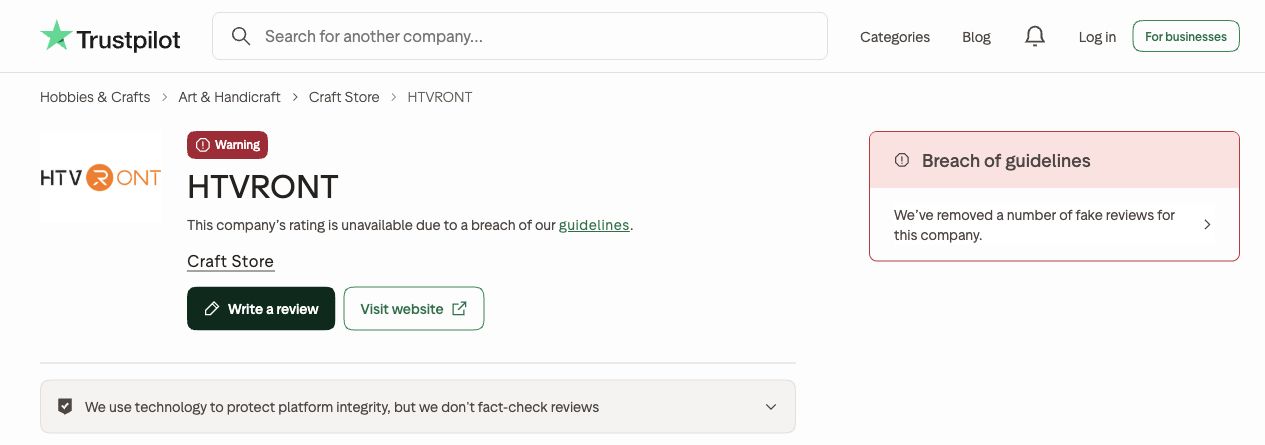
Individual accounts can still identify questions to investigate, without supporting a satisfaction or defect-rate calculation. Six selected 2026 entries cover repair, delivery, materials and help:
| Review | Reported experience | Visible outcome |
|---|---|---|
| Gabriela Castro 1 star · October 12 | D1 diagnosis and costly parts after warranty | Company promised further review; restored use unconfirmed |
| Teri Blake 1 star · updated September 16 | Disputed H17 delivery and carrier explanation | Company described a redelivery offer; receipt unconfirmed |
| Kat Vlach 1 star · September 4 | Heat press lock failure and dissatisfaction with post-warranty help | Further contact promised; repair or replacement unconfirmed |
| Wayne B. Allen 5 stars · September 2 | Problem with permanent vinyl, documented with photos | Customer reported receiving free replacement material promptly |
| Marisa 5 stars · August 28 | Tumbler press warranty request | Replacement approved quickly; resumed use not yet confirmed |
| Melissa Smerker 5 stars · August 26 | iEngrave connectivity problem | Customer reported resolution after a remote support appointment |
A promise to follow up, replacement approval, receipt of a part and restored use are separate outcomes. For customers making items regularly, the last of these determines whether work can resume.
Make compatibility and service terms usable at the point of purchase
The warranty policy distinguishes general equipment, DTF printheads and mainboards, accessories and consumables. The returns page includes 15-day and extended 30-day conditions; it should not be summarized as unconditional 30-day returns. Buyers need the terms applicable to their product, condition and region.
One Reddit discussion about the original automatic press and puff vinyl contains mixed compatibility experiences. Another asks for help with a stuck press, without a visible author-confirmed resolution.
The first suggests making material guidance specific to the machine generation; the second suggests tracking support to restored use. Two discussions cannot establish platform-wide sentiment or failure rates across the product range.
Four operating practices worth testing
- Make the first-project checklist part of selection. Specify the machine, materials, consumables and necessary accessories.
- Connect each acquisition task to a usable setup. Search guides, demonstrations and affiliate content should lead to the relevant model and materials.
- Measure purchase and continued use separately. Track retained orders, first successful projects, material replenishment and repeat support contacts alongside visits.
- Close service cases when use resumes. Distinguish response, diagnosis, replacement delivery and restored operation, then improve guides from recurring problems.
Sources and review scope
Data: Similarweb, April–September 2026; Semrush traffic and market data, September; SEO overview, October 25; AI visibility, October 24. These are third-party estimates. Relevant countries, devices and denominators are identified beside the analysis.
Official pages and reviews were checked on October 26, 2026. Google uses the US store page; Trustpilot uses the main-domain profile. The selected Google entries, six Trustpilot reviews and two Reddit discussions are not random samples or independently matched to orders and repairs. They cannot establish overall satisfaction or issue frequency. Review sources may overlap and are not combined; official terms can vary by region and change over time.